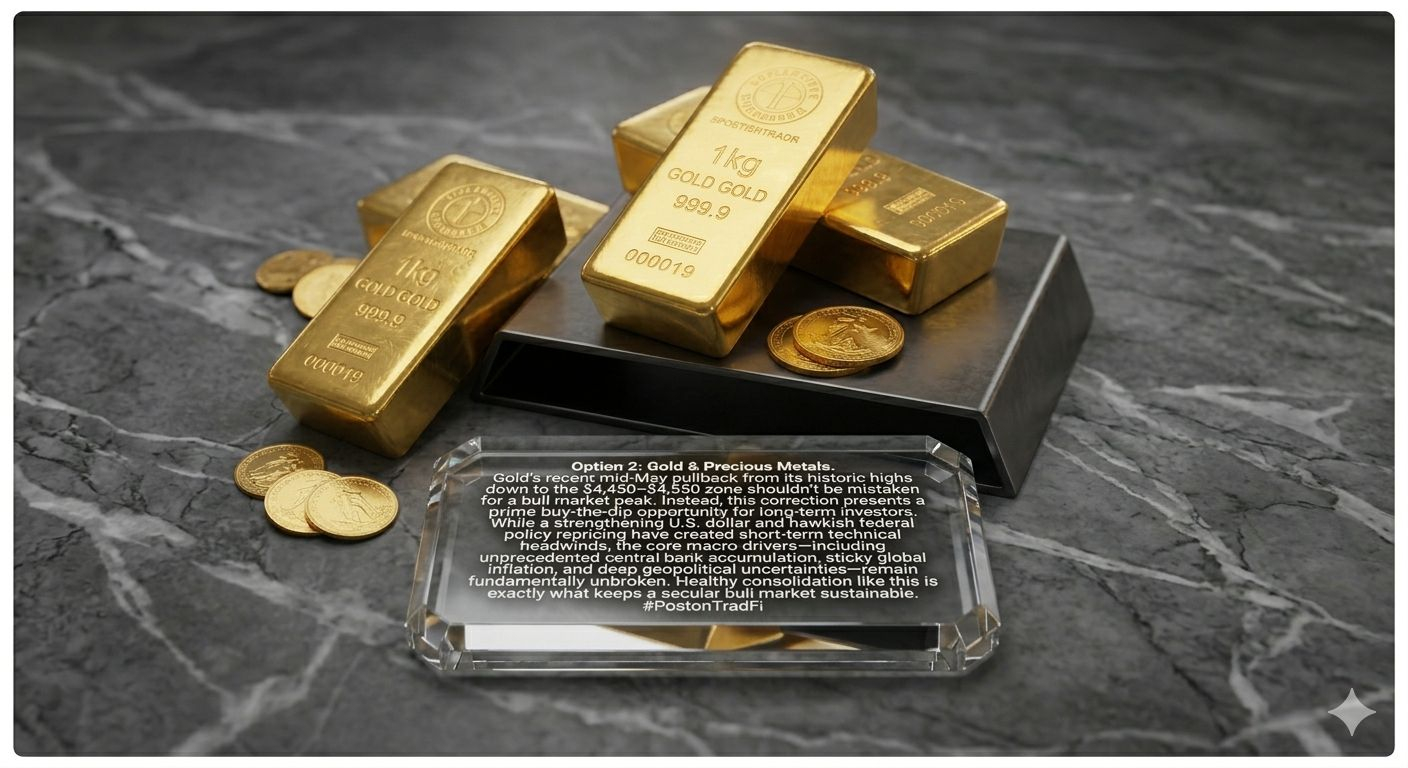
Gold’s pullback from its historic peak of roughly $5,600 per ounce earlier this year down to the $4,500–$4,600 range is a classic buy-the-dip opportunity, not a bull market peak.
The Deeper Macro Mechanics:
Why This Isn't a Normal Cycle
The transition of gold from an all-time high of $5,608/oz down to the $4,500–$4,600 range represents a massive structural shift in how the yellow metal is being priced by global markets.
Historically, a pullback of this magnitude would signal a cyclical peak. However, the current consolidation is behaving much more like a structural launchpad for several fundamental reasons.
1. The Weaponization of Reserve Assets
The structural floor under gold isn't just about retail jewelry demand or inflation hedging anymore. Since the freezing of foreign sovereign reserves in recent years, central banks have fundamentally reassessed what constitutes a "risk-free" asset.
The Structural Shift:
While US Treasuries carry zero default risk, they carry geopolitical confiscation risk. Gold, held domestically, carries neither.
This realization has turned central banks into permanent, price-insensitive buyers. According to institutional flow data, central bank purchasing has moved from tactical accumulation to permanent structural allocation.
2. The US-Iran Peace Premium & The Fed Conundrum
The primary catalyst for the drop from $5,600 was the easing of immediate geopolitical premiums following reports of a potential US-Iran agreement and the tentative reopening of the Strait of Hormuz.
However, this relief rally has created a paradoxical situation for the Federal Reserve:
The Bear Case Argument:
Easing Middle Eastern tensions cools down the immediate energy-driven inflation shock, prompting Fed officials (like Governor Christopher Waller) to signal a move away from an aggressive easing bias. In theory, "higher-for-longer" real interest rates increase the opportunity cost of holding non-yielding bullion.
The Reality Check:
Even if nominal rates stay elevated to combat sticky structural inflation, real rates (nominal rates minus inflation) remain historically suppressed. Gold thrives in environments where inflation outpaces the yield of fiat currency, which remains the broader macro reality.
3. Technical Consolidation Metrics
From a pure charting perspective, a 50% year-on-year vertical surge requires a healthy cooling-off period to prevent a speculative bubble.
The fact that gold has stabilized around $4,568/oz despite hawkish Fed rhetoric and a localized reduction in geopolitical panic demonstrates a highly resilient demand floor. The market is effectively digesting its gains; as long as bullion holds above its key long-term exponential moving averages, the macro bull run remains structurally intact.
Given how aggressively central banks are absorbing supply on these dips, do you think the traditional relationship between gold and US real yields has been permanently broken, or will a hawkish Fed eventually cap this bull run.......