
I still remember when people said data is like oil. You heard it startup ideas, conferences, investor discussions. The idea was simple: the more data a company has the stronger it becomes.. For a long time that made sense. Companies with the user data built the best recommendation systems, ad systems and AI models.
Now I think the AI market is changing. People still talk about model size, computing power and billion-dollar training investments. But there's a growing issue that nobody seems to be addressing: most people don't know where AI intelligence comes from anymore.. More importantly nobody knows who's responsible when AI systems make costly mistakes.
That might not matter when AI gives you a movie recommendation.. It matters a lot when AI affects insurance approvals, legal workflows, trading systems, healthcare decisions or financial agents. At that point it becomes important to know where the intelligence comes from. Audit trails matter. Ownership matters. Accountability matters.
I think the market underestimates how important this shift could be.
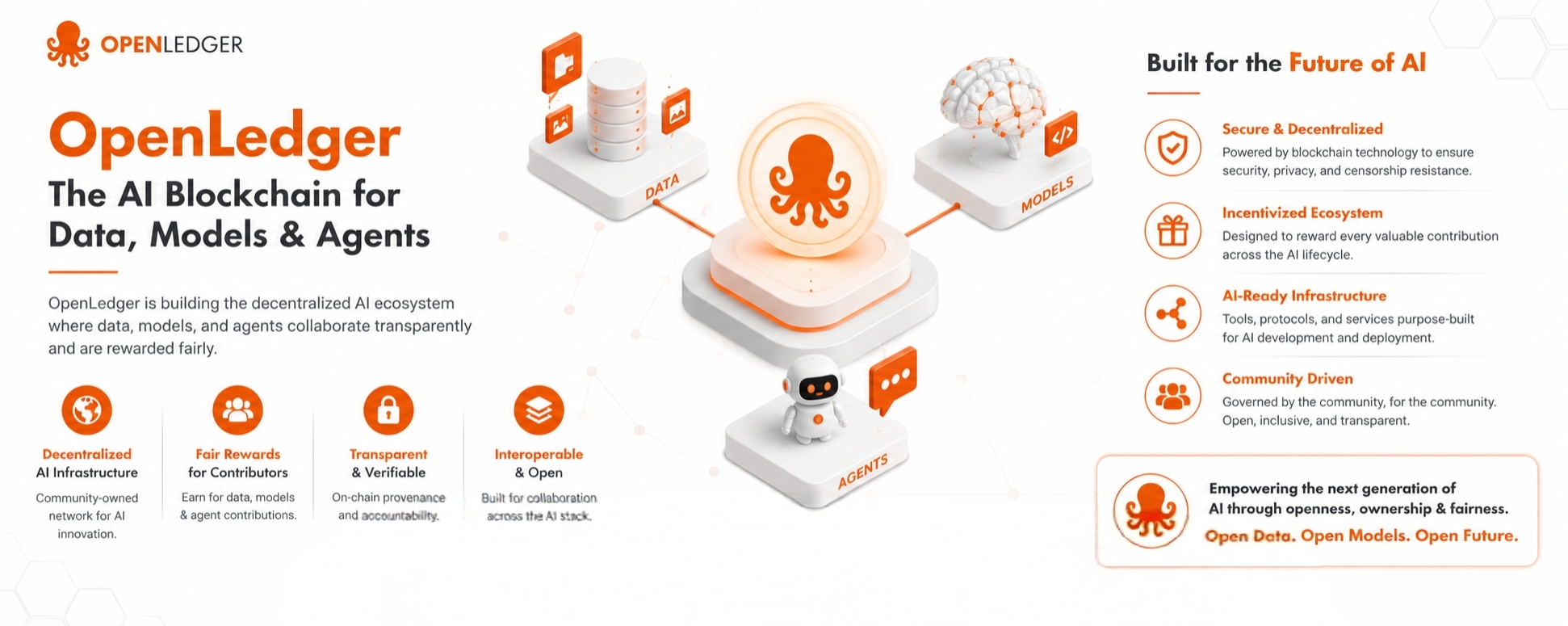
That's why OpenLedger caught my attention. Not because its another " AI" project. That term is meaningless now. Most projects just repackage computing infrastructure with AI branding.
What interests me about OpenLedger is its focus on attribution.
Not just generating intelligence. Tracking where that intelligence comes from.
That sounds like a difference until you think about it.
The current AI economy works like an extraction machine. Data goes in models absorb it outputs come out and the original contributors disappear. Writers, researchers and experts. Their knowledge gets compressed into model weights. Becomes invisible.
The system remembers the information. Forgets the people behind it.
I think that "forgetting" becomes a problem when regulation, lawsuits and enterprise adoption increase. Hidden data pipelines look efficient until someone asks questions about copyright, compliance, liability or synthetic training loops.
At that point opacity stops looking powerful. Starts looking fragile.
It reminds me of financial systems before reporting requirements became stricter. Complexity and opacity created advantages because institutions could move faster than oversight.. Eventually transparency became economically valuable.
I think AI could be heading toward a moment.
That's where OpenLedgers Datanets idea becomes interesting. Of treating data like a one-time resource the system preserves contribution lineage across AI usage. Contributors don't disappear after one interaction. Their role stays economically visible if their data creates value downstream.
I think that changes incentives. Most AI systems reward accumulation: collect more store hide more. Attribution-based systems reward something different. Maintaining verifiable contribution histories.
Those are two cultures.
One is built around possession.
The other is built around trusted participation.
Term trusted participation might scale better than pure data hoarding.
A hospital can't blindly use systems from a black-box intelligence engine trained on unverifiable data. Financial institutions can't either. Eventually someone asks questions:
Where did this output come from?
What datasets shaped it?
Can we audit the decision path?
Who is accountable if something goes wrong?
Once liability enters the picture companies become conservative quickly.
That said, I don't think OpenLedger solves all of this overnight. Attribution systems sound great. Maintaining honest contribution tracking at scale is hard. Incentive systems attract spam, manipulation and farming.
And there's another truth: some companies don't want transparency even if it improves trust. They want control. Those are not always the thing.
That tension matters.
Because what OpenLedger challenges is the assumption that secrecy will always give an advantage. I'm not convinced that stays true once AI becomes integrated into industries where accountability is unavoidable.
Maybe the long-term advantage won't belong to the company hiding the information.
Maybe it belongs to the system that can prove where its intelligence comes from without breaking under complexity.
That feels like a different AI market, than the one people still think they're trading.
