
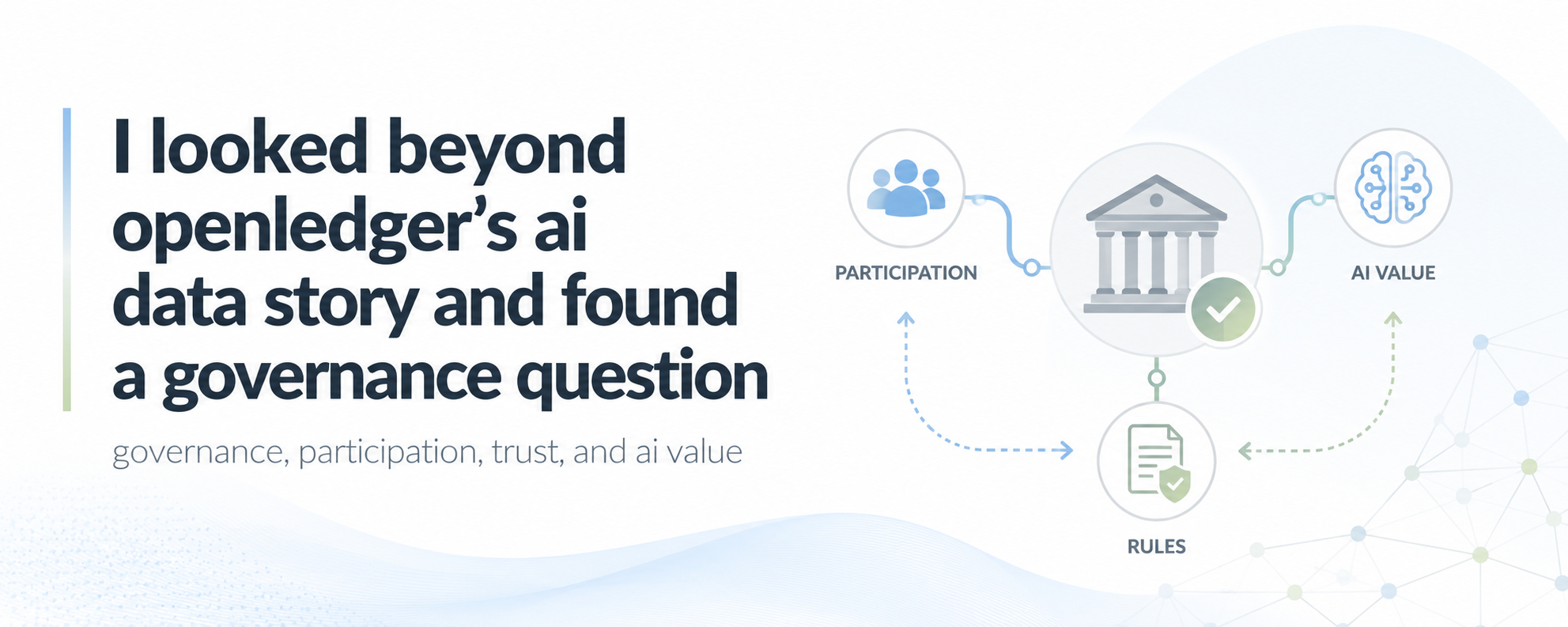
I first looked at @OpenLedger as an ai data story, but the governance part made me pause longer.
Most people talk about openledger through rewards, datanets, models, and attribution. That makes sense. Those are the visible parts. But for me, governance is the quieter layer that decides whether this system can grow with trust.
According to openledger docs, its governance is powered by a hybrid on-chain system using openzeppelin's modular governor framework. In simple words, this means the network is not only built to record activity, but also to let open holders take part in future protocol direction and upgrades.
That detail matters.
If #OpenLedger wants to build an economy around ai data, model training, agents, and contributor rewards, then rules cannot feel hidden. People need to know how changes happen. Who can propose them. Who can vote. How upgrades move from an idea to execution.
I see governance here as a trust bridge between ai builders and crypto users.
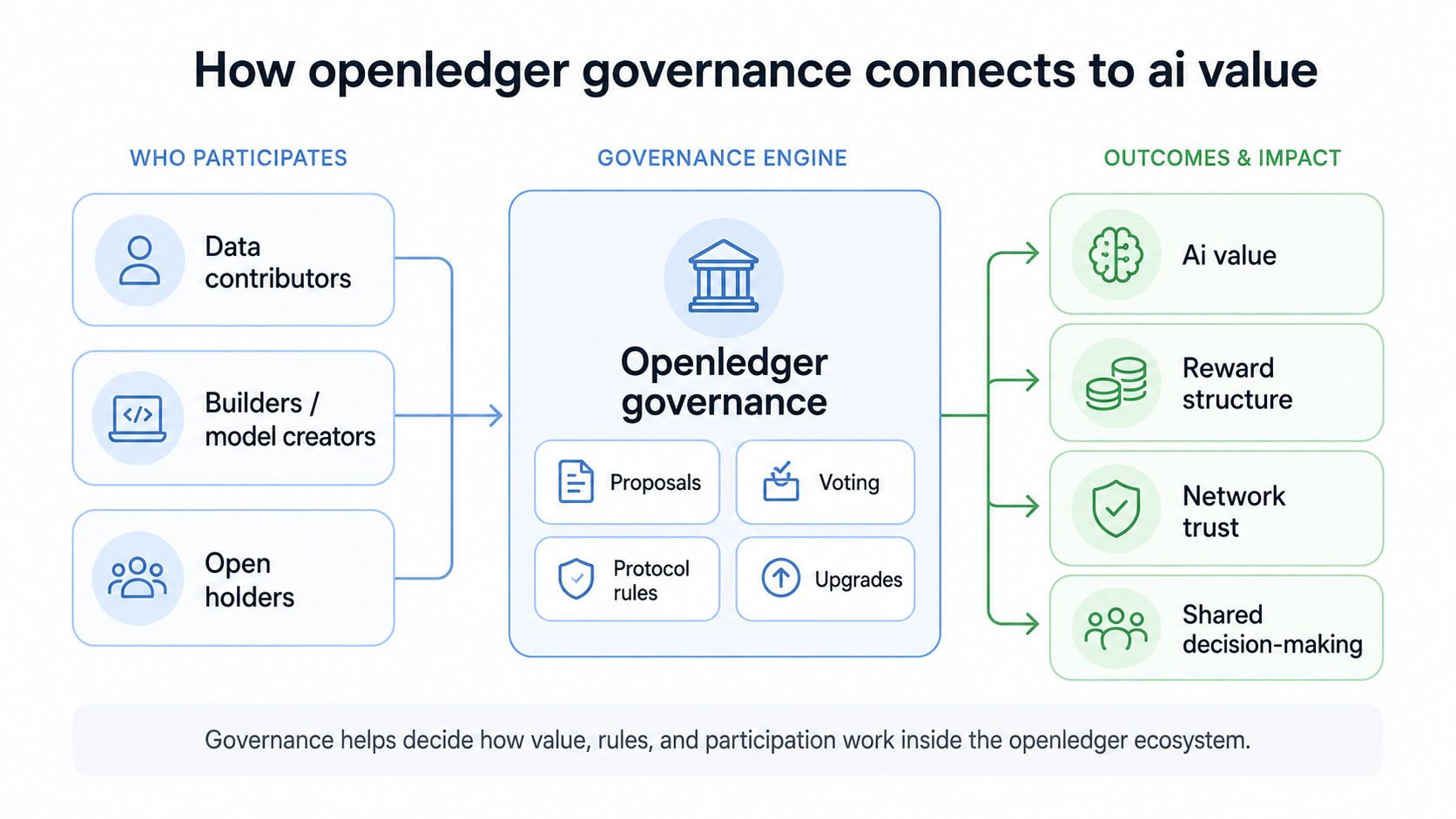
Ai creates value from data, but data comes from people, communities, and real usage. If contributors help improve models, then the network around those models also needs a clear way to update rules over time. That is where governance becomes more than a technical feature. It becomes part of the economic design.
Binance research also describes $OPEN as the native gas token of the openledger blockchain, with roles in rewards, payments, settlement, staking, datanet usage, and governance. So this topic is clearly connected to both crypto and economy.
I do not see this as a simple voting story. I see it as a question of ownership.
If ai infrastructure becomes more open, then the next challenge is not only who builds it. The bigger challenge is who helps guide it when real value starts moving through the system.