LAYER 1: THE REALITY NO ONE WANTS TO ADMIT
━━━━━━━━━━━━━━━ #openledger @OpenLedger
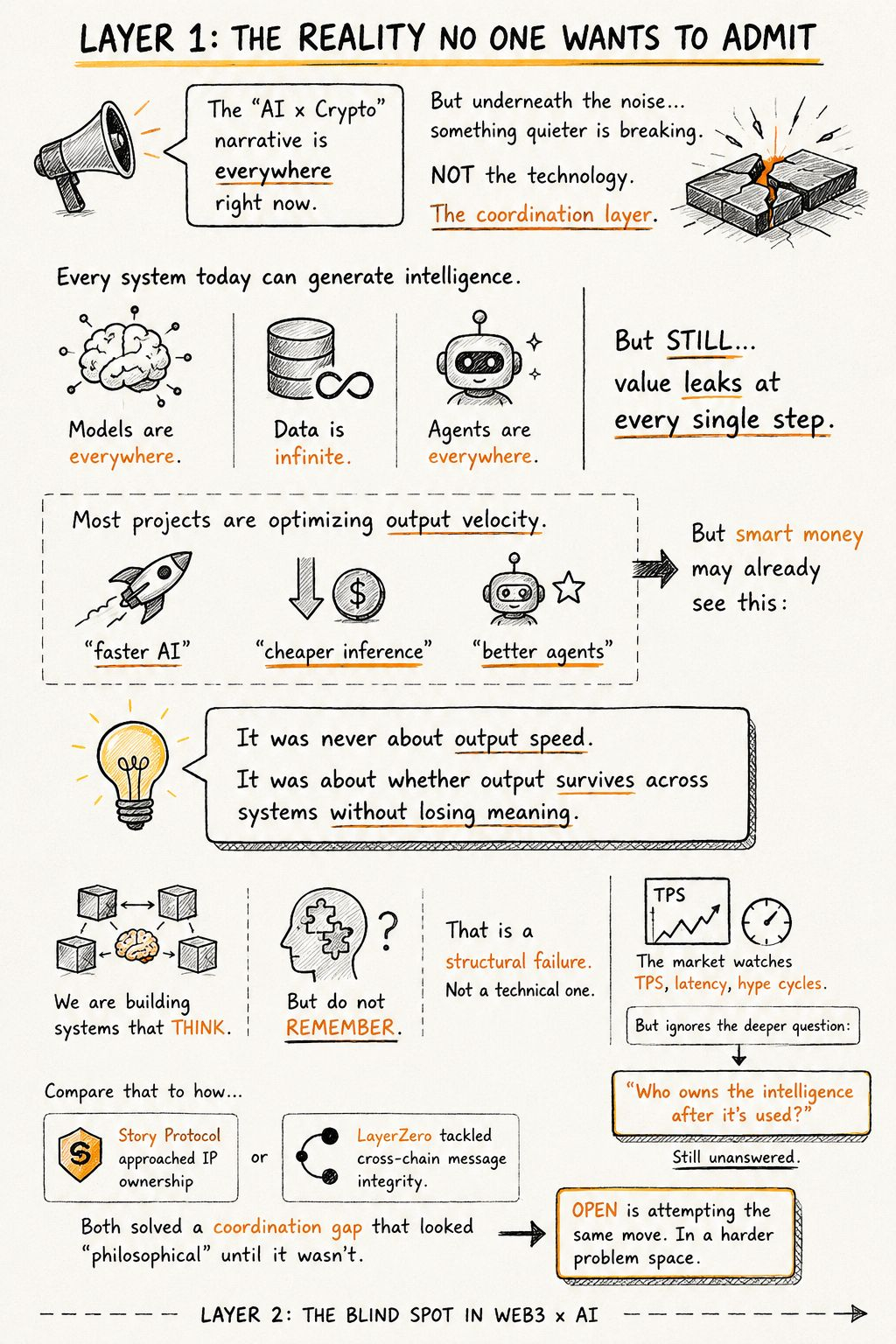
The "AI x Crypto" narrative is everywhere right now.
But underneath the noise… something quieter is breaking.
NOT the technology.
The coordination layer.
Every system today can generate intelligence.
Models are everywhere. Agents are everywhere. Data is infinite.
But STILL… value leaks at every single step.
Most projects are optimizing output velocity.
Not system coherence.
"faster AI"
"cheaper inference"
"better agents"
But smart money may already see this:
It was never about output speed.
It was about whether output survives across systems without losing meaning.
━━━━━━━━━━━━━━━
LAYER 2: THE BLIND SPOT IN WEB3 x AI
━━━━━━━━━━━━━━━
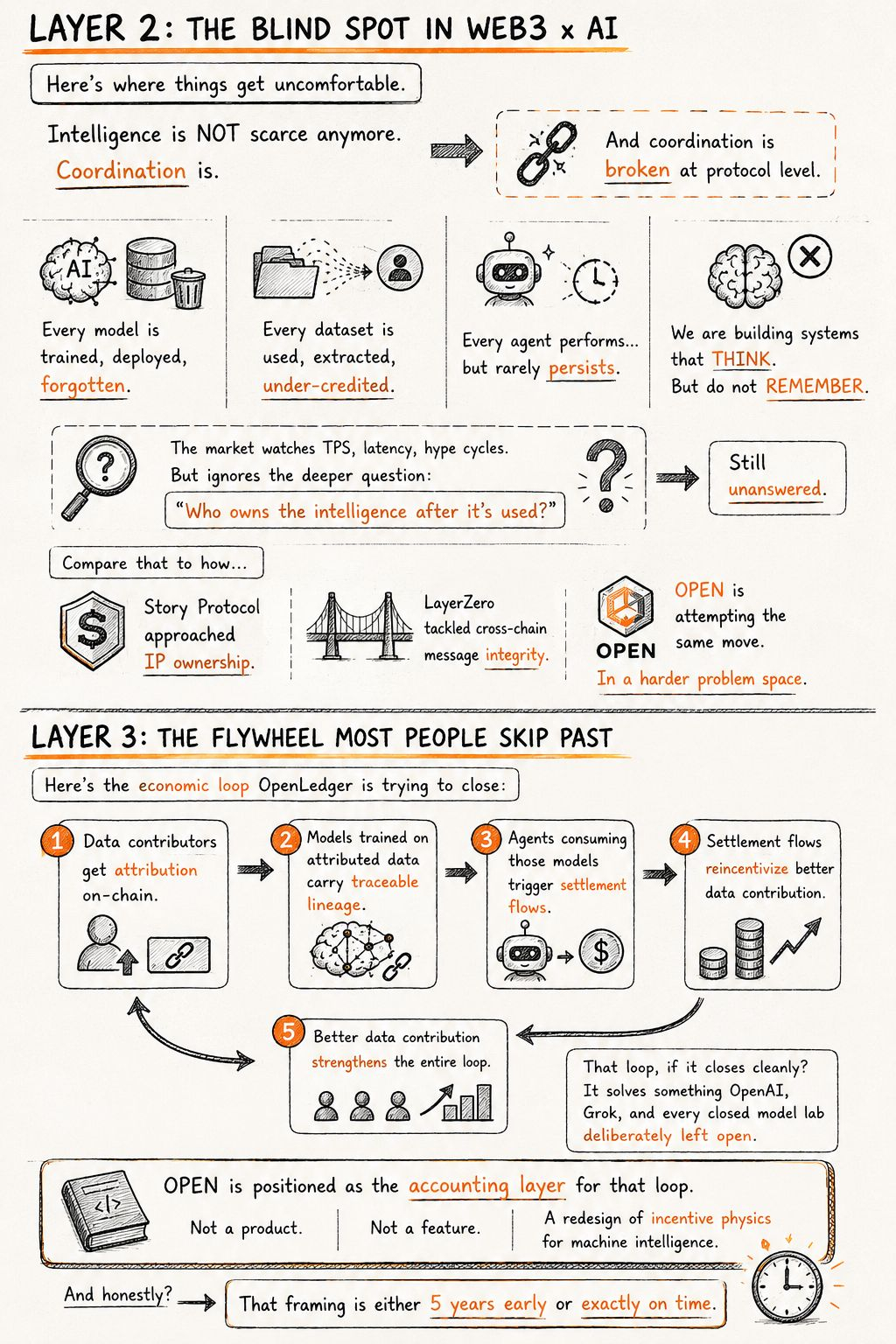
Here's where things get uncomfortable.
Intelligence is NOT scarce anymore.
Coordination is.
And coordination is broken at protocol level.
Every model is trained, deployed, forgotten.
Every dataset is used, extracted, under-credited.
Every agent performs… but rarely persists.
We are building systems that THINK.
But do not REMEMBER.
That is a structural failure. Not a technical one.
The market watches TPS, latency, hype cycles.
But ignores the deeper question:
"Who owns the intelligence after it's used?"
Still unanswered.
Compare that to how Story Protocol approached IP ownership, or how LayerZero tackled cross-chain message integrity.
Both solved a coordination gap that looked "philosophical" until it wasn't.
OPEN is attempting the same move. In a harder problem space.
━━━━━━━━━━━━━━━
LAYER 3: THE FLYWHEEL MOST PEOPLE SKIP PAST
━━━━━━━━━━━━━━━
Here's the economic loop OpenLedger is trying to close:
Data contributors → get attribution on-chain
→ Models trained on attributed data → carry traceable lineage
→ Agents consuming those models → trigger settlement flows
→ Settlement flows → reincentivize better data contribution
That loop, if it closes cleanly?
It solves something OpenAI, Grok, and every closed model lab deliberately left open.
Because closed labs benefit from the leakage.
OPEN is positioned as the accounting layer for that loop.
Not a product.
Not a feature.
A redesign of incentive physics for machine intelligence.
And honestly?
That framing is either 5 years early or exactly on time.
━━━━━━━━━━━━━━━
RISK / WEAKNESS — DEEP THINKING
━━━━━━━━━━━━━━━
Let's be brutally honest.
Data attribution at scale is extraordinarily hard to enforce. The bridge hack graveyard exists because "elegant on paper" architectures meet adversarial reality.
Incentive adoption is NOT guaranteed. Axie proved flywheel economics collapse when extraction outpaces contribution.
Network effects here may concentrate rather than decentralize. Whoever controls the attribution standard controls the layer.
And the hardest truth:
Correct architecture does NOT guarantee adoption.
Markets reward coordination momentum. Not correctness.
LayerZero had the right architecture AND faced years of skepticism before liquidity followed conviction.
OPEN faces the same gauntlet. Harder category. Less patient capital.
Think about that carefully.
━━━━━━━━━━━━━━━
FINAL FRAME
━━━━━━━━━━━━━━━
We are moving toward a world where intelligence is not just produced.
It is traded, tracked, and continuously settled.
If that shift is real…
OpenLedger isn't competing in the AI race.
It's trying to define the accounting layer of machine intelligence itself.
But the question remains open:
Is the world ready for intelligence that remembers its economic history?
Or does the market need one more extraction cycle before it cares?
Do you think $OPEN is:
1 — Over-engineered theory that won't scale
2 — Early infrastructure for the next AI economic layer