
The more I looked into OpenLedger and its native token $OPEN today, the more one thing kept coming back to me — this isn't just another blockchain project. It's an attempt to build a completely new kind of economic layer. But here's the uncomfortable question: who does this system actually create value for, and where exactly does that value stop?
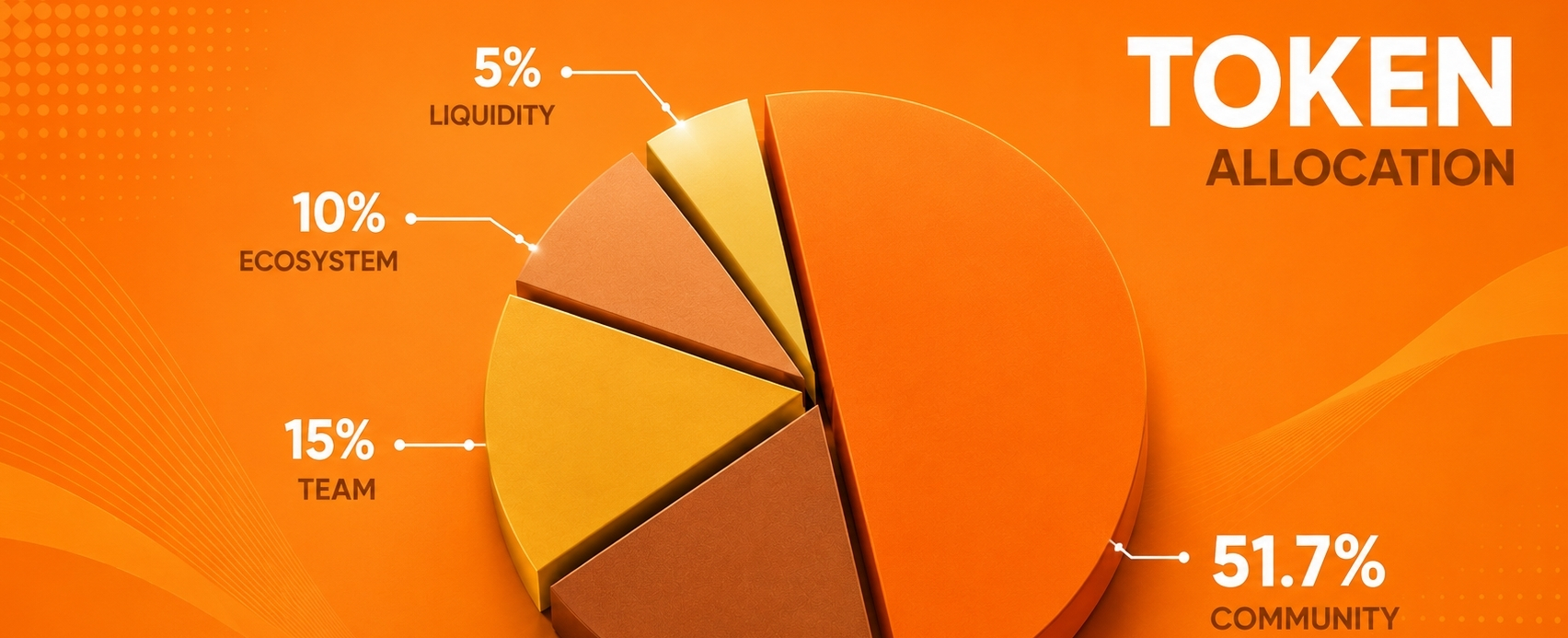
After digging deeper, here's what I understood. OpenLedger calls it "Payable AI" or an "AI Liquidity Layer" — the term sounds polished, but the idea underneath is quite raw. AI is no longer just a model or a tool; it's a production system that consumes data and creates value. The problem until now was, who owns that data and who owns that output? Looking at OPEN's tokenomics, it's clear they're trying to fill this gap. Total supply is 1 billion, with the community getting 51.7%, investors 18.29%, team and advisors 15%, ecosystem incentives 10%, and the remaining 5% allocated for liquidity and airdrop. Keeping such a large portion for the community is a positive signal, but distribution alone doesn't tell the whole story.
The real issue is where the token actually sticks. Use as gas fees, staking in model deployment, and attribution-based rewards — these three things together create an interesting loop. This means the token isn't just for holding; it's actively circulating within the system and also getting locked. Theoretically, this can create supply pressure, but how much will depend entirely on real usage. And that brings us to the real question — can such a system actually scale? AI infrastructure moves very fast. The model that works today could be updated tomorrow. In this environment, keeping attribution correct, tracking data contributions, and giving everyone fair rewards — this is a very clean theory, but execution can get messy.
Looking at OpenLedger's architecture — Datanets, ModelFactory, and OpenLoRA — it's clear they're not just trying to control the marketplace but the full pipeline, from data to model to deployment. But what I think about most isn't technical; it's governance. When data becomes a valuable asset, the biggest conflict will be about ownership. Who decides which data is useful and which contribution is valuable? Algorithms sound like an easy answer, but in reality, it's not that simple. The OPEN token isn't just a currency here — it's a coordination tool. But coordination only works when there's trust, and if trust scales, there's also a risk of collapse.
The most interesting part is that this entire system is less about prediction and more about control of flow — data flow, model flow, value flow — everything gets directed through the system. So in the end, it seems the real experiment of @OpenLedger isn't technology, but whether economics and trust can run together. And at that point, a simple question remains — if data truly creates value, then who is the final owner of that value? The answer to that question will probably decide the future of OPEN.
That said, it's not that the project is completely perfect or flawless, but in an AI sector where most projects don't even bother showing security documents, OpenLedger is showing a willingness to present them to everyone — and that alone is a big positive signal 🚀