Everyone Wants AI... But OpenLedger Is Asking a Different Question
Not gonna lie, the first time i came across OpenLedger (OPEN), i almost scrolled past it.
I've seen so many projects throwing around words like AI, blockchain, decentralized intelligence, agent economy, and honestly after a while it all starts sounding like the same pitch with slightly different branding. So my default reaction these days is skepticism first, excitement later.
But the more i looked into OpenLedger, the more i found myself thinking about a pretty simple question.
If AI is becoming one of the biggest industries in the world, then who actually gets paid?
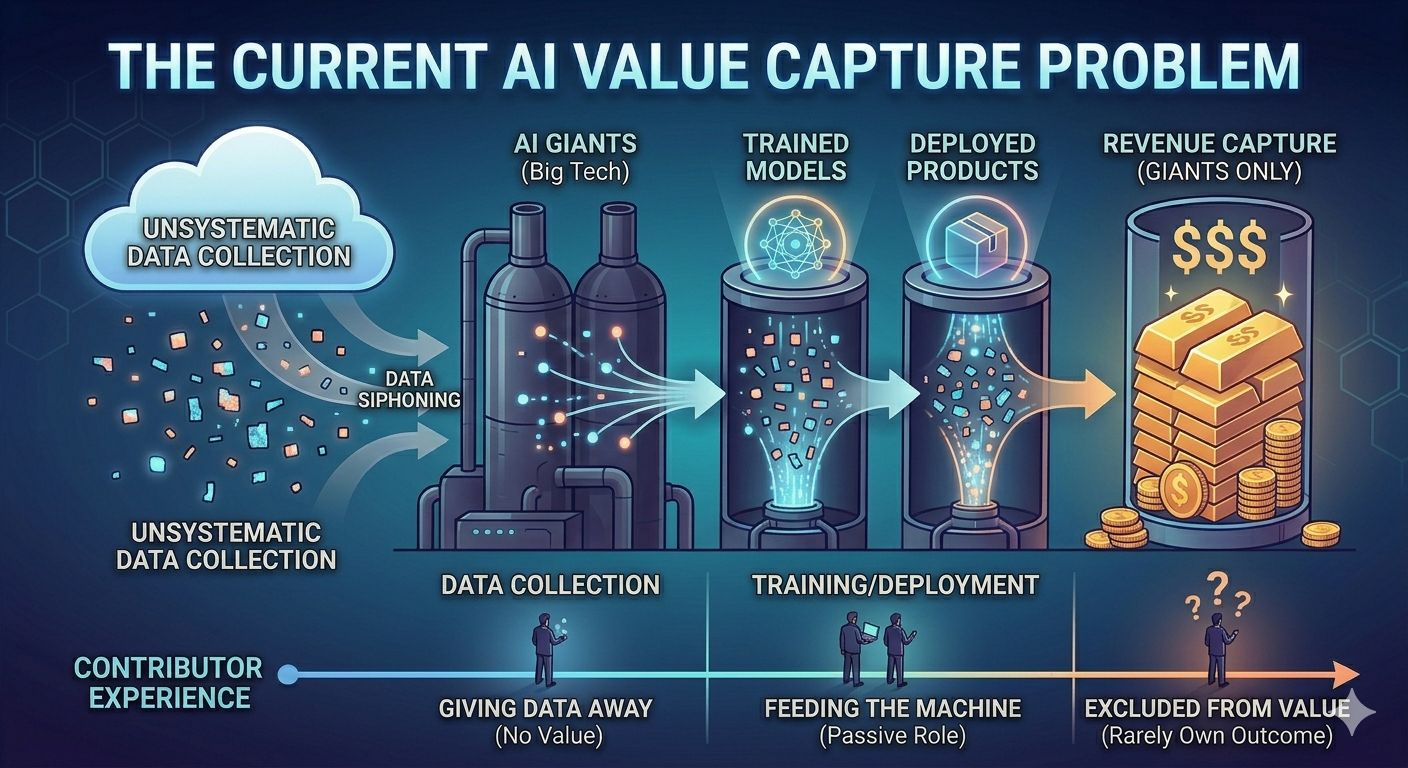
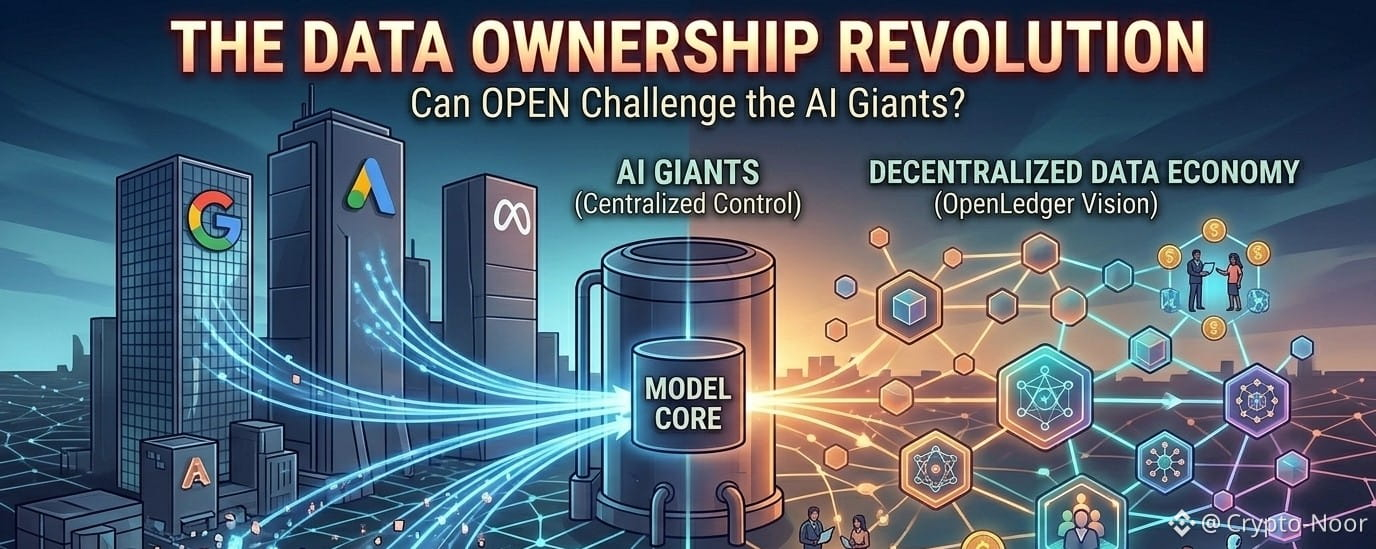
Right now most of the value seems concentrated around a handful of companies. They collect data, train models, deploy products, and capture the revenue. Everyone else contributes pieces of the puzzle but rarely owns much of the outcome.
OpenLedger seems to be trying to flip that idea around.
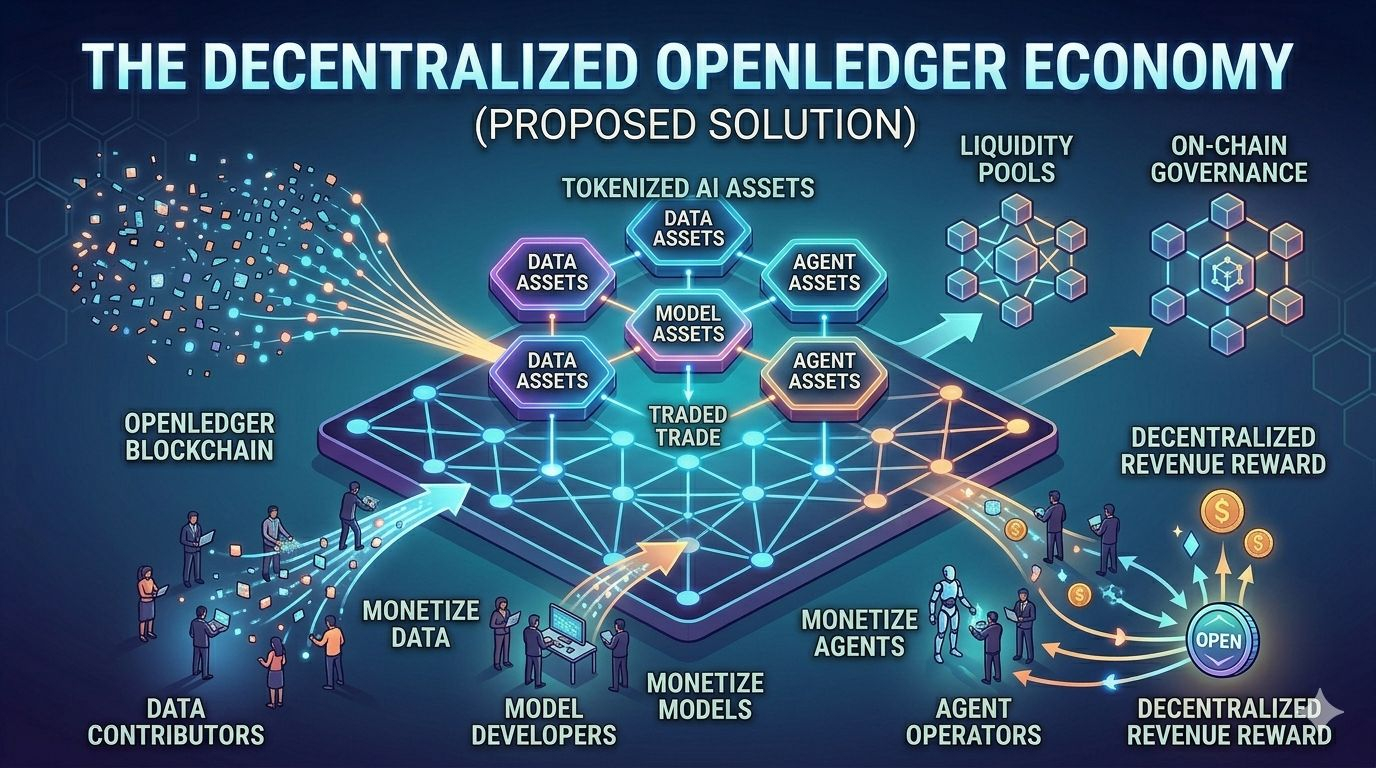
At least from how i understand it, the project is building an AI-focused blockchain where data, models, and even autonomous agents can become assets that generate value. Instead of data being something quietly extracted in the background, it becomes something participants can potentially monetize. Same thing with AI models and agents.
And honestly... that's the part that got my attention.
Because data has always felt weird to me. It's incredibly valuable, yet most people give it away without ever seeing a return. AI models need data. AI agents need data. Entire billion-dollar businesses are built on top of data. So the idea of creating liquidity around those resources doesn't sound crazy at all.
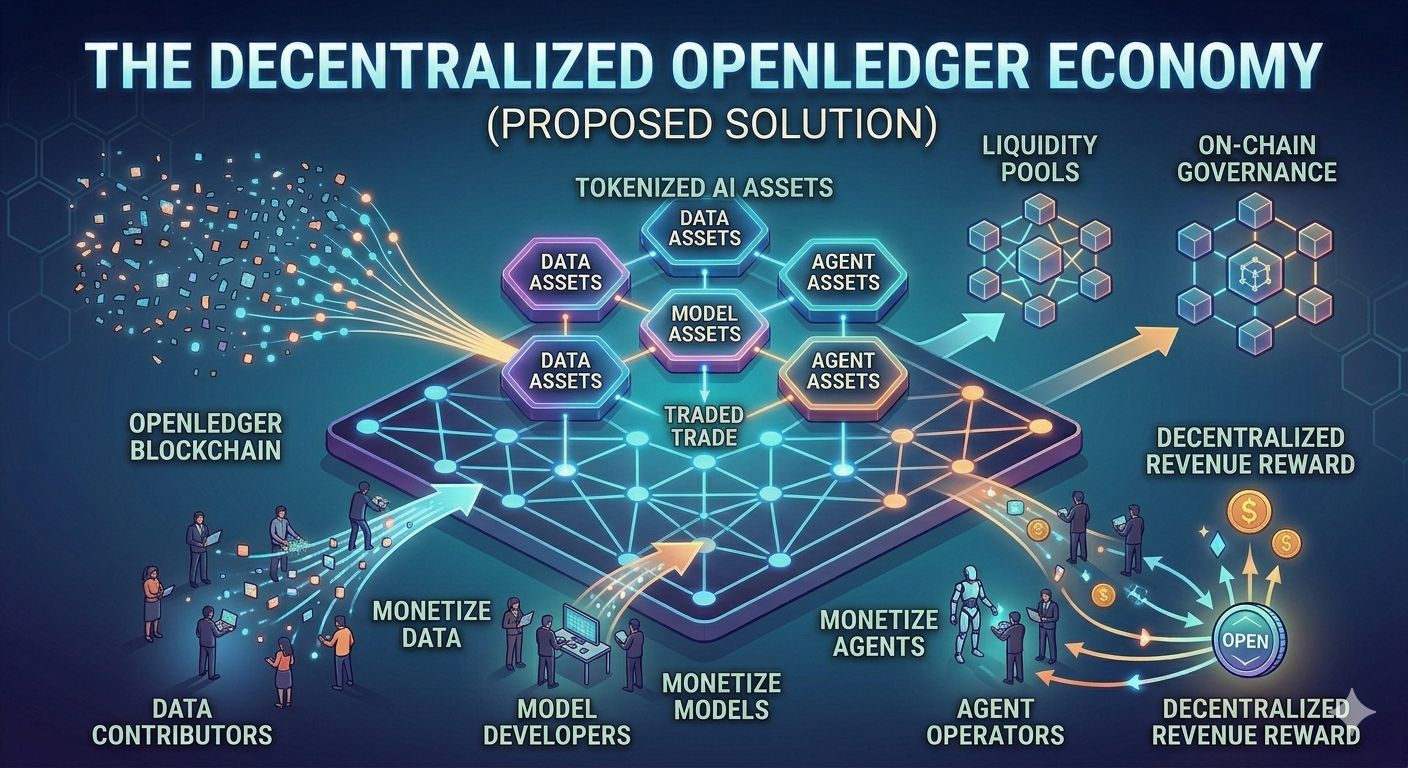
In theory, OpenLedger is trying to create an economy where contributors aren't just feeding the machine. They're actually participating in it.
Now, does that automatically mean it works?
No. Not even close.
This is where my skepticism kicks back in.
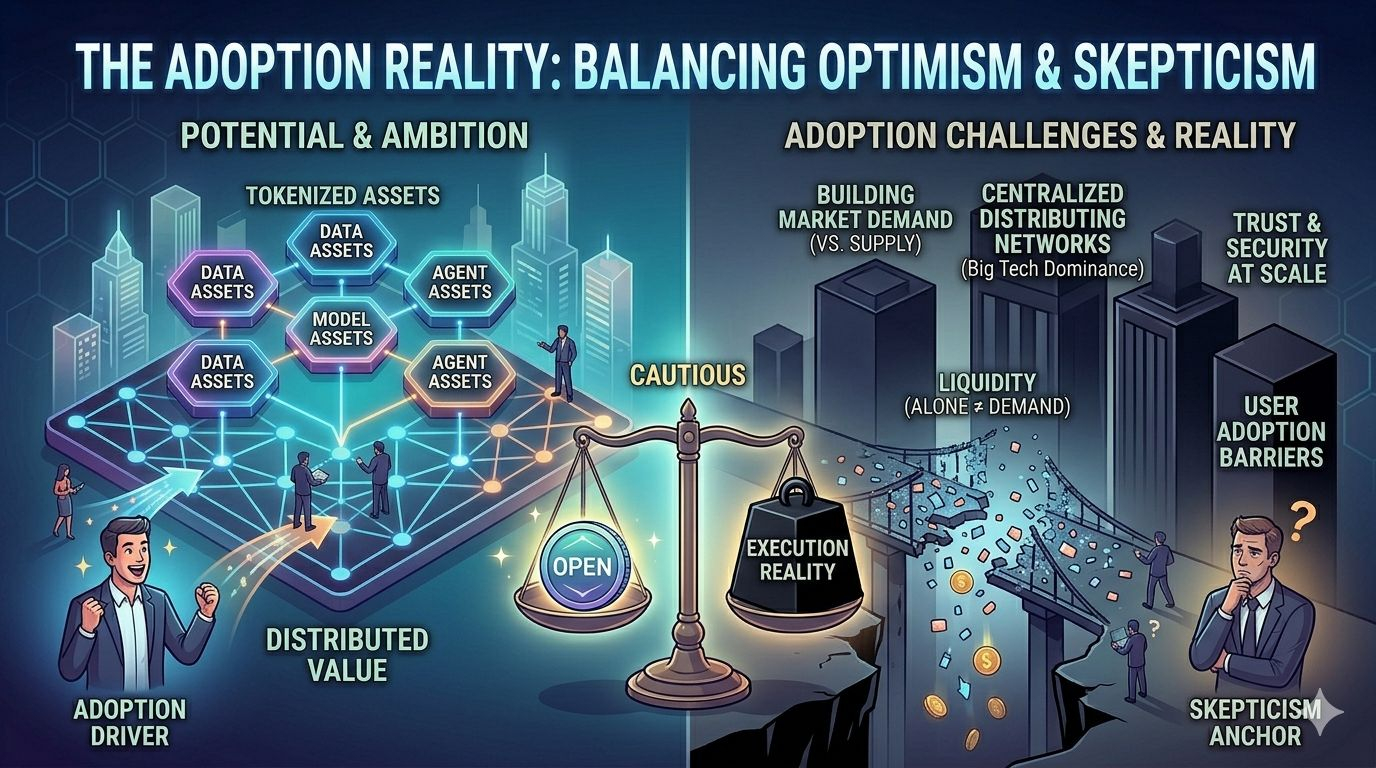
We've been through multiple cycles where blockchain projects promised to tokenize everything. Social networks, storage, computing power, attention, content creation... some ideas survived, many didn't. The reality is that building a marketplace is much easier than creating actual demand.
That's usually where things break.
You can have amazing technology, fancy tokenomics, and ambitious roadmaps, but if people don't actively need the product, liquidity alone doesn't solve the problem.
And with AI moving so fast, there's another challenge. The big players aren't slowing down. They're getting stronger, richer, and more integrated into everyday life. Competing against that isn't just a technology problem. It's a distribution problem, a trust problem, and a user adoption problem.
Still, i can't completely dismiss what OpenLedger is trying to do.
The reason is simple.
Unlike some crypto narratives that feel disconnected from reality, AI is already here. Businesses are spending billions on it. Developers are building on it. Users are interacting with it daily. The demand side exists.
The question becomes whether decentralized infrastructure can capture a meaningful piece of that value.
Maybe it can.
Maybe it can't.
I'm honestly not sure yet.
What i do know is that projects sitting at the intersection of AI and blockchain are probably worth paying attention to, especially when they're focused on real economic problems instead of pure speculation.
OpenLedger feels like one of those experiments that could either become surprisingly important or quietly disappear over the next few years. Both outcomes seem possible right now.
So yeah, i'm curious. Cautiously curious.
Not because i think every AI blockchain will change the world, but because the underlying problem they're trying to solve actually matters.
If you're looking at OPEN, i'd probably treat it the same way i treat any early-stage narrative. Read more than the headlines. Test the ecosystem if possible. Watch for actual adoption instead of social media excitement. And most importantly, move slowly.
Hype is easy to find.
Real value takes a lot longer to prove.