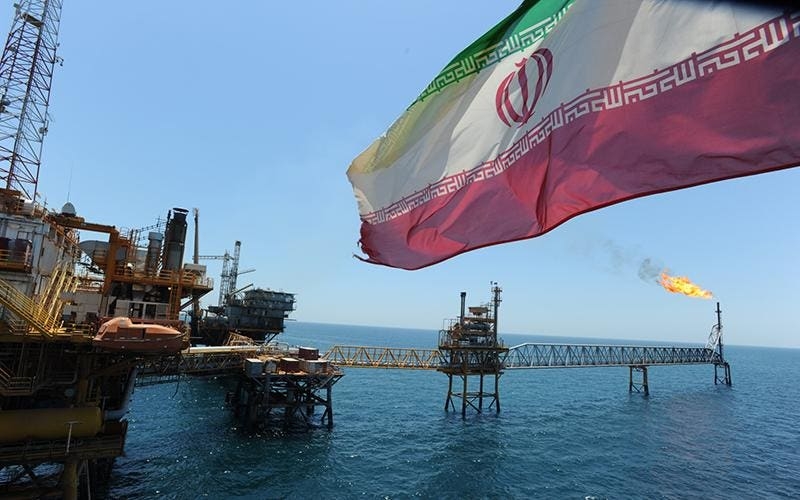
The global energy market is currently navigating a period of intense volatility as geopolitical risks reach a six-month high. As of February 19, 2026, Brent Crude has surged past the $71 per barrel threshold, a direct reflection of the escalating friction between the United States and Iran. With traders now aggressively pricing in the possibility of military action, the market is bracing for a shift that could redefine global supply stability.
The rally gained significant momentum following a 4% jump on Wednesday, followed by a further 1.6% increase during European trade on Thursday morning. International benchmark Brent Crude reached $71.55, while the U.S. benchmark, West Texas Intermediate (WTI), mirrored this upward trend, climbing to $66.37 per barrel. This price action underscores a growing consensus among market participants: the window for a diplomatic resolution is rapidly closing.
A Breakdown in Diplomacy
The primary driver of the current market anxiety is the apparent deadlock in high-level negotiations. While the U.S. Administration has publicly urged Tehran to be “very wise” and move toward a deal, the reality on the ground suggests a transition toward a military footing. Reports from Axios indicate that the U.S. is moving closer to a potential campaign that sources describe as a "massive, weeks-long" operation—a far more extensive scenario than the localized "blitz" seen in previous regional conflicts.
According to sources close to top U.S. national security officials, President Donald Trump has discussed options that include a strike that could be ordered as early as this Saturday. As the U.S. continues to amass military forces near the Persian Gulf, the international community is watching for a decision that could fundamentally alter the global energy landscape over the weekend.
The Chokepoint Risk and Market Tightness
For energy analysts, the most critical concern remains the Strait of Hormuz. As a primary maritime artery for global oil, any disruption in this region would not only halt Iranian supply but could choke off broader Persian Gulf flows. This "chokepoint risk" is compounded by a physical market that is already tighter than many anticipated.
ING strategists have pointed out that the shape of the ICE Brent futures curve suggests a supply-demand balance that is under significant strain. This tightness is further exacerbated by a growing reluctance among buyers to touch sanctioned barrels, effectively shrinking the available global supply at a time when geopolitical stability is at its most fragile.
A Convergence of Global Volatility
The timing of the U.S.-Iran escalation is particularly precarious, coinciding with a breakdown in Russia-Ukraine talks in Geneva. This convergence of conflict across multiple strategic regions has created a "perfect storm" for energy prices. With the physical market showing signs of extreme pressure and military forces in position, the market is no longer merely speculating on risk—it is actively preparing for impact.
As we move toward the weekend, the focus remains squarely on the Persian Gulf. If military intervention transitions from a possibility to a reality, the current $71 price point may serve as a new floor rather than a ceiling for the weeks ahead.
#WhenWillCLARITYActPass #StrategyBTCPurchase #USJobsData #WriteToEarnUpgrade #OilMarket