
reaking.
Just now, the Supreme Court ruled Trump’s tariffs illegal.
So what happens next?
1️⃣ Refunds could be massive
Under this ruling, more than $175 billion in collected tariffs may need to be returned to importers. Estimates from Wharton put it around $175–179 billion.
If that money goes back, the Treasury takes the hit.
2️⃣ But don’t expect quick checks
The international trade court is sitting on over 1,000 pending cases. Sorting this out could take one to two years.
Trump has already said if refunds happen, “it would be a complete mess.”
3️⃣ The White House has Plan B ready
Treasury Secretary Bessent has signaled they could shift the legal basis within 24 hours and keep tariffs in place.
Most likely under Section 301 or Section 122 of the Trade Act.
New label. Same fight.
4️⃣ But the new tools have limits
Section 122 caps tariffs at 15% and only for 150 days.
Section 301 requires country-by-country investigations.
Getting back to 10%–50% across the board? Not that simple.
5️⃣ Markets must reprice this
If replacement tariffs don’t stick, the effective U.S. tariff rate could fall from around 20% to roughly 9%.
Still higher than the ~2% before Trump’s second term.
But compared to today? That’s a major shift.
6️⃣ Households would feel it
The Tax Policy Center estimates repealing these tariffs could save the average household about $1,200 by 2026.
Research from the New York Fed shows roughly 90% of tariff costs are ultimately paid by American consumers.
7️⃣ Don’t ignore the margin fallout
Customs margin and guarantee payments — tens of billions — could also be tied up in the refund process.
Insurance companies’ upcoming earnings reports may get interesting.
Bottom line:
The tariffs may b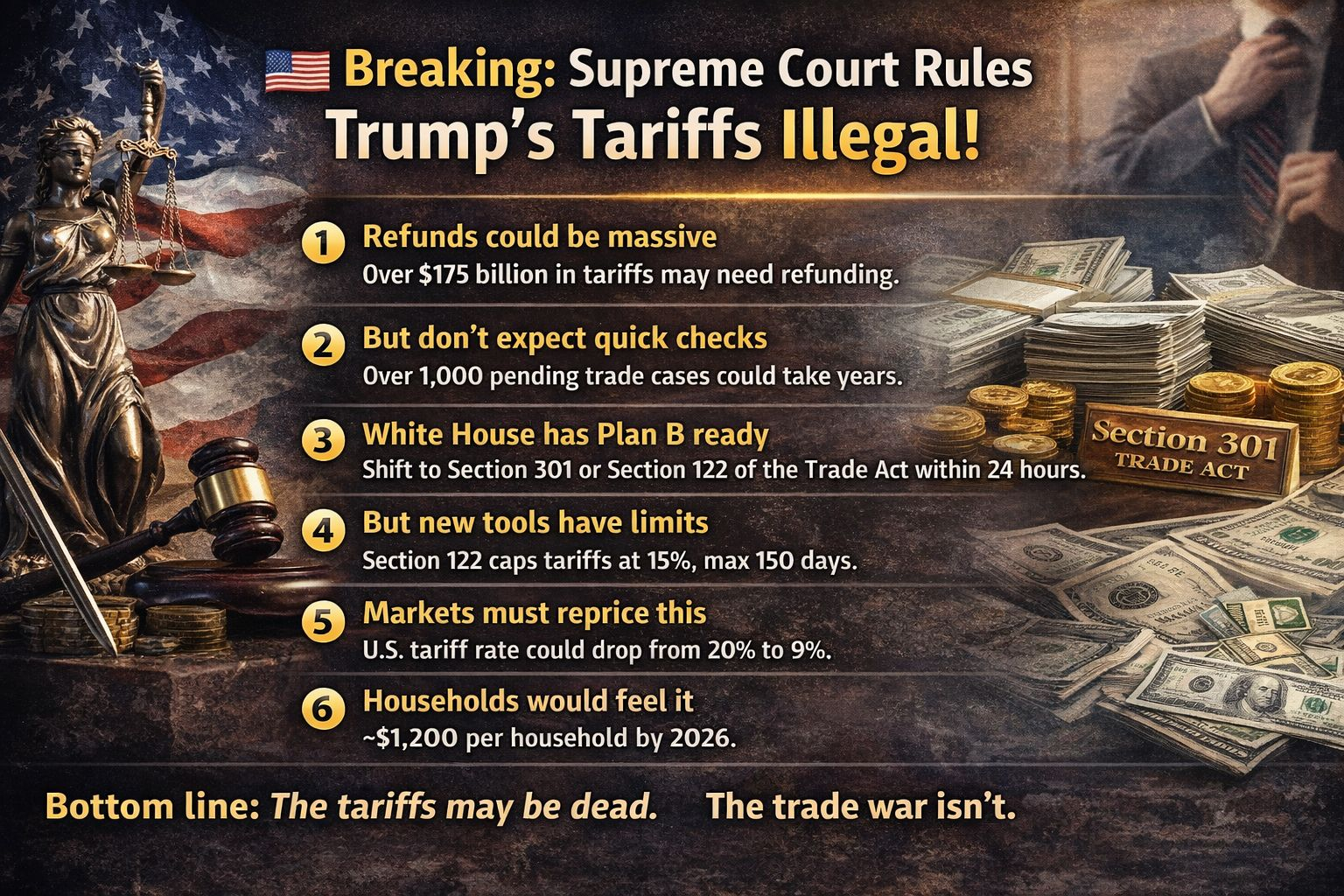 e dead.
The trade war isn’t.