
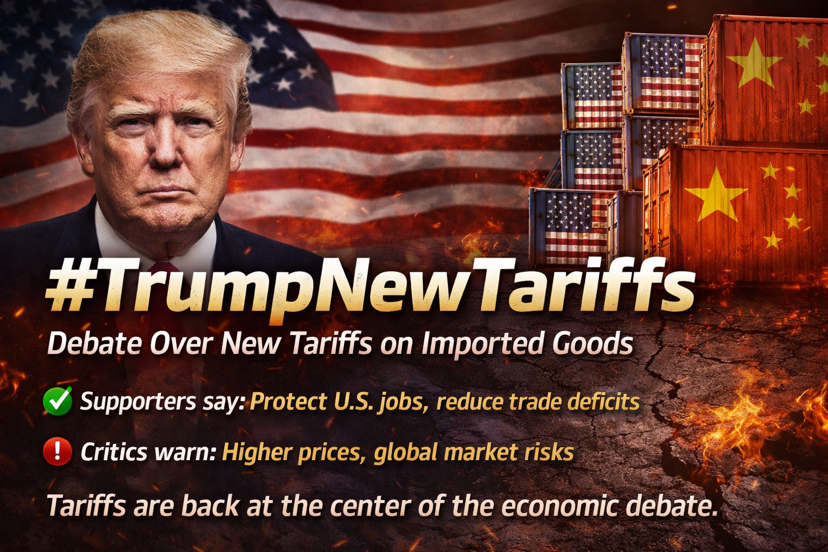
The hashtag #TrumpNewTariffs is trending as fresh discussions emerge around former U.S. President Donald Trump and his proposal to expand tariffs on imported goods if re-elected. The policy direction signals a renewed push toward economic nationalism, aiming to protect American industries, reduce trade deficits, and bring manufacturing jobs back to the United States.
What Are the “New Tariffs”?
Trump has floated the idea of imposing broad, across-the-board tariffs on imports—potentially a universal tariff on all foreign goods, alongside significantly higher duties on imports from strategic competitors like China. Supporters argue that such measures would strengthen domestic production, encourage companies to reshore operations, and reduce reliance on foreign supply chains.
Critics, however, warn that sweeping tariffs function as a tax on imports, which can translate into higher consumer prices. Businesses that depend on global supply chains may face increased costs, potentially affecting inflation and corporate margins.
Market & Global Impact
Global markets tend to react strongly to tariff headlines. Increased trade barriers can:
• Trigger retaliatory measures from trading partners
• Disrupt supply chains
• Influence currency markets
• Affect commodities and manufacturing sectors
Emerging markets and export-driven economies may feel ripple effects, while sectors such as steel, domestic manufacturing, and select industrial players could benefit in the short term.
Political & Economic Implications
The tariff conversation ties into broader debates about globalization, economic sovereignty, and national security. For voters, the issue often centers on jobs and cost of living. For investors, it’s about risk management and sector rotation.
As the 2026 political landscape evolves, #TrumpNewTariffs remains more than just a trending hashtag—it represents a potential shift in U.S. trade policy with global consequences.
Whether viewed as protectionism or strategic leverage, one thing is certain: tariffs are back at the center of economic debate.

