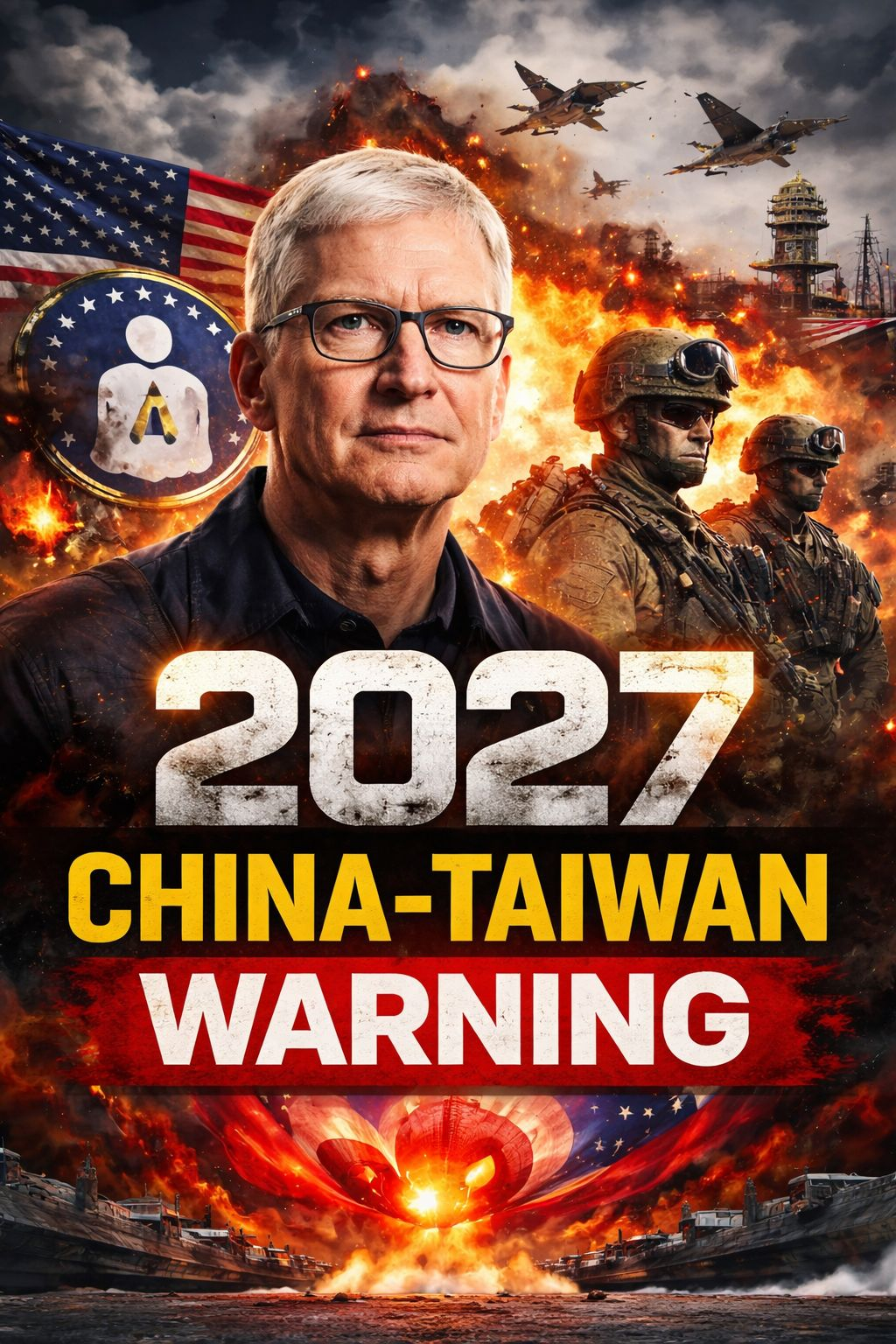
U.S. intelligence agencies privately warned top tech leaders that China could move militarily against Taiwan as early as 2027 — and some inside Silicon Valley took the message very seriously.
In July 2023, senior officials from the Central Intelligence Agency (CIA) and the U.S. Director of National Intelligence convened an exceptionally rare classified briefing for a small circle of elite tech executives — including Apple CEO Tim Cook, Nvidia’s Jensen Huang, AMD’s Lisa Su and Qualcomm’s Cristiano Amon — in a secure facility in Silicon Valley.
The subject of this hush-hush meeting? A stark assessment of China’s military buildup and the growing possibility that Beijing might feel prepared to take decisive action against Taiwan around 2027.
🧠 Why This Matters Beyond Spies
This wasn’t just a political briefing — it was strategic risk warning. It highlighted how deeply intertwined global tech supply chains are with geopolitical tensions. Taiwan, home to the world’s most advanced semiconductor production, especially TSMC’s global role in chip manufacturing, supplies roughly 90 % of cutting-edge chips used in everything from smartphones to AI servers.
That makes Taiwan not just a regional flashpoint, but a global critical infrastructure hub. If China were to blockade or invade Taiwan, the effects would ripple through global economies — from stock markets to smartphone availability — and could potentially trigger one of the most severe supply-chain disruptions in modern history.
😳 A Sleepless Night for Tech Titans
According to reports, Tim Cook admitted he “sleeps with one eye open” after hearing the CIA’s assessment — a revealing, almost cinematic quote that captures how seriously some insiders took the warning.
That reaction underscores a truth few outsiders grasp: even today’s biggest tech giants are vulnerable to geopolitical shocks that have nothing to do with markets, products, or quarterly earnings. Their supply chains remain heavily dependent on one region, and that dependency now has a political and military dimension.
🛠 Changing Strategies — But Slowly
Since the briefing, companies including Apple have announced plans to diversify production and invest more in domestic chip manufacturing, partly to reduce reliance on Taiwan — but progress has been slow and expensive. Building semiconductor facilities outside Taiwan is costly and technologically challenging.
Meanwhile, Taiwan itself continues to invest in defense strategies, including its so-called “silicon shield” — the idea that its indispensable role in the tech supply chain will deter any potential attack. Yet analysts caution that economic importance does not always prevent military conflict, as recent geopolitical events elsewhere have shown.
🌍 Beyond 2027: What’s Next?
Whether the feared scenario — a PLA move against Taiwan — will actually unfold by 2027 remains uncertain. Analysts, governments and industry leaders have all pointed out that intelligence warnings are not predictions, but risk assessments that help shape planning and preparedness.
Still, this secret warning has forced a reckoning: global tech — the engine of modern economies — cannot be separated from global power politics. The era of chips being just a supply-chain issue is over; now they are a strategic frontier in the world’s most consequential geopolitical competition.