
Indian Prime Minister Narendra Modi’s recent visit to Israel has drawn major international attention. What stood out most was the personal welcome he received from Israeli Prime Minister Benjamin Netanyahu, who greeted him at the airport — a rare diplomatic gesture that highlighted the growing trust and strong ties between the two nations.
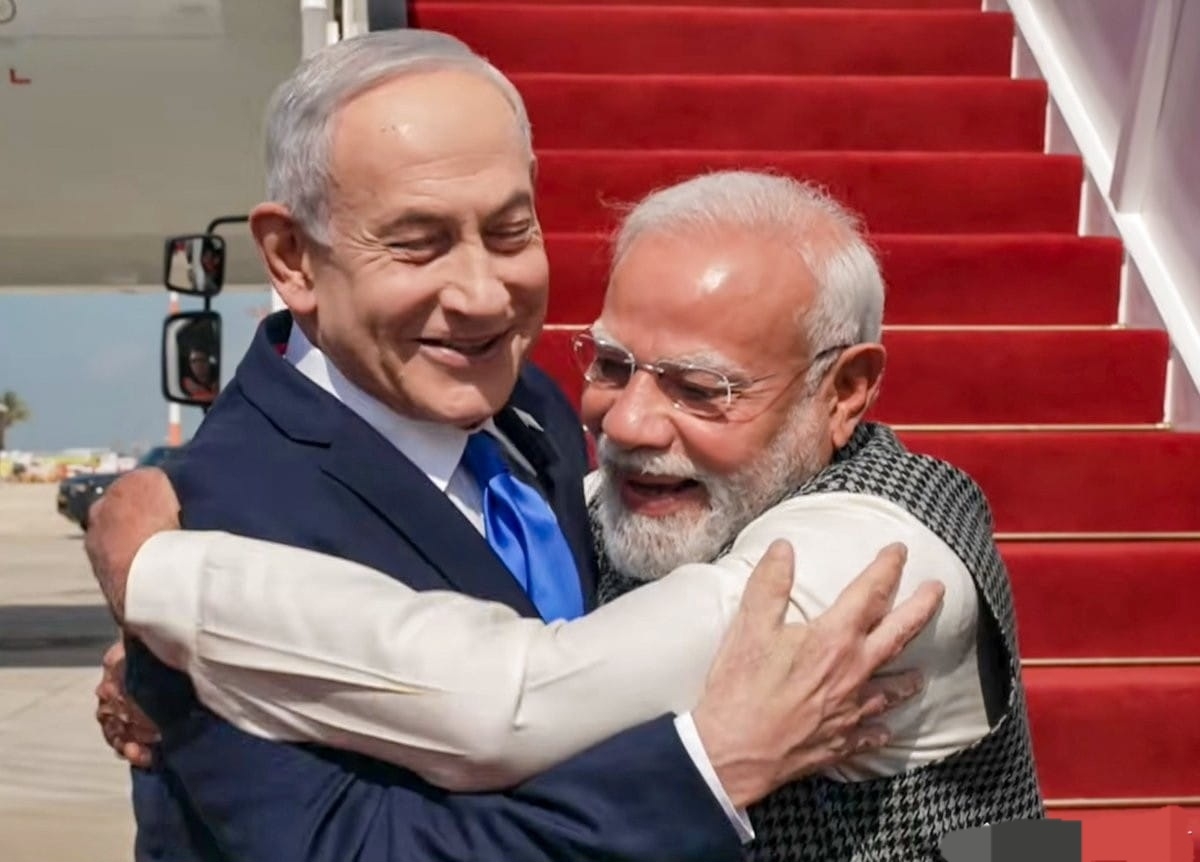
The visit has sparked concern in Pakistan. Voices within Pakistan’s Senate criticized what they described as an emerging regional alignment involving Israel and India, calling it unfavorable for the Muslim world. Major Pakistani media outlets have also presented the strengthening India–Israel partnership as a potential security challenge for Islamabad.
At the core of the debate is a reported geopolitical understanding between India, Israel, Greece, and Cyprus. While not officially formalized, this framework is believed to focus on strategic and security cooperation, particularly in regions like the Eastern Mediterranean where interests overlap.
Pakistan’s biggest concern appears to be defense collaboration, especially speculation about advanced long-range missile systems and military technology potentially being supplied to India. Such developments could impact the strategic balance in South Asia.
At the same time, Turkey may oppose any alignment that strengthens Greece and Cyprus, adding more complexity to the regional equation.
Although this proposed bloc remains largely conceptual, the symbolism of Modi’s high-level reception in Israel reflects a deeper and more structured partnership. The India–Israel relationship is steadily evolving from tactical cooperation into long-term strategic alignment.
#Israel #Netanyahu #Geopolitics #SouthAsia #GlobalPolitics


