

The world's changing. Machines aren't just tools anymore; they're partners. That means we need a way for humans and robots to work together smoothly. Think of it as creating a shared understanding built on trust and clear rules.
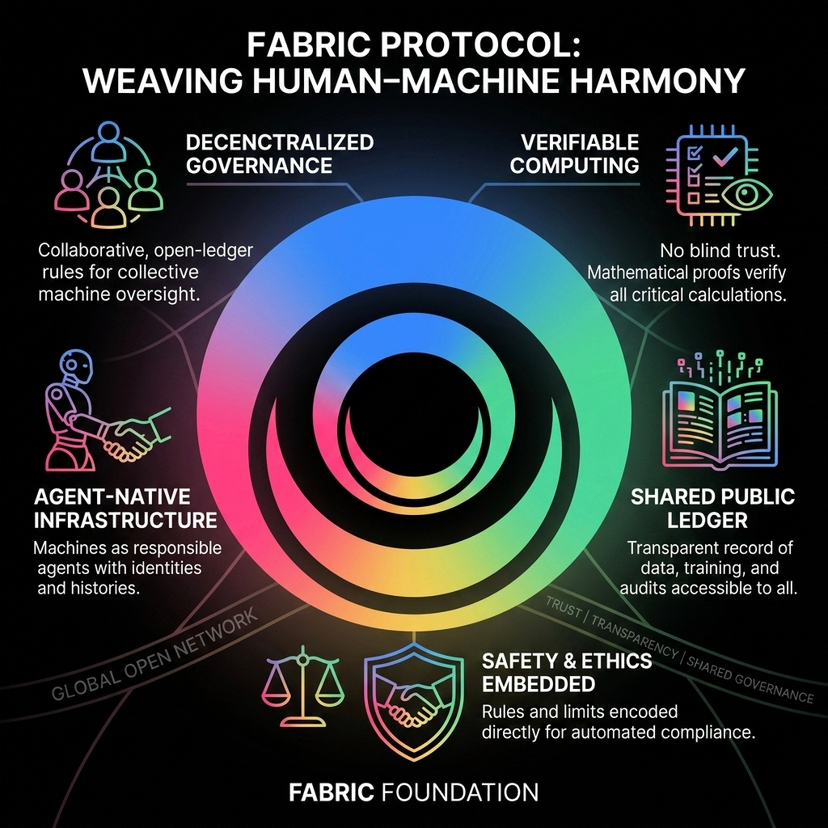
That's where Fabric Protocol comes in. Backed by the Fabric Foundation, it's trying to build an open online system that changes how smart machines are made, managed, and improved. It's not just about tech; it's about making sure AI works with human values.
As robots and AI spread into areas like health care, transportation, farming, and cities, we worry about safety and doing things the right way. Machines are making choices that impact people, but often we can't see how they're making those choices. The old ways of control aren't good enough. Fabric Protocol is a way to fix this by creating a system where trust is built into how machines think.
Basically, Fabric Protocol is like a shared online space where data, math, and rules are handled openly. Every important step, like updates or changes in behavior, can be recorded and checked. This means robots aren't learning in their own little bubble but are part of a team with developers, checkers, and users. By sharing info, robots become part of a bigger, smarter system.
One cool thing about this system is that you can check the math. Usually, we just hope machines are doing what they're told. Fabric Protocol lets anyone check the work to make sure the algorithms are working as they should. This keeps things fair, prevents sneaky changes, and makes robots more reliable and ethical.
Fabric Protocol also sees robots as smart beings with their own identities and responsibilities. Each one follows rules, works with others, and learns together. This helps robots work together, get better, and stay responsible.
Rules are a big deal in this system. Fabric Protocol doesn't let one person decide how machines act. Instead, everyone gets a say in the rules and updates. Developers suggest changes, the community checks them out, and then everyone agrees on what to do. This keeps things fair and prevents one group from taking over.
The online record that runs Fabric Protocol keeps track of everything a machine does and how it's improved. Data, results, safety checks, and rules are all stored openly and safely. This gives robots a memory, so they can learn from what happened before and be held responsible. This shared memory makes humans and machines trust each other more.
Safety and rules are built into the system. Instead of just relying on outside watchdogs, Fabric Protocol makes sure rules are followed automatically. Ethical limits, safety rules, and legal stuff can be programmed into smart systems. This keeps tech moving forward without leaving responsibility behind.
If you're a developer, Fabric Protocol is a great place to try new things. You can add new parts, play with algorithms, and share improvements without starting from scratch. This speeds up progress and makes it easier to work together.
For regular folks and businesses, this system brings more faith in robot tech. Hospitals can check on medical robots, delivery companies can check their systems, and governments can watch over machines used in public. This reduces worries and helps us use automation without giving up control or our values.
Fabric Protocol is more than just tech; it's a change in how we see machines. It says that intelligence should be shared, responsible, and shaped by everyone. Robots aren't just tools owned by companies; they're partners in an open system guided by human values. This encourages working together instead of just depending on machines.
Looking ahead, Fabric Protocol could be the base for how all robots work together. As networks grow, the system could turn into a worldwide intelligence network. Robots could work together across countries during disasters, share environmental info, and learn from medical data. And it would all happen openly and safely.
In short, Fabric Protocol is creating a new kind of intelligence that mixes computers, rules, and ethics into one network. With the support of the Fabric Foundation, it's a plan for responsible innovation in a world of smart machines. By matching tech power with teamwork, it offers a future where humans and robots grow together with trust and shared goals.