
To better understand the answer to this question, imagine this example:
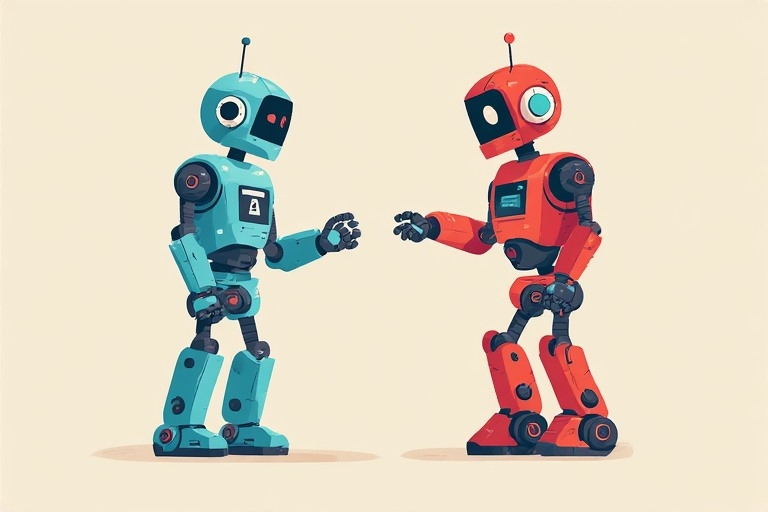
You buy a robot from Company A to cook dinner. Your neighbor buys a robot from Company B to wash dishes. They are in the same kitchen, but they cant talk to each other. They dont trust each other. They might even bump into each other like clueless roommates.
It's a waste of time and resources, right?
Thats the state of robotics today. We have incredible machines, but they operate in silos. They dont share data, they dont coordinate, and they definitely dont collaborate.
If we want a future where robots actually help us—like, really help us—we need to fix the communication layer.
THIS is where the Fabric Protocol enters the mood🧵
@FabricProtocol is a company that isnt building another robot. They are building the operating system for robots.
It makes more sense when you see them as the United Nations for Machines, but secured by math instead of diplomacy.
Backed by the non-profit Fabric Foundation, this project is creating a global open network where general-purpose robots can finally talk to each other.
We are talking about construction robots coordinating with delivery drones. We are talking about factory arms sharing safety data with human workers in real-time.
How Does It Work? (Without difficult words)
At its core, Fabric uses a public ledger—basically a super secure, transparent notebook that everyone can see but no one can cheat.
1. Data Coordination: Robots share what they see and do.
2. Computation Verification: The network checks that the robots' "brains" are working correctly (no rogue AI, please!).
3. Regulation: Rules are enforced automatically through code.
This combination creates something we desperately need: safe human-machine collaboration. It means we can work alongside autonomous machines without wondering, "Is this thing going to malfunction and step on my foot?"
Why $ROBO Matters
The token $ROBO , is the fuel for this economy. It incentivizes good behavior. It pays for computation.
It aligns the interests of robot builders, data providers, and human users.
In the future, we wont just buy a robot; we will subscribe to a network of robots. And that network needs to be decentralized so that no single company controls the machines we rely on.
Shortly said,
We are standing at the edge of a physical revolution. AI gave machines brains. Fabric Protocol is giving them a society.
If you want to understand how we move from "robots as fancy tools" to "robots as collaborative partners," keep your eyes on @Fabric Foundation
The infrastructure for the autonomous world is being laid right now, and its name is $ROBO .
Welcome to the future. Its collaborative. Its decentralized. And its finally here.