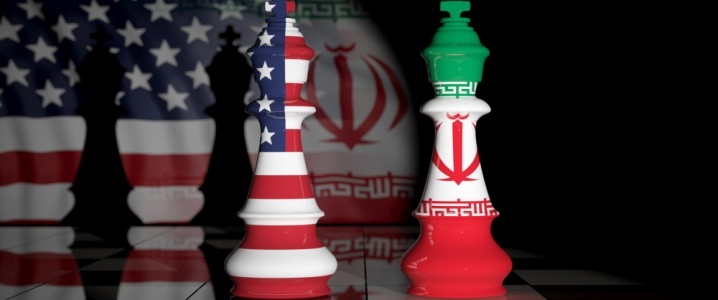
The global energy market is holding its breath. What started as a simmer has turned into a full-blown boil. On Friday, oil prices didn’t just tick upward—they surged by a staggering 3.7%. The catalyst? A high-stakes, nerve-wracking standoff between the United States and Iran that has sent shockwaves through trading floors and forced economists to tear up their old playbooks.
For months, the world hoped for de-escalation. Instead, we are witnessing a geopolitical chess match where every move feels heavier than the last. This isn’t just about numbers on a screen; it’s about the raw, unpredictable friction of international diplomacy. As the tension mounts, so does the "war premium"—the extra cost baked into every barrel of oil to account for the terrifying possibility of conflict.
A Radical Shift in the 2026 Outlook
The atmosphere has changed. Market analysts, who were previously cautious, are now sounding the alarm. According to the latest Reuters poll, 34 top economists and analysts have officially hiked their price forecasts for 2026. This isn't a minor adjustment. It is a collective realization that the "Iran crisis" is the dominant force of our time.
In just one month, the outlook has shifted significantly. Brent Crude is now expected to average roughly $63.85 per barrel for the year—a notable jump from the $62.02 predicted in January. The U.S. benchmark, WTI Crude, isn't trailing far behind. Experts now expect it to cross the $60 threshold, up from previous estimates of $58.72. These figures represent more than just supply and demand; they represent a world on edge.
The Geneva Deadlock and the Vienna Hope
The price spike on Friday was a direct reaction to the friction in Switzerland. Negotiators in Geneva adjourned their latest talks without a breakthrough, sending a clear signal to the markets: peace isn't coming easily. Both Brent and WTI responded instantly, trading 3% higher as the news broke. Brent is currently hovering near $73, while WTI sits firmly at $67.
Despite the gridlock, there is a flicker of hope. Oman’s Foreign Minister, Badr Albusaidi, has been working tirelessly behind the scenes as a mediator. He noted that while the path is rocky, "significant progress" has been made. All eyes now turn to Vienna, Austria, where the next round of high-stakes negotiations is set to take place. The world is watching, and the markets are waiting to see if diplomacy can finally cool the rising heat.
The Invisible Weight: The $10 War Premium
What makes the current situation so volatile is the "geopolitical risk premium." Analysts estimate that between $4 and $10 of the current price of every barrel is tied directly to the fear of war. It is an invisible weight on the global economy. Even though the market is technically oversupplied, the sheer uncertainty of the Iran crisis is overriding the basic fundamentals of supply and demand.
The reality is simple: the direction of oil prices for the remainder of 2026 will not be decided by oil rigs or refineries. It will be decided in the halls of government and the rooms of diplomatic summits. Until the U.S.-Iran standoff finds a resolution, the "war premium" is here to stay, and the world’s energy future remains as volatile as a tinderbox. The stakes have never been higher.
#BlockAILayoffs #JaneStreet10AMDump #USIranTensions #MarketRebound $SUI $WLD $CHZ