
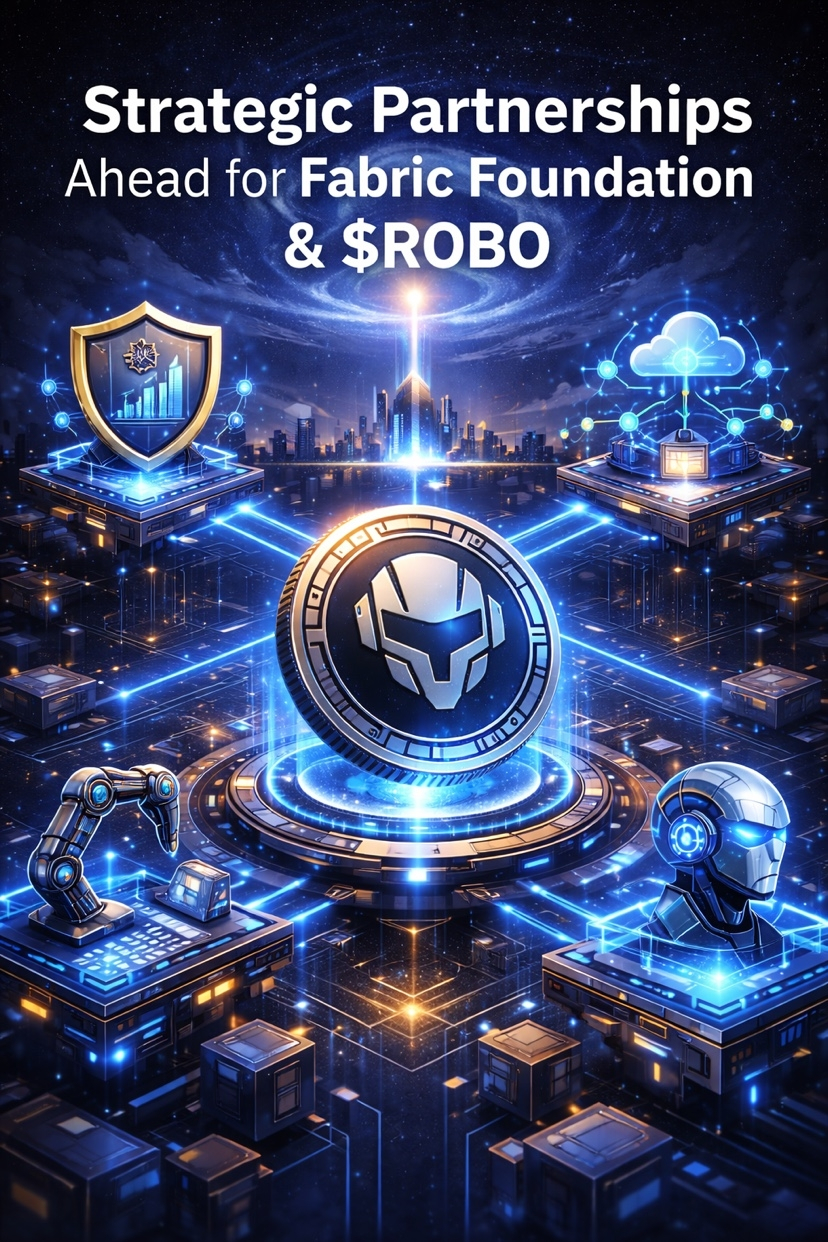

As intelligent automation becomes a core narrative in Web3, the strategic positioning Fabric Foundation opens the door to high-impact partnerships. Given its modular AI-integrated infrastructure, the most logical expansion vector lies at the intersection of DeFi protocols, decentralized compute networks, and enterprise automation providers. In each case, ROBO would function as the economic coordination layer.
A potential collaboration with decentralized compute projects could allow AI agents built within Fabric Foundation to access scalable off-chain processing while settling execution results on-chain. This would deepen ROBO execution utility and increase transactional throughput. Similarly, integration with established DeFi ecosystems could enable automated treasury management, yield routing, or AI-driven liquidity optimization—again anchoring ROBO within high-frequency economic activity.
Enterprise-facing partnerships are another compelling vector. If Fabric Foundation positions itself as middleware for automation-heavy industries, ROBO could serve as the programmable settlement token for cross-platform workflows, compliance-triggered smart contracts, or AI-verified data feeds.
While no formal announcements may exist yet, the architecture of undefined oundation naturally supports cross-protocol composability. The more interoperable the network becomes, the stronger the structural role of ROBO as staking collateral, governance weight, and execution fuel.
In a market increasingly focused on real utility and scalable coordination, strategic partnerships could accelerate adoption—and reinforce ROBO as a core asset within decentralized intelligent infrastructure. #ROBO