
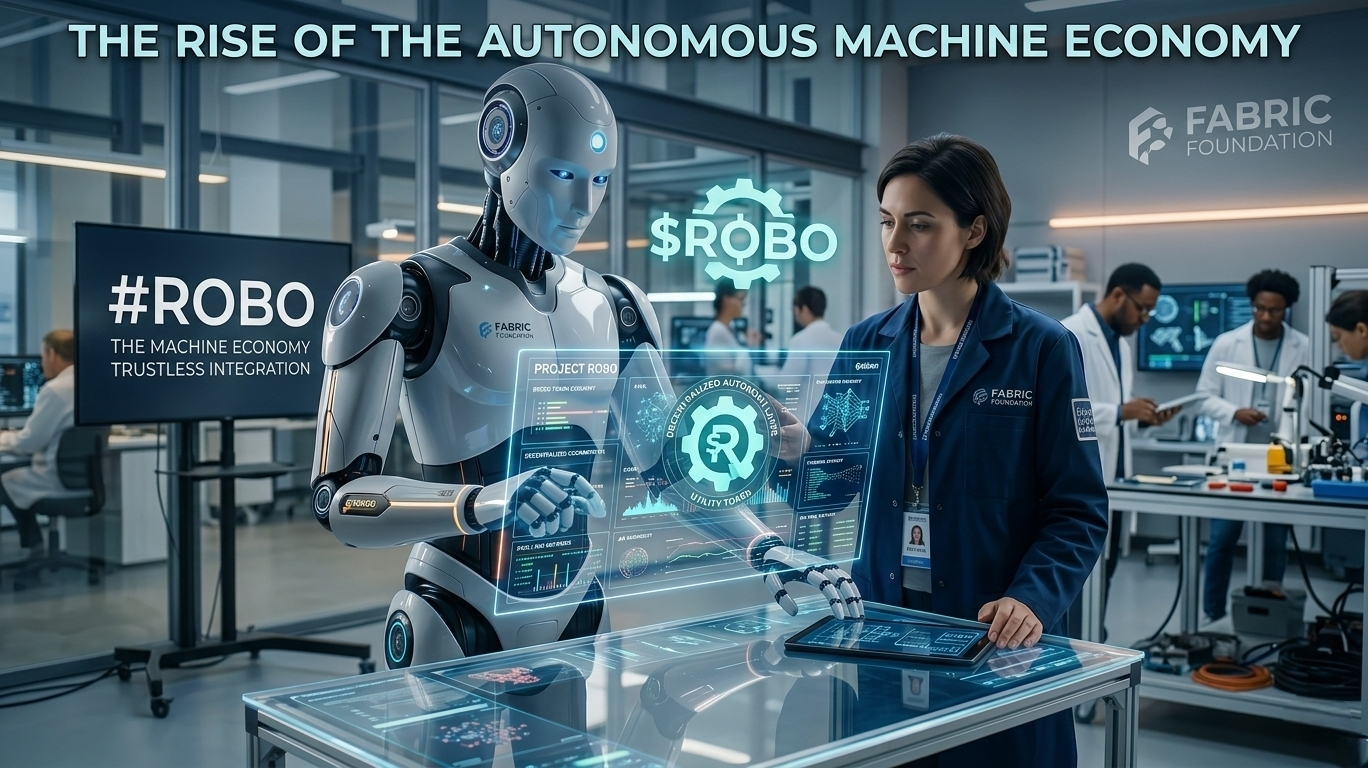
Gdy stoimy na krawędzi nowej ery przemysłowej, integracja sztucznej inteligencji i robotyki przestaje być tylko futurystycznym konceptem — staje się naszą codzienną rzeczywistością. Jednak aby roboty mogły naprawdę zintegrować się z naszym społeczeństwem, potrzebują więcej niż tylko zaawansowanych sensorów; potrzebują zdecentralizowanej infrastruktury, aby działać autonomicznie. W tym miejscu @Fabric Foundation wkracza do gry, budując niezbędne fundamenty dla tego, co wielu nazywa "Gospodarką Maszyn."
Dlaczego decentralizacja ma znaczenie dla robotyki
W scentralizowanym świecie jeden punkt awarii może zablokować całą flotę autonomicznych asystentów lub dronów dostawczych. Wykorzystując technologię blockchain, @Fabric Foundation zapewnia, że te maszyny mają weryfikowalne tożsamości (DID) i mogą komunikować się przez bezpieczną sieć peer-to-peer. Ta warstwa zaufania pozwala robotom na negocjowanie, transakcje i współpracę bez pośrednika, zapewniając efektywność i prywatność danych.
Rola $ROBO
W sercu tej rewolucji znajduje się $ROBO token. To nie jest tylko spekulacyjny aktyw; to jest życiodajna siła ekosystemu Fabric. Jego użyteczność obejmuje kilka kluczowych funkcji:
* Opłaty sieciowe: Napędzanie transakcji między maszynami a ludzkimi użytkownikami.
* Zarządzanie: Pozwalanie społeczności i interesariuszom na kształtowanie przyszłości protokołu.
* Zachęty: Nagradzanie tych, którzy przyczyniają się do danych lub mocy obliczeniowej w sieci.
Trzymając $ROBO, uczestnicy w zasadzie zabezpieczają udział w infrastrukturze, która będzie zarządzać autonomiczną siłą roboczą przyszłości. W miarę jak @Fabric Foundation nadal współpracuje z producentami sprzętu i deweloperami AI, synergia między $ROBO a fizyczną robotyką będzie tylko silniejsza.
Przejście do świata, w którym maszyny są aktorami gospodarczymi, to ogromne przedsięwzięcie. Jednak z dedykowaną fundacją i solidnym tokenem użyteczności, takim jak $ROBO , droga do zdecentralizowanej, bezpiecznej i efektywnej gospodarki maszynowej jest jaśniejsza niż kiedykolwiek. Obserwuj tę przestrzeń, ponieważ skrzyżowanie Web3 i Robotyki dopiero się zaczyna.