
Artificial intelligence is no longer experimental. Autonomous agents can analyze markets, execute strategies, interact with APIs, and even control physical systems. But as machines begin operating inside real economic environments, one critical question emerges:
Who governs the machines?
This is not just a technical challenge. It is an economic one.
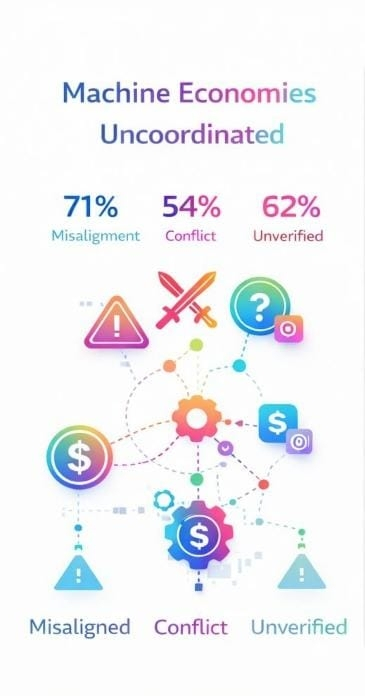
The Risk of Uncoordinated Machine Economies
When AI agents transact value and make autonomous decisions, structural risks surface:
Misaligned incentives
Unverified execution
Conflicting objectives
Lack of accountability
Centralized override vulnerabilities
Speed without governance creates instability.
Efficiency without alignment creates systemic risk.
This is the coordination gap emerging in machine economies.
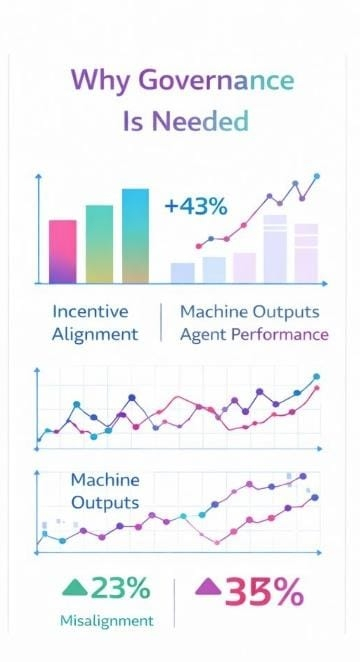
Infrastructure Alone Isn’t Enough
Most blockchain discussions focus on throughput, latency, and scaling. But when participants are intelligent agents, performance metrics alone don’t guarantee stability.
Autonomous systems require:
Economic validation mechanisms
Incentive alignment
Transparent governance
Clear signaling frameworks
Predictable settlement structures
Without incentive design, agents operate independently not coherently.
The Role of Fabric Foundation
Fabric Foundation is positioning itself at the intersection of AI and economic governance. Rather than prioritizing raw speed, it focuses on structured coordination ensuring that machine-driven systems operate within defined, transparent frameworks.
Economic governance doesn’t mean centralized control. It means designing systems where actions are validated, incentives are aligned, and participation is economically enforced.
How $ROBO Enables Alignment
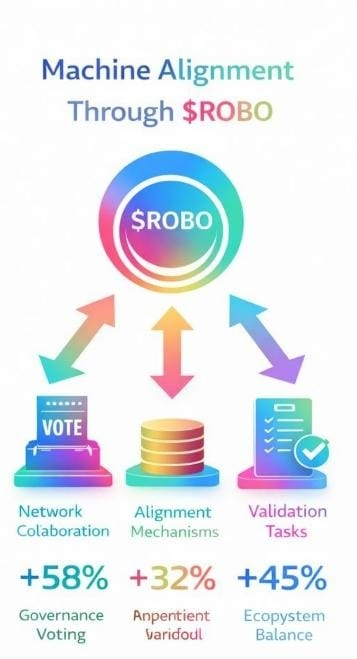
Within this ecosystem, ROBO functions as the coordination layer. Its structural role may include:
Governance participation
Validation incentives
Network signaling
Stakeholder alignment
Instead of being an afterthought, $ROBO becomes the economic glue connecting agents, developers, and participants.
The Bigger Picture
As AI evolves from tool to autonomous actor, infrastructure must evolve with it. The machine economy won’t be built on throughput alone.
It will be built on coordination.