
When I look at $ROBO, I don’t approach it as a robotics narrative token. I approach it as an infrastructure thesis.
The conversation around AI and robotics usually centers on capability — smarter models, better hardware, faster actuation. But capability alone does not allow machines to function inside economic systems. Markets require identity, payment rails, coordination logic, and enforceable incentives.
That is the layer I see ROBO targeting.
Through the infrastructure direction of Fabric, the focus is not on building another robot. It’s on enabling robots and intelligent agents to participate in decentralized economic environments in a structured way. And that distinction matters.
Autonomous systems, if they are to transact, negotiate, provide services, or execute tasks across networks, cannot remain anonymous black boxes. They need verifiable identity frameworks. They need programmable payment channels. They need governance alignment. Without those components, autonomy stays isolated.
ROBO sits at that intersection — where machine capability meets economic participation.
What makes this structurally interesting to me is the coordination model. A robot interacting in a decentralized marketplace cannot rely on trust assumptions designed for humans. It needs cryptographic identity. It needs deterministic settlement. It needs rule-based governance. The infrastructure layer becomes the enabler.
If a delivery robot completes a task, how is compensation automated?
If an autonomous drone provides data, how is value transferred?
If a machine misbehaves, how is accountability enforced?
These are not speculative questions. They are system design questions. And ROBO is positioned within a framework attempting to answer them.
I also pay attention to incentive architecture. Any machine economy requires aligned incentives between developers, operators, and network participants. Tokens, when designed correctly, function as coordination instruments. They bond behavior to economic consequence.
That is where $ROBO’s importance lies — not in hype, but in alignment.
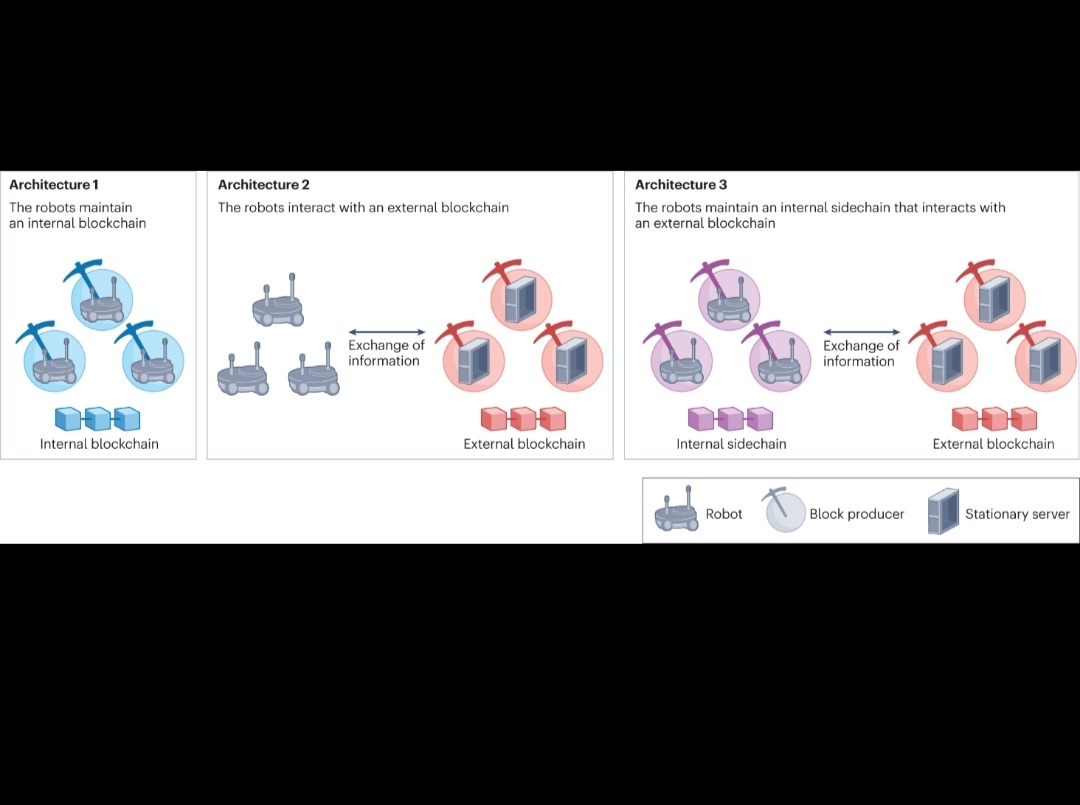
Rather than competing at the hardware layer or the AI model layer, the infrastructure thesis focuses on economic rails: enabling machine-to-machine payments, staking-backed accountability, and governance participation. If machines are to become semi-autonomous economic actors, they need programmable economic rights and obligations.
Most discussions about robotics avoid this layer entirely. They assume machines will plug into existing financial systems seamlessly. I don’t share that assumption. Legacy systems are not built for autonomous agents negotiating at machine speed.
Blockchain-based coordination frameworks are.
From my perspective, ROBO represents an early positioning in what could become a much larger shift — machines not just executing instructions, but interacting economically with other machines and humans in decentralized environments.
That future does not require louder narratives. It requires infrastructure that works under adversarial conditions.
Identity must be tamper-resistant.
Payments must be programmable.
Governance must be enforceable.
Incentives must be aligned.
Without those four pillars, autonomous economies remain theoretical.
With them, machine participation becomes structurally viable.
That is why I evaluate ROBO through an infrastructure lens rather than a speculative one. It is not about whether robotics grows — that trajectory is already visible. It is about whether robotics can integrate into open economic systems without centralized intermediaries.
If autonomous agents are going to transact, coordinate, and generate value independently, they will need an economic substrate that recognizes them as actors.
ROBO is positioning itself within that substrate.
Not as a headline-grabbing robotics token.
Not as a short-term volatility vehicle.
But as part of the coordination architecture required for machine-native economies.
And infrastructure, historically, is where durable systems are built.