
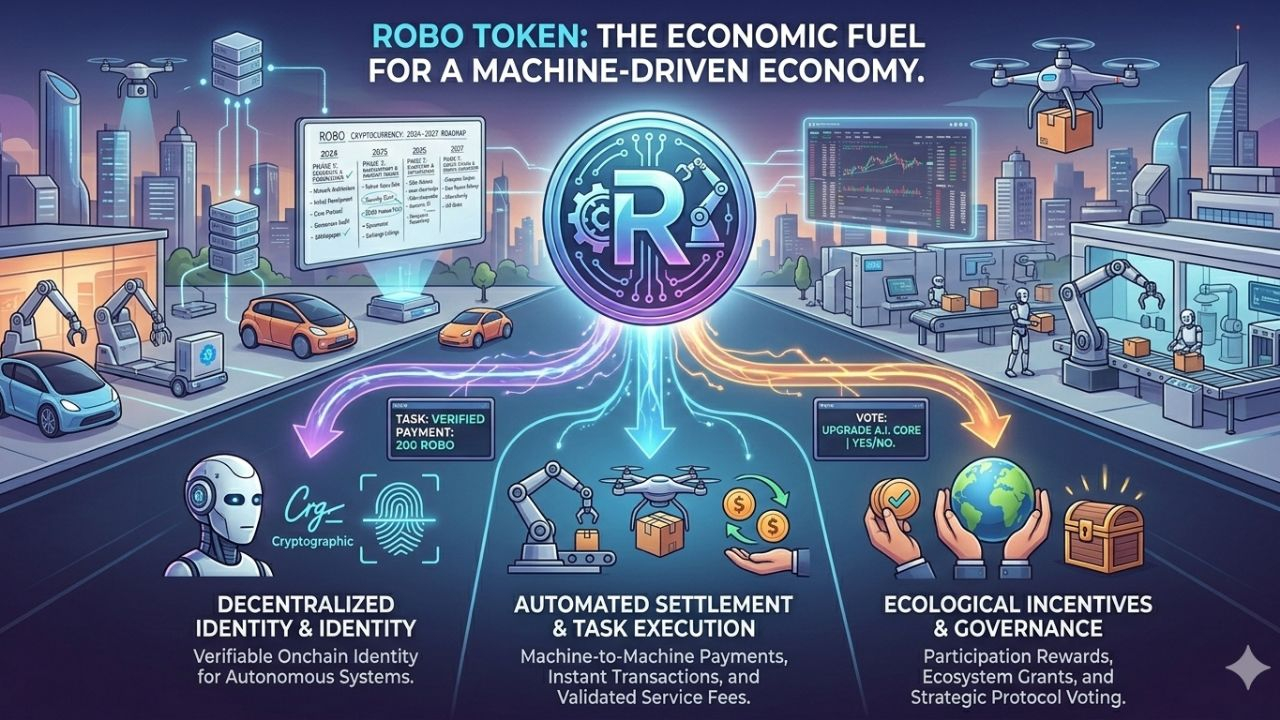
W szybko rozwijającym się świecie blockchaina wiele tokenów obiecuje innowacje — ale tylko nieliczne próbują budować infrastrukturę dla całkowicie nowych podmiotów gospodarczych. ROBO, natywny token protokołu Fabric, nie pozycjonuje się jako kolejny spekulacyjny aktyw, ale jako fundament dla tego, co nazywa gospodarką napędzaną maszynami.
Zamiast skupiać się wyłącznie na DeFi lub finansach cyfrowych, @ROBO koncentruje się na większym pytaniu:
Co się stanie, gdy roboty i autonomiczne systemy będą musiały przeprowadzać transakcje, zarabiać i koordynować się niezależnie?
Podstawowa idea stojąca za ROBO
Na swoim fundamencie ROBO istnieje, aby zasilać ekosystem protokołu Fabric — sieci blockchain zaprojektowanej, aby nadać robotom i systemom opartym na sztucznej inteligencji tożsamość i zdolność ekonomiczną na łańcuchu.
Teza jest prosta, ale ambitna:
W miarę jak automatyzacja rozszerza się w różnych branżach — logistyka, produkcja, dostawa, inteligentna infrastruktura — maszyny coraz częściej wykonują rzeczywistą pracę gospodarczą. Jednak nie ma standardowego zdecentralizowanego ramy, która pozwalałaby robotom:
Posiadać tożsamość cyfrową
Otrzymywać płatności bezpośrednio
Uczestnicz w zarządzaniu
Udowodnij ukończoną pracę na łańcuchu
ROBO jest zaprojektowane, aby działać jako ekonomiczne paliwo dla tej struktury.
To sprawia, że jest strukturalnie różny od tokenów memowych czy czysto spekulacyjnych altcoinów. Jego propozycja wartości jest związana z tym, czy gospodarki maszynowe mogą sensownie rozwijać się na torach blockchain.
Filozofia rozwoju
Rozwój ROBO odzwierciedla długoterminowe myślenie o infrastrukturze, a nie krótkoterminowe cykle hype.
Zamiast uruchamiać dziesiątki funkcji jednocześnie, ekosystem Fabric został zbudowany w fazach:
Tożsamość jako priorytet
Początkowy rozwój koncentrował się na nadaniu robotom weryfikowalnych kryptograficznych tożsamości. Bez tożsamości nie ma odpowiedzialności ani struktury nagród.
Rozliczenie i wykonanie zadań
Następna warstwa wprowadziła systemy weryfikacji zadań i rozliczeń płatności — umożliwiając robotom (lub operatorom) otrzymywanie nagród w tokenach ROBO za zweryfikowane wkłady.
Integracja zarządzania
Posiadacze ROBO mogą uczestniczyć w kształtowaniu decyzji protokołu. Zarządzanie jest zorganizowane w sposób sprzyjający długoterminowym uczestnikom, a nie krótkoterminowym traderom.
Projekt kładzie nacisk na ekonomię opartą na wkładzie. W przeciwieństwie do pasywnych modeli stakingowych powszechnych w DeFi, nagrody mają być związane z rzeczywistym uczestnictwem i zweryfikowanym wynikiem.
Jak ROBO działa w ekosystemie
ROBO pełni wiele ról w sieci:
Token użytkowy – Używany do opłat transakcyjnych, płatności za zadania i interakcji w systemie.
Token zarządzający – Może być zablokowany, aby uzyskać moc głosowania nad aktualizacjami protokołu i parametrami ekonomicznymi.
Mechanizm zachęt – Rozdzielany do współpracowników, którzy walidują zadania, dostarczają infrastrukturę lub rozszerzają funkcjonalność ekosystemu.
Ta wielowarstwowa użyteczność jest ważna. Token związany z rzeczywistym użyciem sieci zazwyczaj ma silniejsze długoterminowe fundamenty niż ten, który polega wyłącznie na spekulacji — ale tylko jeśli adopcja się zmaterializuje.
Mapa drogowa: Strukturalna, ale ambitna
Mapa drogowa ROBO odzwierciedla stopniową ekspansję ekosystemu, a nie natychmiastową transformację.
Faza 1 – Podstawowa infrastruktura
Wczesny etap skoncentrowany był na:
Uruchomienie tokena i notowania giełdowe
Aktywacja modułów tożsamości robotów
Początkowe mechaniki rozliczeń
Ten etap skoncentrowany był na technicznym udowodnieniu koncepcji.
Faza 2 – Systemy zachęt
Następny kamień milowy podkreśla:
Zweryfikowane nagrody oparte na zadaniach
Silniejsza walidacja współpracowników
Wczesne integracje ekosystemu
Tutaj celem jest przejście od teoretycznej zdolności do mierzalnej aktywności.
Faza 3 – Interakcja wieloagentowa
Przyszłe plany rozwoju obejmują:
Wsparcie złożonych przepływów pracy między wieloma robotami
Skalowanie przepustowości transakcji
Optymalizacja koordynacji ekonomicznej
Ten etap określi, czy protokół może poradzić sobie ze złożonością automatyzacji w rzeczywistym świecie.
Długoterminowa wizja
Szeroko zakrojona ambicja obejmuje:
Warstwa blockchain zoptymalizowana dla maszyn
Zdecentralizowany rynek umiejętności, na którym można wdrażać i monetyzować zdolności robotów
Globalna gospodarka robotów działająca z minimalną interwencją ludzi
Choć wizjonerskie, te kamienie milowe w dużej mierze zależą od adopcji robotyki w rzeczywistym świecie — co ewoluuje wolniej niż rynki kryptowalut.
Zrównoważona perspektywa ludzka
ROBO reprezentuje odważny pomysł: połączenie ekonomii blockchain z autonomiczną robotyką.
Jednak realizm ma znaczenie.
Przemysł robotyki rozwija się stabilnie, ale nie eksploduje.
Adopcja blockchain w automatyzacji przemysłowej pozostaje eksperymentalna.
Wartość rynkowa może wyprzedzać rzeczywistą użyteczność na wczesnych etapach.
Dlatego długoterminowa wartość ROBO będzie mniej zależała od notowań na giełdach, a bardziej od:
Adopcja przez deweloperów
Rzeczywiste integracje robotyczne
Mierzalne wykonanie zadań na łańcuchu
Zrównoważona ekonomia tokenów
Jeśli ekosystem Fabric odniesie sukces w wprowadzaniu rzeczywistych przepływów pracy automatyzacji, ROBO może reprezentować niszowy, ale znaczący zasób infrastrukturalny. Jeśli adopcja pozostanie koncepcyjna, ryzykuje, że stanie się kolejnym ambitnym, ale niedostatecznie wykorzystywanym eksperymentem blockchain.
Ostateczna myśl
ROBO nie jest budowane jako token napędzany hype — przynajmniej strukturalnie. Jest pozycjonowane jako infrastruktura dla potencjalnej gospodarki maszynowej.
Jednak tokeny infrastrukturalne żyją lub umierają w zależności od użycia.
Nadchodzące lata ujawnią, czy zdecentralizowane finansowanie robotyki stanie się praktyczną rzeczywistością — czy pozostanie interesującym pomysłem wyprzedzającym swój czas.