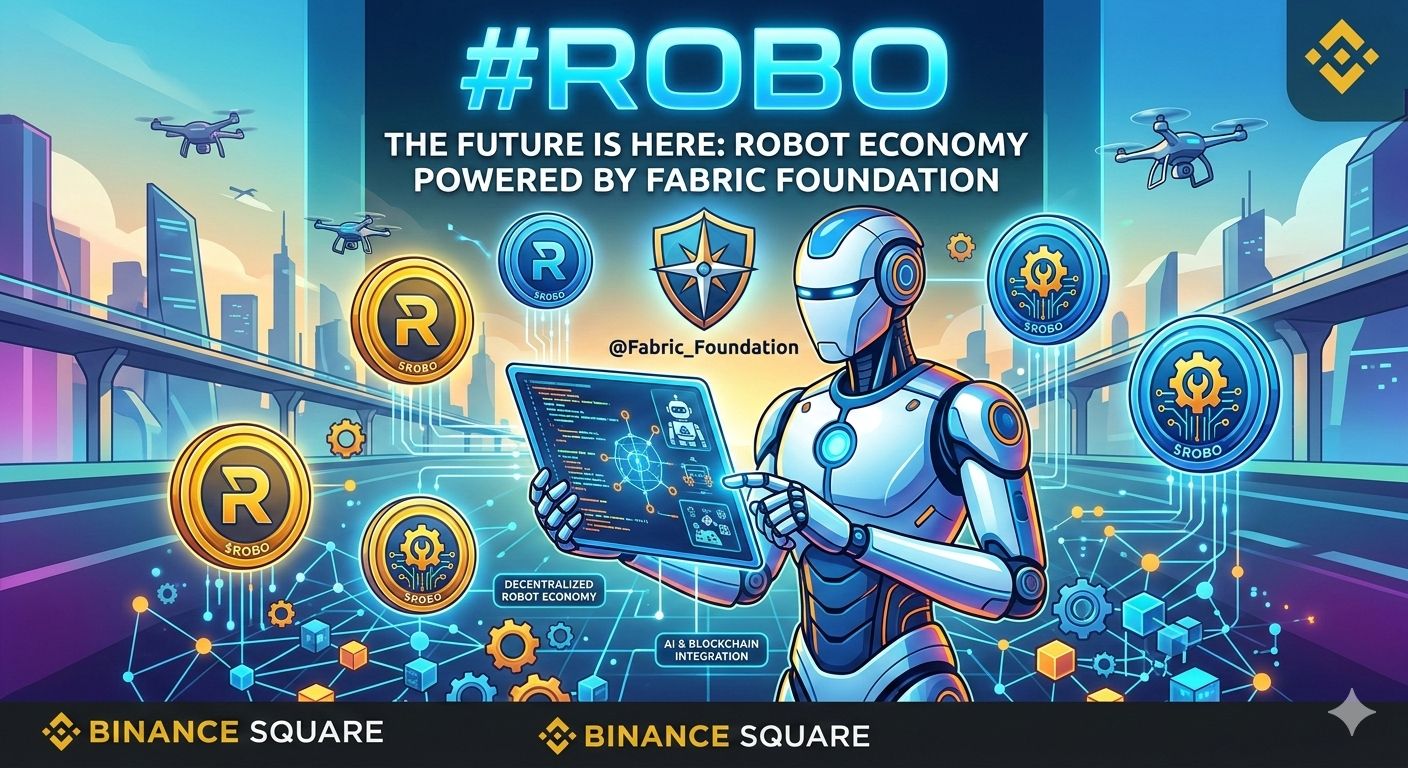
The Fabric Foundation is tackling the most ambitious question in crypto right now: How do we give physical robots a financial identity? This isn't about building a better chatbot; it's about building the economic railway for the physical automation that is about to flood every warehouse, hospital, and sidewalk near you .
The current state of robotics is one of isolation. A factory robot from one brand cannot hire a cleaning robot from another. They are tools, not participants.built by OpenMind, solves this by integrating the OM1 operating system (think Android for hardware) with the FABRIC protocol, a trust layer enabling machine-to-machine communication and commerce .
This is where ROBO comes in. It isn't just a speculative asset; it is the fuel for the "Robot Economy." Here is how it functions in the real world
When a logistics company hires a fleet of delivery robots, the labor is settled in ROBO.
Developers and hardware manufacturers must stake ROBO to access the network's skills and data.Through decentralized coordination pools, the community can fund the purchase of robots, with maintenance and charging logistics paid out in stablecoins and settled in ROBO .
This vision recently took a massive leap forward. the issuing ROBO on Virtuals, we are witnessing the convergence of the purely digital Agentic GDP" (aGDP) with physical, embodied AI. Virtuals provides the runway for autonomous intelligence, while Fabric provides the landing gear for that intelligence to interact with the physical world .
We are moving past the era of isolated machines. By integrating the Virtuals ecosystem, we are building a future where your robot doesn't just wait for instructions—it secures its own bag of ROBO pays for its own charging station, and contributes to the global economy as a first-class citizen .
The infrastructure is live on Base, the TGE has launched, and the robot economy is now open for business. The question isn't if machines will transact, but who will own the infrastructure they use to do it.#ROBO $ROBO @Robo