


The future of Defi is moving away from one-size-fits-all blockchains. General-purpose chains are revolutionary but often struggle with liquidity fragmentation and inconsistent yields. The next critical evolution is purpose-built Layer 2 ecosystems which are designed for specific use cases. Katana emerges as a prime example of this trend.
Katana is a DeFi-first Layer 2 blockchain incubated by Polygon Labs and GSR. It aims to become the liquidity hub within the broader Polygon AggLayer ecosystem. Unlike chains that try to be everything to everyone, Katana focuses exclusively on creating the best possible environment for decentralized finance. This specialization allows it to solve problems that general-purpose chains cannot effectively address.
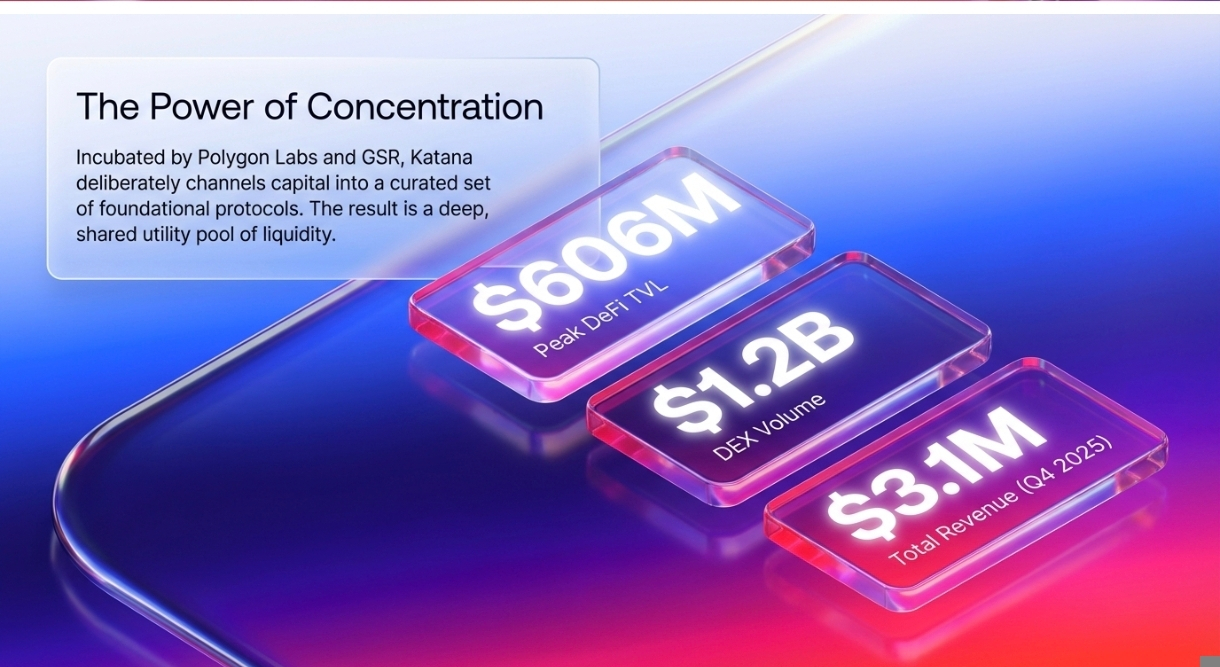
The chain launched its public mainnet in late June 2025 and has since demonstrated rapid growth. In just six months, it generated $3.1 million in total revenue, reached a peak DeFi TVL of $606 million, and processed $1.2 billion in DEX volume during Q4 2025 alone. These metrics highlight how specialization can drive concentrated growth.
Today in this article we will dive Deeper into the Mechanism and explore the world of Katana
II. Katana’s Core Strategy
Katana's strategy is straightforward but powerful. It tackles DeFi's biggest problem: fragmented liquidity. When capital is spread thin across many venues, markets become inefficient. Prices move too much on small trades (high slippage), and yields fluctuate wildly as capital chases the next temporary incentive.
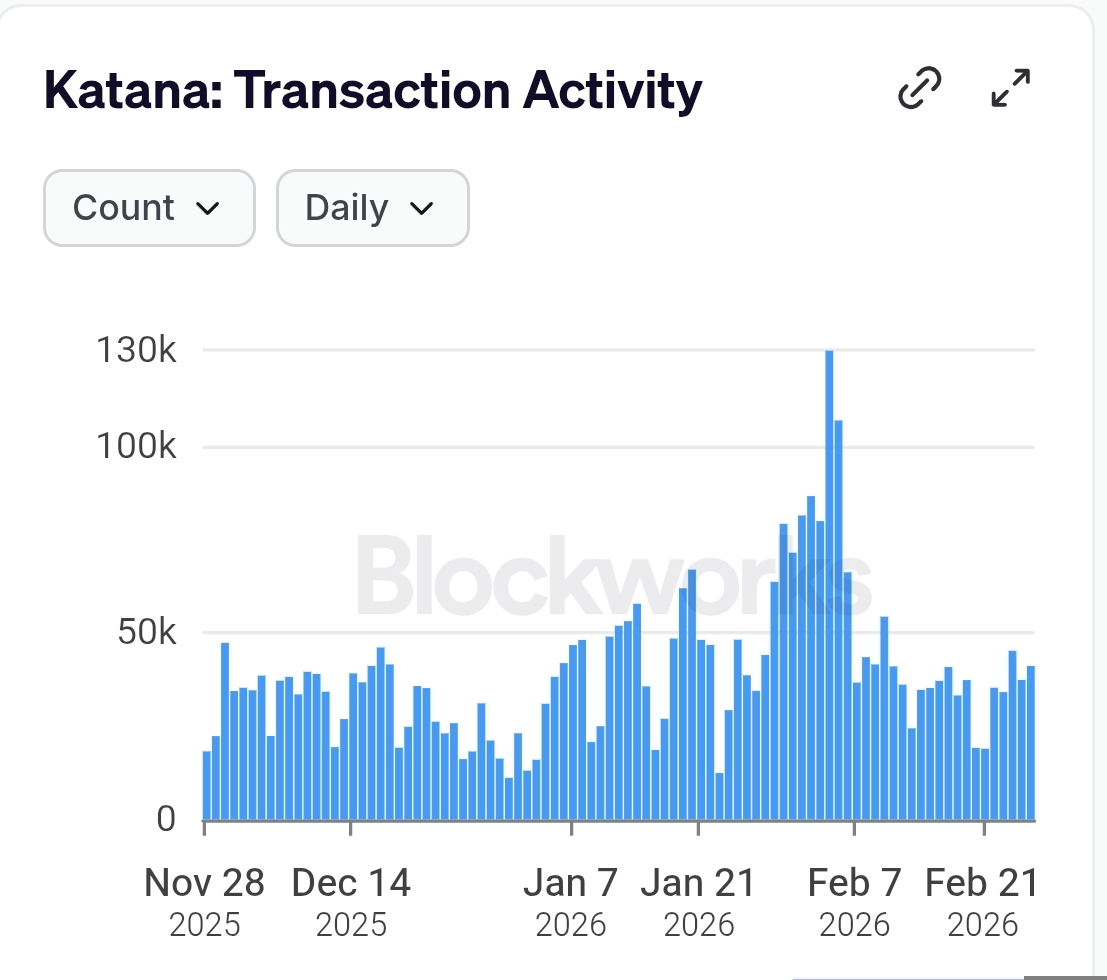
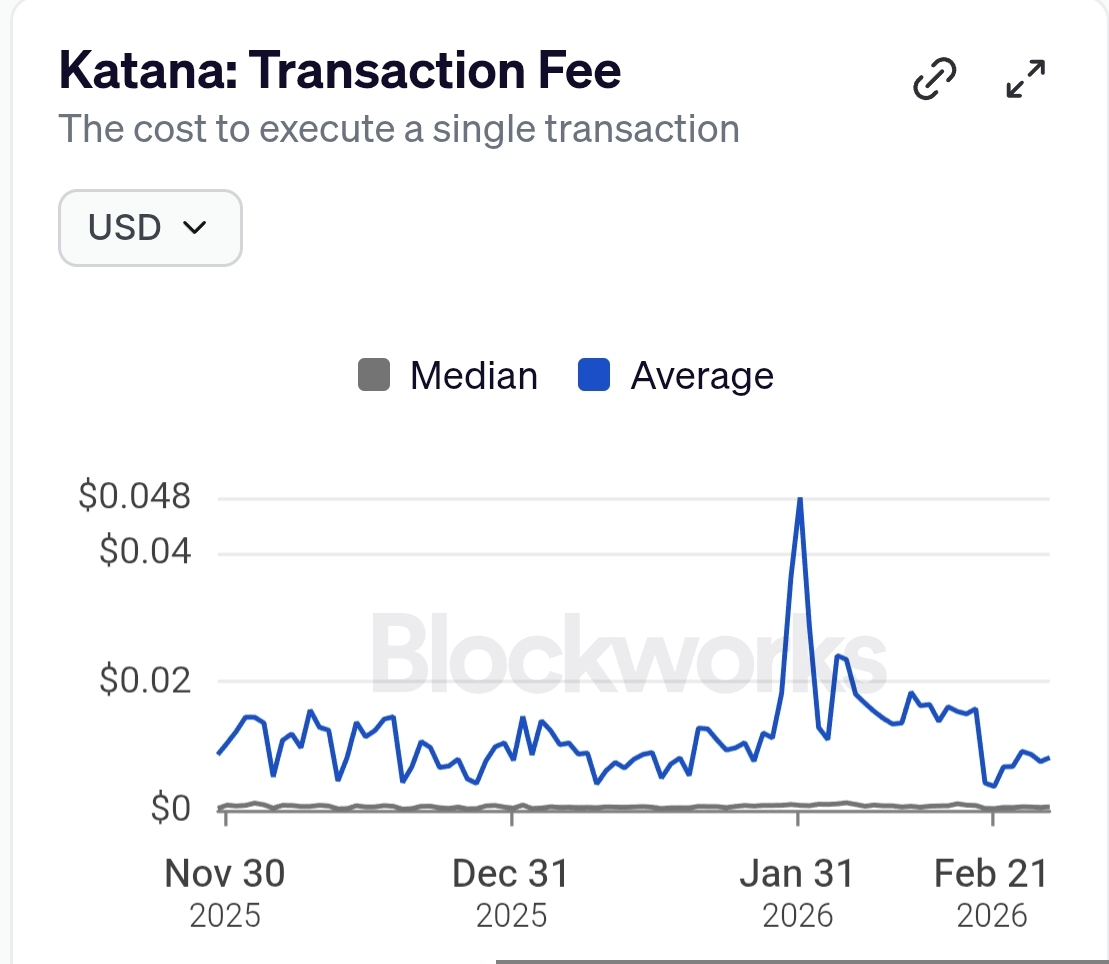
Katana's solution is concentration. Rather than allowing liquidity to scatter, it deliberately channels capital into a curated set of foundational financial protocols. This creates a deep, shared pool of liquidity that serves as a utility for the entire network. Hundreds of other applications can then build on top of this solid foundation, tapping into ready-made liquidity without starting from zero.
This strategy aligns everyone's incentives. Traders get better prices, liquidity providers earn more from higher capital usage, and developers can focus on innovation instead of fighting over a shrinking pie. The chain's growth becomes a team effort where everyone benefits, moving away from the "winner-takes-all" competition that has characterized much of DeFi.
III. Architectural Foundation: The Best of Both Worlds
Katana's technical foundation is a blend of two proven technologies, chosen for developer familiarity and performance. It's built using Polygon's Chain Development Kit (CDK) in a special configuration called "cdk-opgeth." This combines the popular OP Stack architecture with Ethereum's most widely used software, Geth.
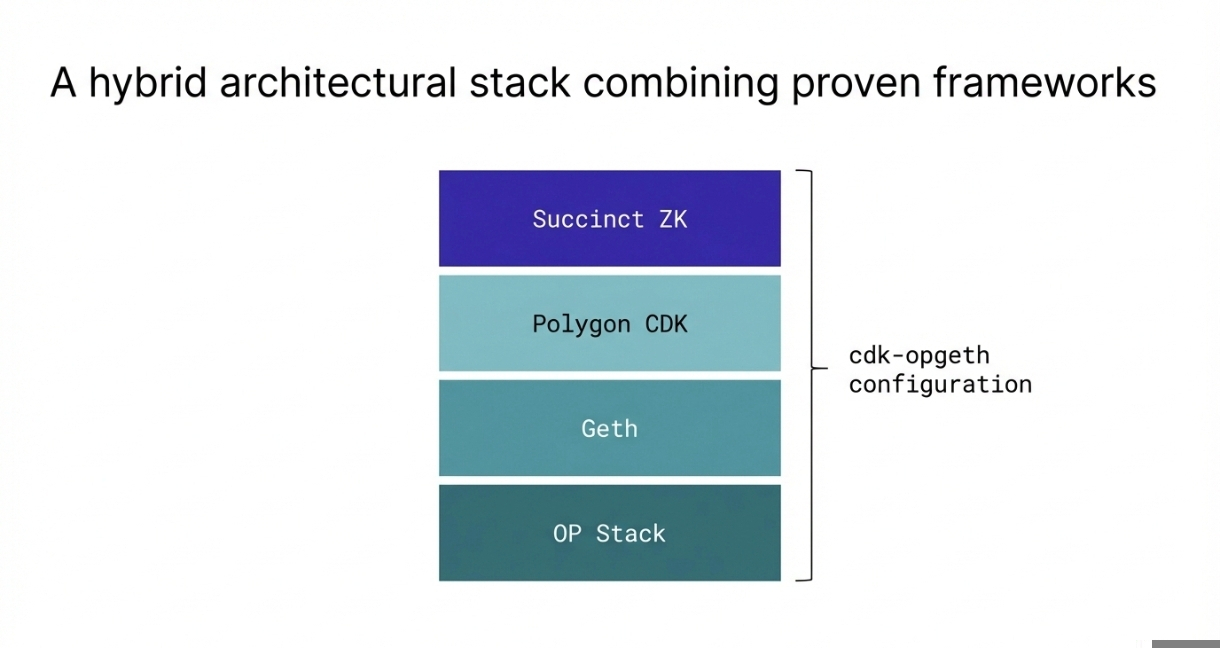
Imagine building with LEGO. The OP Stack is like a popular, well-understood LEGO set that many builders know how to use. Katana uses this set but adds a special piece from Polygon's kit (the CDK) that lets it connect seamlessly to the AggLayer network. It also uses a powerful math trick called a Zero-Knowledge (ZK) proof. This trick lets Katana quickly prove to Ethereum that all its transactions are correct, cutting down the waiting time for moving funds from days to under an hour.
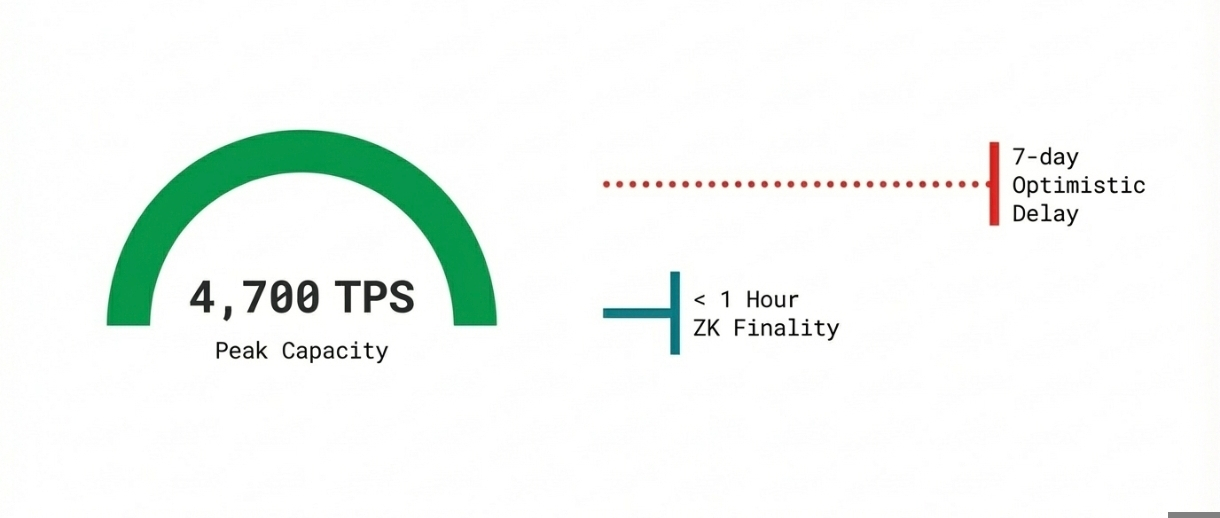
This hybrid approach delivers institutional-grade performance. The network can handle over 4,700 transactions per second at peak capacity. More importantly, by integrating ZK proofs from Succinct, Katana achieves "fast finality." This means transactions are considered fully settled in under an hour, a dramatic improvement over the 7-day withdrawal delays common in older Layer 2 designs.
IV. Integration with Polygon AggLayer
Katana doesn't exist in isolation. It is a foundational piece of Polygon's AggLayer, a "unified bridge" that connects multiple independent blockchains into one cohesive experience. For users, this means moving assets between chains connected to the AggLayer feels as simple as sending tokens within a single network.
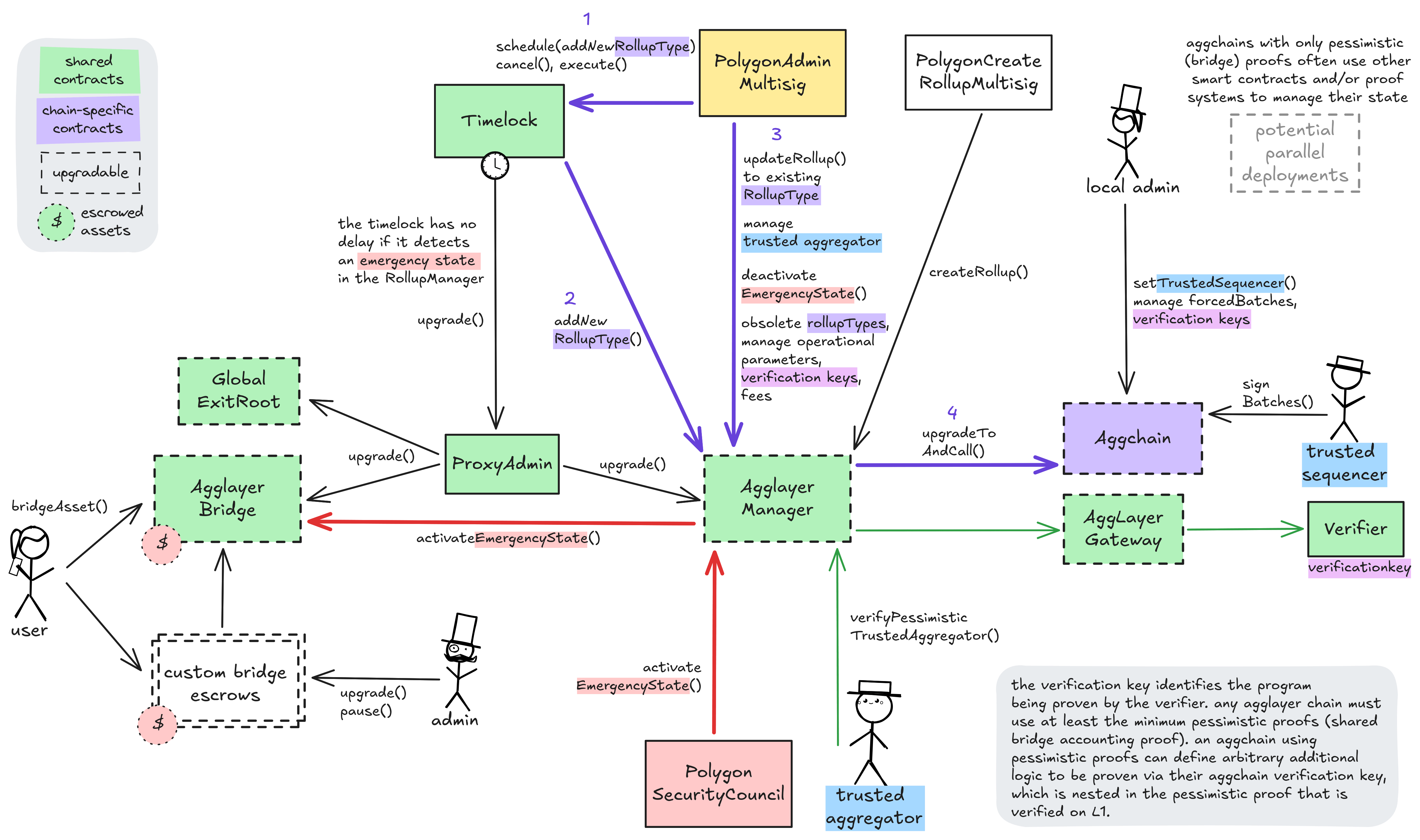
Katana is the first chain to use the new "CDK OP Stack" configuration, marking the beginning of AggLayer's "multistack" era. The vision is simple: builders should be able to launch a network using any technical stack they prefer and still connect seamlessly to others. AggLayer acts as the neutral meeting ground, and crucially, it does not charge a tax for chains to connect. Its goal is to unify liquidity and users, not extract rent.
By being the first and primary DeFi hub on this network, Katana provides a deep pool of liquidity that all other connected chains can access from day one. This transforms Katana from a standalone chain into the beating heart of a broader financial ecosystem.
V. The DeFi Flywheel Model
At the core of Katana's design is a self-reinforcing economic cycle called the "flywheel." The goal is to generate sustainable, real yield from actual network activity, not from printing new tokens. Here's how the flywheel spins:
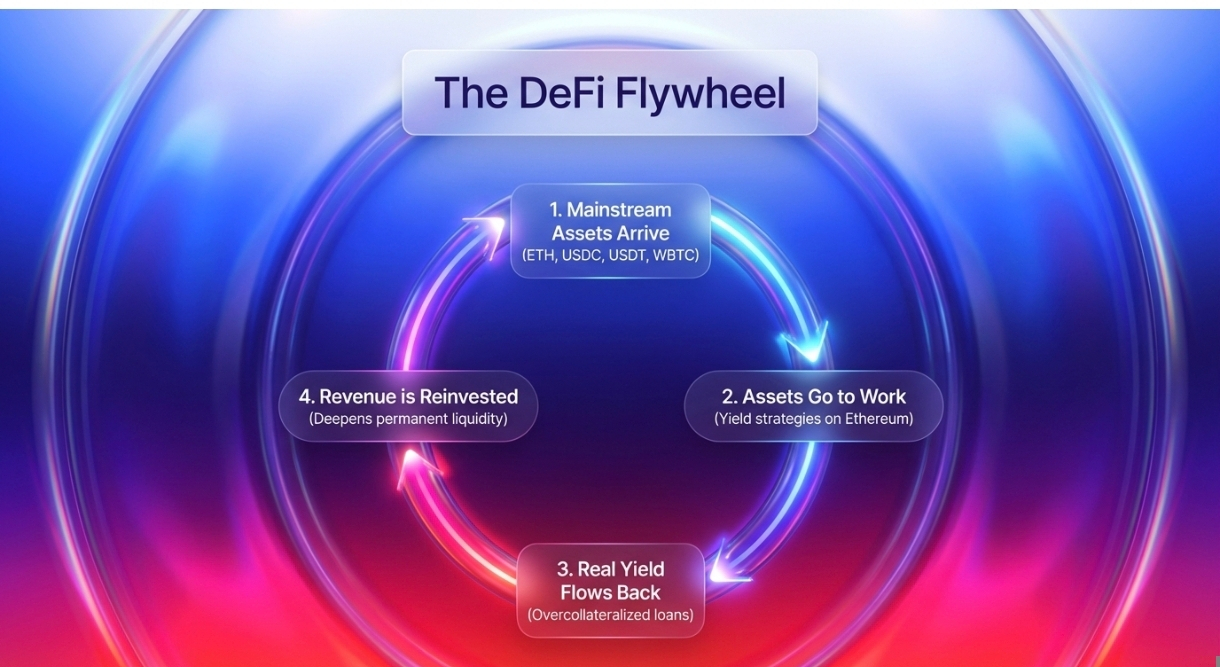
Assets Arrive: Users bridge mainstream assets like Ethereum (ETH), USD Coin (USDC), Tether (USDT), and Wrapped Bitcoin (WBTC) to Katana.
Assets Go to Work: These assets are not left idle. Through the VaultBridge (explained next), they are put to work in yield-generating strategies on Ethereum.
Yield is Generated: Real yield, primarily from overcollateralized loans, is earned on those base assets.
Yield Flows Back: That yield is streamed back into the Katana ecosystem.
Revenue is Reinvested: A portion of all network revenue, from sequencer fees and core application fees, is automatically reinvested to provide "Chain-Owned Liquidity."
Liquidity Deepens: This permanent liquidity backstop makes markets deeper and more efficient for everyone.
Better Experience Attracts More Users: A better trading and earning experience attracts more users and assets, which spins the flywheel faster.
This model aligns growth with sustainability. As more people use Katana, more real yield is generated and reinvested, making the network stronger and more attractive, a virtuous cycle.
VI. VaultBridge Mechanism:
This is one of Katana's key innovations. In most blockchain ecosystems, when you bridge assets from one chain to another, those assets sit idle in a bridge contract. They contribute to the "Total Value Locked" or TVL number but aren't actually doing anything.
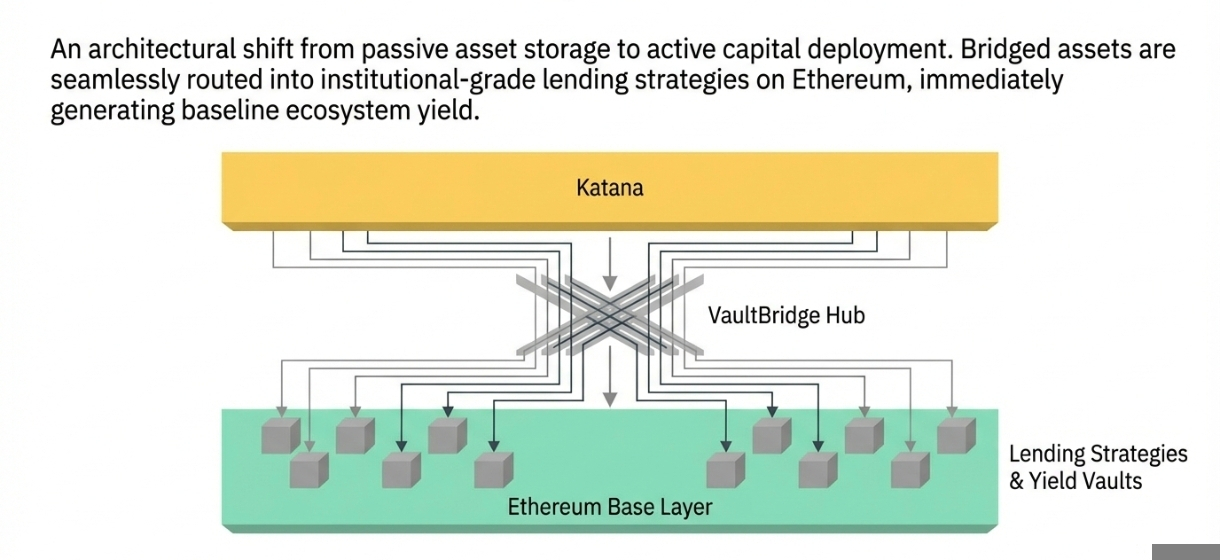
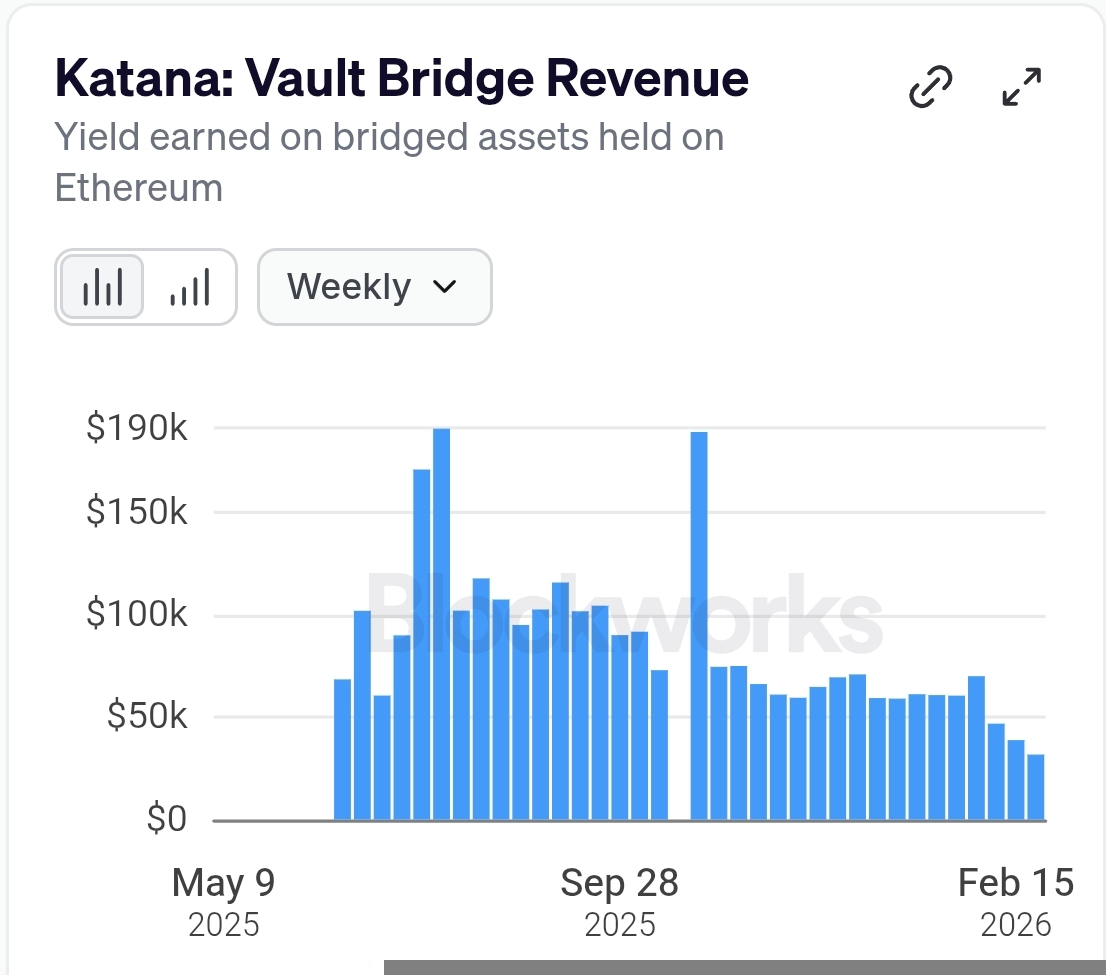
Katana's VaultBridge changes this. When you bridge ETH, USDC, USDT, or WBTC to Katana, here's what happens:
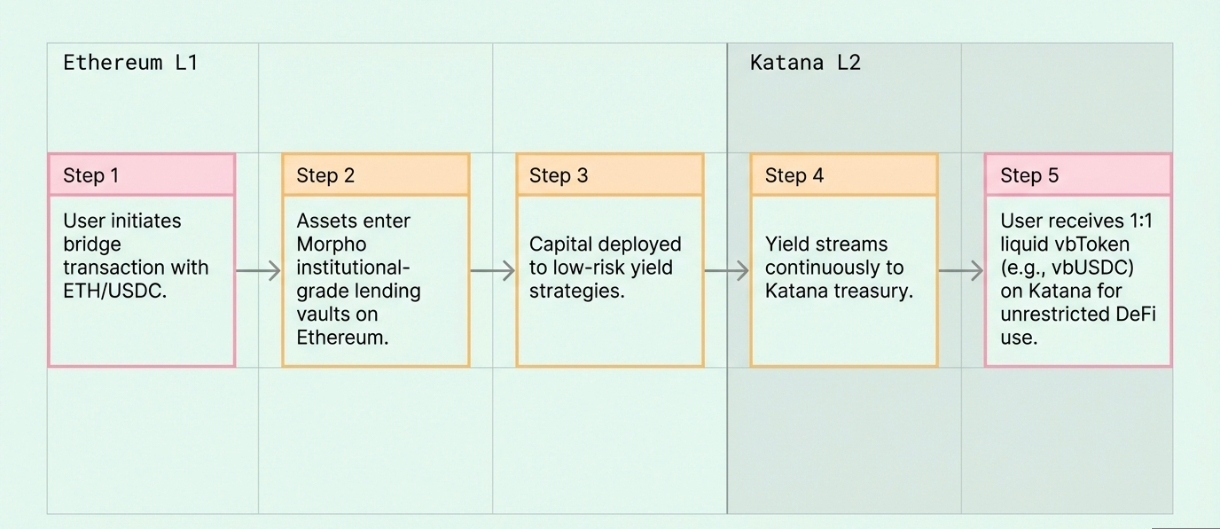
❍ Step 1: You initiate a bridge transaction.
❍ Step 2: The original assets (e.g. real USDC on Ethereum) are deposited into professionally managed, institutional-grade lending vaults on Ethereum. These vaults are built by Morpho, a leading lending protocol.
❍ Step 3: These vaults deploy the capital into low-risk, yield-generating strategies (like overcollateralized loans).
❍ Step 4: The yield generated is continuously streamed back to Katana's treasury.
❍ Step 5: You receive a 1:1 representation of your bridged asset on Katana, called a "vbToken" (like vbUSDC ). This token is your claim on the original asset and can be used freely in Katana's DeFi apps.
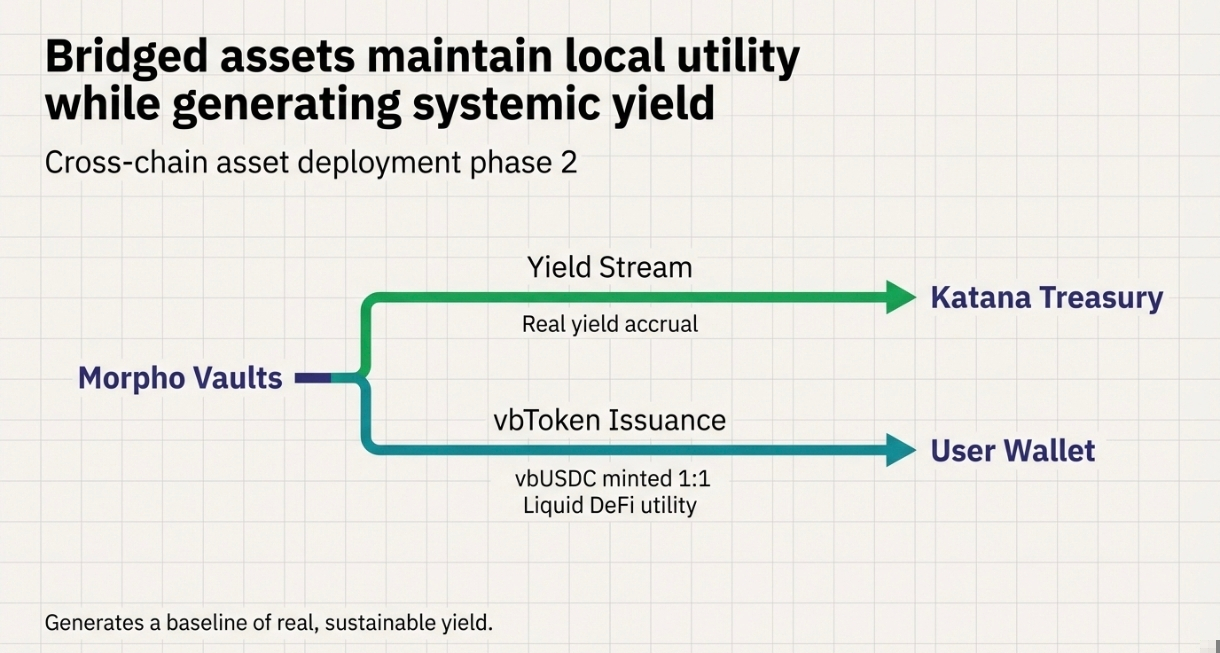
Now, if you still didn't understand VaultBridge, imagine you deposited gold in a bank vault to keep it safe . A traditional bridge would just lock the gold away. VaultBridge is like a bank that, with your permission, lends out your gold to trustworthy borrowers (earning interest) while giving you a certificate (vbToken) that you can trade as if it were the gold itself. The interest earned goes to maintain and improve the bank itself.
This mechanism creates a baseline of real, sustainable yield for the entire Katana ecosystem, funded by the productive use of its bridged assets.
VII. Chain-Owned Liquidity
Another cornerstone of Katana's model is Chain-Owned Liquidity (CoL). In traditional DeFi, liquidity is provided by users who can withdraw their funds at any time. This "mercenary capital" often flees at the first sign of trouble or when better incentives appear elsewhere.
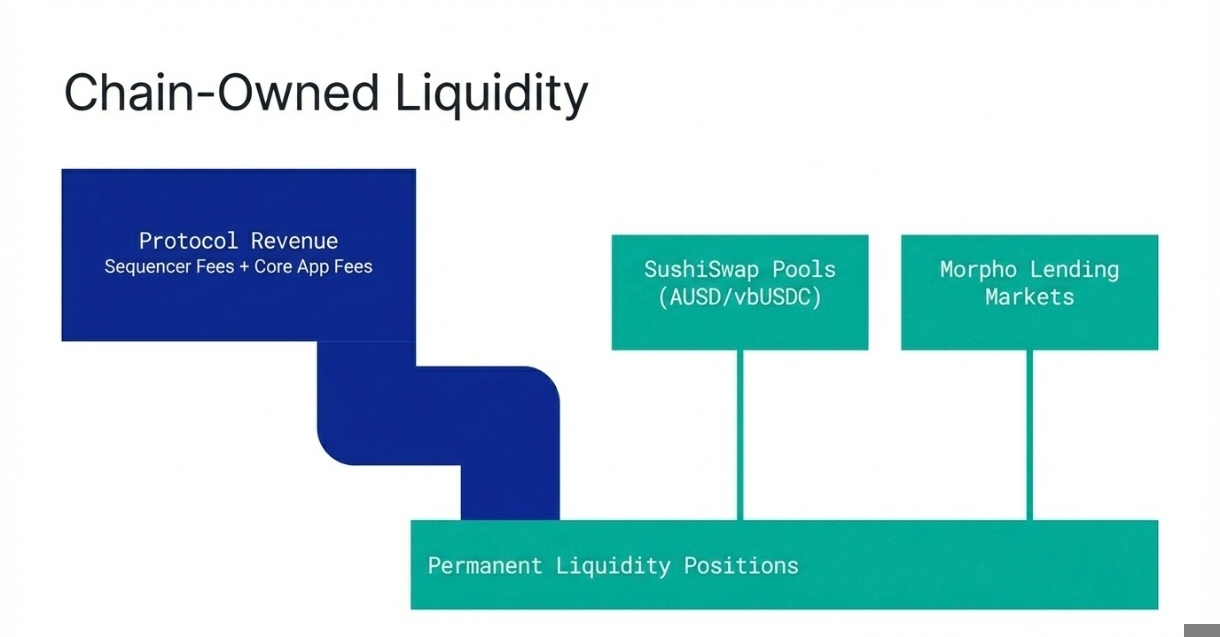
Katana takes a different approach. The protocol itself becomes a major, permanent liquidity provider. One hundred percent of the net fees from processing transactions (sequencer fees) and a portion of revenue from core applications are automatically used to buy liquidity positions in the network's key markets, such as on SushiSwap or within Morpho lending pools.
❍ This creates a permanent liquidity base that doesn't leave. It backstops the market, ensuring deep liquidity is always available and reducing volatility.
❍ It aligns the chain's success with user experience. As the network earns more fees, it adds more liquidity, which improves trading conditions and attracts more users.
❍ It turns protocol revenue into a public good. Instead of being extracted by validators or a foundation, the revenue is reinvested into the ecosystem's core infrastructure.
VIII. Curated Application Layer
Katana is selective about its core applications. This curation prevents liquidity from being diluted across too many venues. The launch ecosystem is built around battle-tested, blue-chip protocols, each serving a critical function:
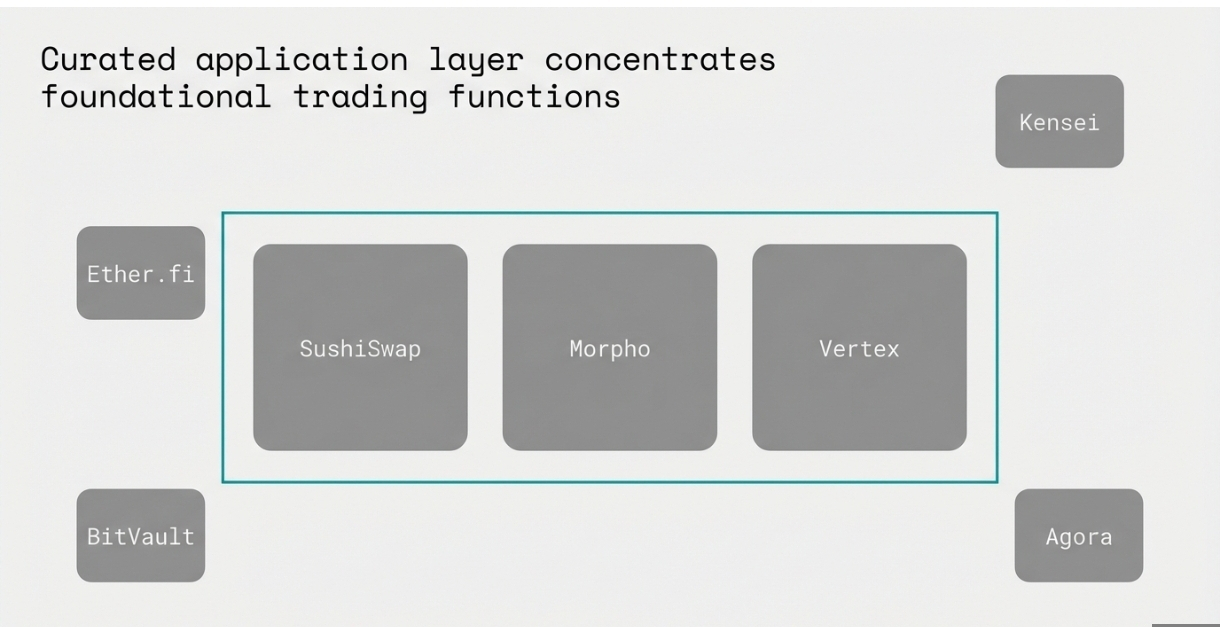
❍ SushiSwap: This is Katana's central marketplace for spot trading. It acts as both the primary decentralized exchange (DEX) and an aggregator that finds the best prices across all available liquidity. Chain-Owned Liquidity is heavily deployed into Sushi's pools (like AUSD/vbUSDC) to ensure deep markets with minimal slippage. When you receive vbTokens from bridging, Sushi is where you'll likely first put them to work.
❍ Morpho: This is the engine for lending and borrowing. Morpho's efficient "peer-to-pool" model powers the VaultBridge vaults on Ethereum and provides the core lending markets on Katana itself. It allows users to lend their assets to earn interest or borrow against their collateral.
❍ Vertex: Slated for integration, Vertex will provide decentralized perpetual futures trading (perps). This will allow users to make leveraged bets on asset prices without needing to own the underlying asset, completing Katana's core trading trifecta: spot, lending, and derivatives.
❍ Other: The ecosystem also includes Kensei as a token launchpad, Agora which issues the native yield-bearing stablecoin AUSD, and integrations with BitVault for Bitcoin-backed assets and Ether.fi for restaked ETH.
This focused environment ensures that liquidity is deep where it matters most, creating a composable and efficient financial system where each core app strengthens the others.
IX. Transaction Processing Model
For users, the experience on Katana is fast and cheap, but it doesn't sacrifice security. Here's how it works under the hood:
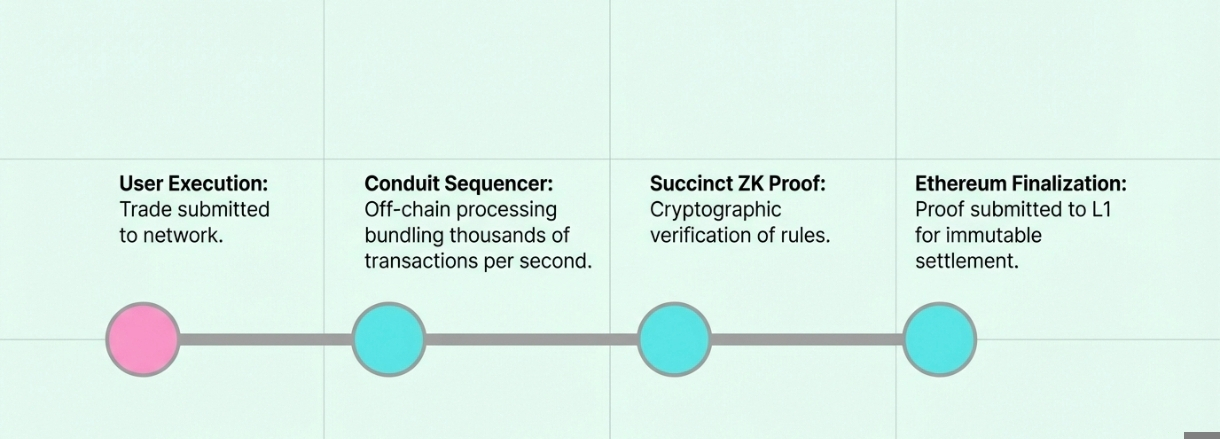
Execution: You submit a transaction, like a trade on Sushi or a deposit to Morpho, to the Katana network.
Off-Chain Processing: Katana's sequencer (operated by Conduit) processes thousands of these transactions per second off-chain, bundling them together.
Proof Generation: Using Succinct's technology, the network generates a cryptographic proof (a ZK proof) that verifies all these transactions were executed correctly according to Katana's rules.
Ethereum Finalization: This proof is submitted to Ethereum. Because the proof is mathematically sound, Ethereum can verify it quickly and finalize the state of Katana. This is what enables sub-hour finality.
This "ZK-rollup" model means users get the speed and low cost of a dedicated chain, with the ironclad security guarantee that their funds are ultimately secured by Ethereum. You get the best of both worlds: Layer 2 scalability with Layer 1 security.
X. AggLayer Security Model
Connecting multiple chains together introduces unique risks. What if one chain in the network gets hacked? Could that compromise the others? AggLayer addresses this with a novel security concept called the "pessimistic proof."
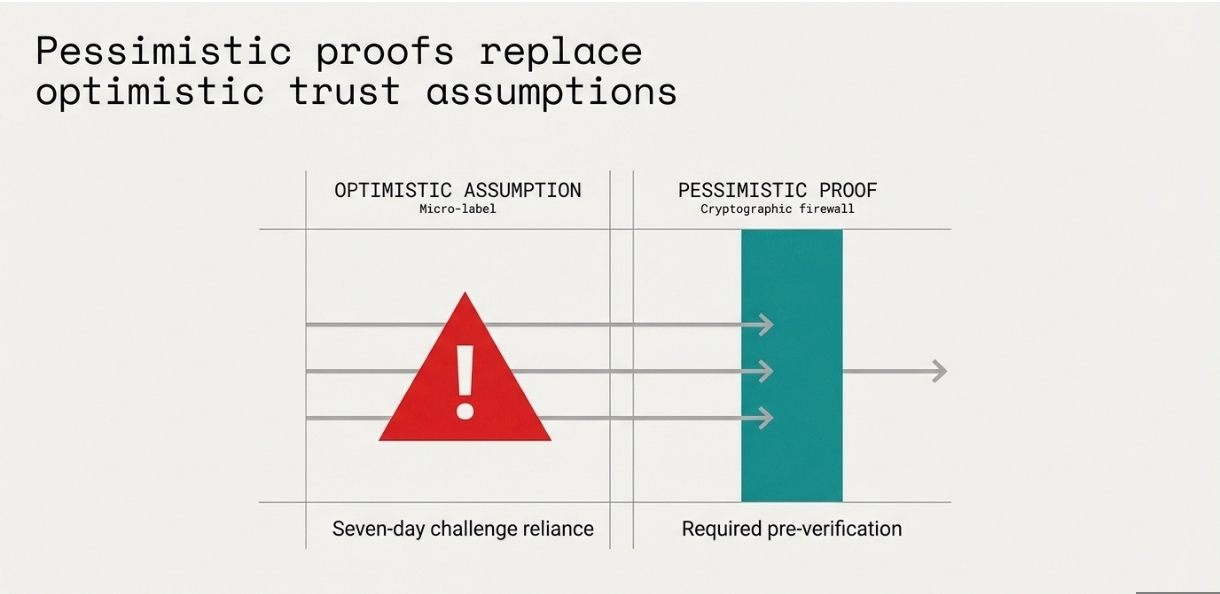
Traditional "optimistic" systems assume everyone is playing by the rules unless someone proves otherwise within a long challenge period (like 7 days). AggLayer's pessimistic proof does the opposite. It assumes every chain might be faulty or malicious and requires cryptographic proof that every cross-chain action is valid before it's accepted.
What is Pessimistic Proofs - Imagine a group of islands (chains) connected by bridges. An optimistic system would let anyone cross a bridge immediately, trusting that guards will catch any thief within a week. A pessimistic system installs a high-tech scanner at each bridge entrance. Every person and package must be scanned and proven safe before they can cross. If one island has a problem, the scanner prevents that problem from spreading to the others.
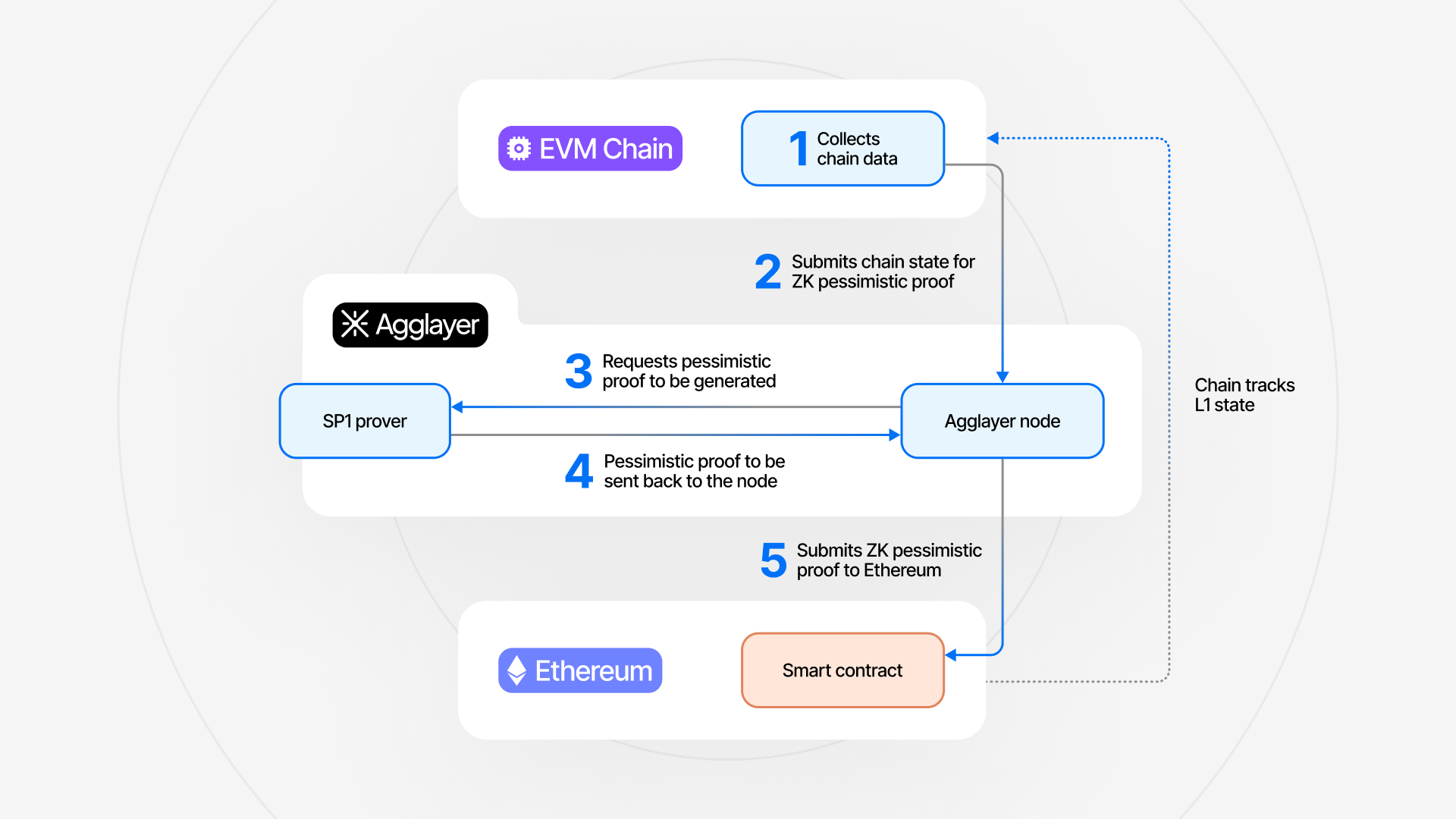
Technically, the pessimistic proof constantly verifies that no chain is trying to withdraw more assets from the shared bridge than it has deposited. This creates a financial "firewall" between chains. Even if one chain is completely compromised, the damage is contained to that chain's own deposits; it cannot drain the assets of other chains on AggLayer. This containment is crucial for safe, trust-minimized interoperability.
Katana is one of our most awaited Defi Project . Their onboarding is super smooth and minimalistic which will attract more people into Defi. You can swap, bridge, deposit & launch a yield strategy with just a few clicks and a fraction of fees. The TGE is just a door away and make sure you are well positioned