
Fabric Foundation operates as a non-profit dedicated to building an open, decentralized network specifically for general-purpose robots and AI-driven autonomous systems. Their core goal? To "Own the Robot Economy." Right now, robots are locked into proprietary silos controlled by big tech or corporations. Fabric changes that by creating permissionless infrastructure where robots gain verifiable on-chain identities, coordinate tasks securely, and participate economically without gatekeepers. It's about ensuring the massive wave of automation benefits humanity broadly through open participation, ethical governance, and shared ownership.
$ROBO: The True Utility and Governance Powerhouse
Robo is far more than a speculative asset—it's the essential fuel driving the entire ecosystem. With a fixed total supply of 10 billion tokens, it powers:
On-chain identities and registration for robots
Machine-to-machine payments and seamless transaction fees
Staking mechanisms for network coordination and security
Governance voting on critical upgrades, ethical standards, safety protocols, and protocol evolution
Incentives and rewards for developers building applications, contributors providing resources (like compute or data), and operators deploying real robots
This creates powerful alignment: as robot activity ramps up in the real world, $ROBO demand grows organically through genuine utility in payments, staking, and decision-making.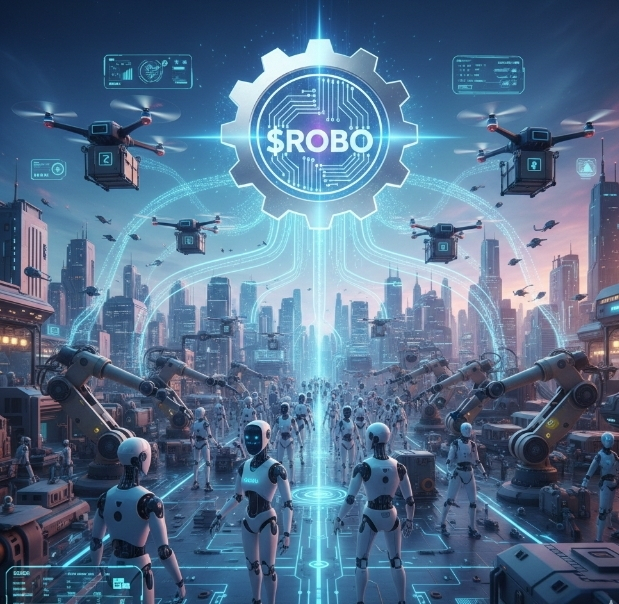
Transforming Robots into Independent Economic Actors
The real-world impact here is game-changing. Robots transition from isolated, single-purpose tools to collaborative, earning entities in a global, verifiable blockchain infrastructure. Imagine fleets of service robots negotiating jobs, delivery bots optimizing routes together, or industrial machines earning rewards for tasks—all with transparent, tamper-proof records. Fabric enables this through decentralized coordination, reducing centralization risks and opening new economic opportunities across industries like logistics, healthcare, manufacturing, and beyond. It's practical DePIN meets robotics.
Why This Matters Right Now in 2026
We're at the perfect moment. AI capabilities are surging, humanoid robots are hitting markets, and embodied intelligence is no longer theoretical. In 2026, Fabric + $ROBO positions itself to lead in crafting a safe, open, and inclusive robot economy before centralized giants dominate. The non-profit focus, strong governance, and incentive design help mitigate risks like ethical misalignment or monopolies. For crypto enthusiasts and robotics fans, this is utility at its finest—real adoption potential driving value.
Recent Developments Fueling the Momentum
The excitement is palpable and justified. Robo officially launched on February 27, 2026, with spot trading going live on major platforms including Coinbase, Bybit, KuCoin, Binance Alpha, and others. The airdrop claim portal opened shortly after (claims available until March 13), rewarding early supporters and driving community engagement. Trading volumes have been strong, reflecting genuine interest rather than pure hype. Follow @FabricFND for real-time updates—the community is growing fast with discussions around Proof of Robotic Work, ecosystem grants, and upcoming L1 migration from Base.
In conclusion, I'm genuinely bullish on Fabric Foundation because it's crypto fulfilling its promise: decentralizing something as transformative as robotics for the greater good. If you're excited about AI-robotics fusion with solid on-chain utility, take a closer look at $ROBO, stake, participate in governance, or join the conversations. The Robot Economy is emerging—let's make sure we own it together. #ROBO @Fabric Foundation