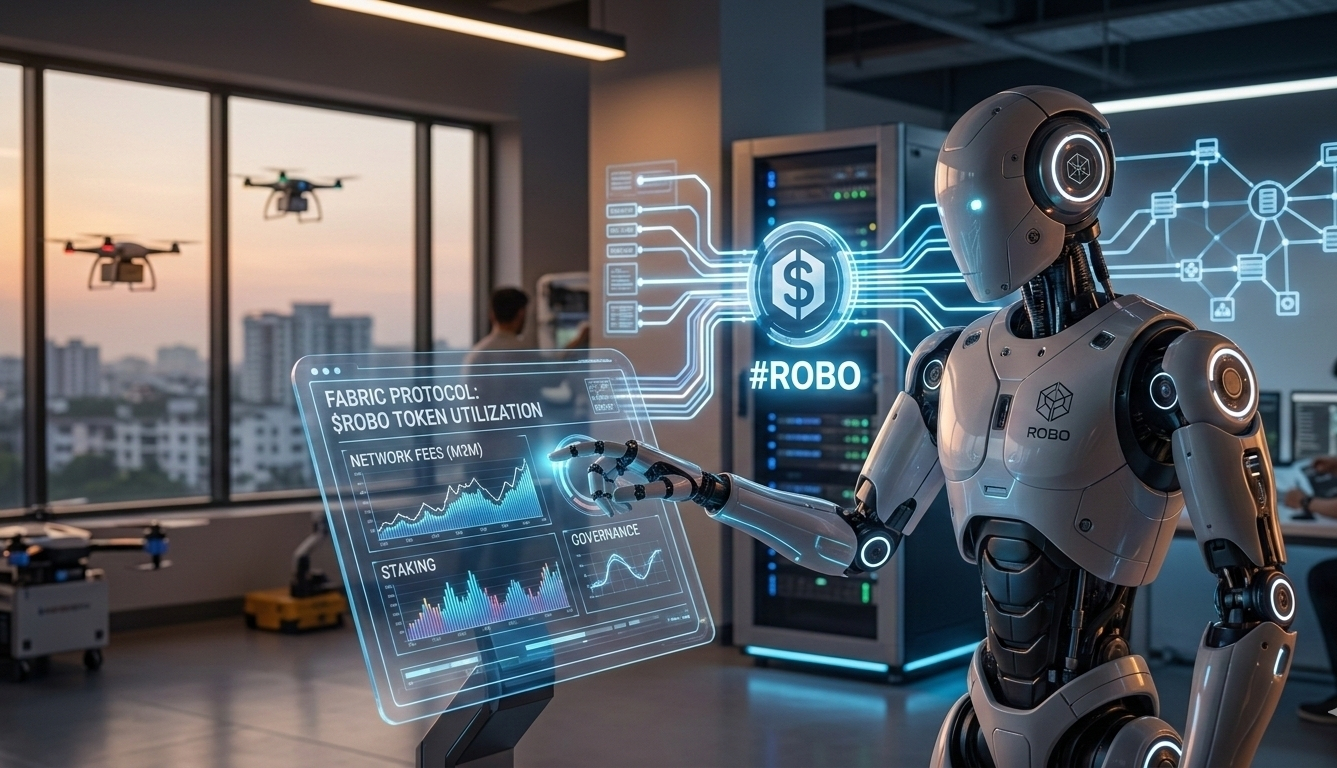
In the rapidly evolving landscape of Web3, we often talk about "AI coins," but few projects bridge the gap between digital intelligence and physical execution as effectively as the Fabric Foundation. As we move through 2026, the focus is shifting from simple chatbots to autonomous physical agents—and @FabricFoundation is building the essential economic rails for this transition.
Moving Beyond "Siloed" Robotics
Traditionally, robots have been isolated tools owned and operated by single entities. The vision proposed by @FabricFoundation is different: an open, decentralized network where machines act as independent economic actors. By utilizing the OM1 Operating System, they are creating a hardware-agnostic environment where humanoids, quadrupeds, and industrial arms can communicate, transact, and perform tasks on a shared ledger.
The Utility of $ROBO : More Than Just a Token
At the heart of this ecosystem is $ROBO. It isn't just a speculative asset; it is the "fuel" for machine-to-machine (M2M) interactions. Within the Fabric Protocol, $ROBO serves several critical functions:
Network Fees: Robots use $ROBO to pay for identity verification and transaction processing.
Staking & Coordination: Participants stake ROBO to coordinate the deployment of robot hardware and ensure network integrity.
Governance: Token holders help shape the operational policies of the world's first open robotics network.
A Sustainable Economic Model
One of the most compelling aspects of the ROBO tokenomics is the integration of protocol revenue with market dynamics. With a portion of revenue directed toward open-market buybacks, the ecosystem is designed to capture the real-world value generated by autonomous labor.
As the world grapples with how to integrate AI into the physical economy, @FabricFoundation provides a transparent, decentralized answer. For those looking at the intersection of DePIN and AI, ROBO represents the infrastructure of the future.