
I'm absolutely thrilled to jump right into exploring Fabric Protocol because it's this groundbreaking global open network that's truly revolutionizing how we think about robots in our everyday lives, and with the backing of the non-profit Fabric Foundation, it's all about empowering people everywhere to build, govern, and evolve these machines together through cutting-edge verifiable computing and infrastructure that's designed specifically for smart agents that can handle real-world tasks with ease. Imagine a world where robots aren't locked behind corporate walls but are part of a shared system that coordinates everything from data flows to computational power and even the rules that keep things safe, all recorded on a public ledger that's like a giant, trustworthy diary everyone can access, and by piecing together these flexible modular components, it opens up incredible opportunities for humans and machines to team up without the usual risks or power imbalances that come with big tech dominance. What gets me really pumped is how this shifts the entire robotics landscape from those secretive, proprietary setups where only giants like certain companies call the shots, to an vibrant open marketplace where you or I could pitch in with our own computational resources or even help run robot operations, and in turn, we all share in the rewards from automating everything from factory work to medical assistance, making it feel like a true community effort that's accessible even from a place like Rahim Yar Khan. It's this democratic vibe that makes Fabric Protocol so captivating, as it invites smaller innovators and everyday folks to join in, provided they've got a connection to the network, and that inclusivity is what propels it forward as a beacon of progress in a tech world that's often too exclusive for its own good.
They're crafting this whole ecosystem with autonomous AI agents at its core, those clever software entities that zip through complex jobs all by themselves, and Fabric Protocol delivers the decentralized backbone they crave, freeing them from the clutches of massive centralized servers run by tech behemoths, so it's essentially birthing a bustling worldwide hub for computational power that's not only verifiable but also rewards everyone fairly for their contributions. Picture this: agents tapping into exactly the resources they need in a flash, with every step backed by cryptographic proofs that scream reliability, ensuring that a robot's actions are spot-on without any shady corners, and that's the magic of verifiable computing that turns robotics into something we can all depend on for daily adventures. The agent-native setup is tailor-made for these AI whizzes, letting them plug straight into the network with optimizations for quick decisions or juggling limits in the physical world, and when you mix in that modular infrastructure, it tackles every angle of robot life from crunching data to calling the shots on governance, which smartly sidesteps pitfalls like machines going off-script from what humans want. On a practical level, network folks can orchestrate robotic workforces, deploying them for gigs and settling payments via the protocol's token, sparking a thriving economy where humans, coders, and bots all have skin in the game to push boundaries together. As the network balloons, it fine-tunes robot usage across fields and far-flung spots, spreading the wealth while embedding safety through ledger-based rules that keep everything in check.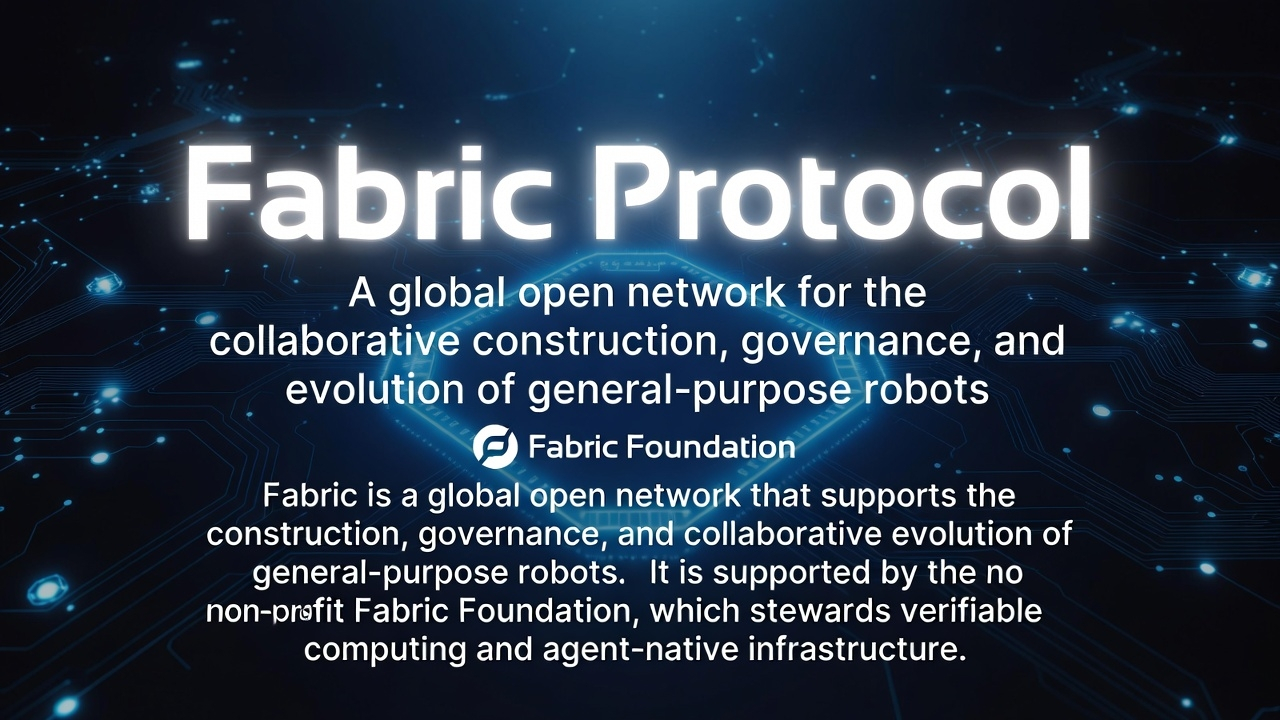
Diving deeper into Fabric Protocol's role as this masterful coordinator for robotic labor, it's exhilarating to see how it invites anyone to jump in by operating or supplying bots for tangible real-world jobs, and the kicker is sharing those sweet economic gains from all the automation magic, which could totally transform sweat-heavy sectors craving a boost from smarter machine help. Think of it as a dynamic marketplace where the protocol matches up participants with workloads seamlessly, and once a task wraps up, verifications kick in to dole out payments without a hitch, all humming along on a blockchain that's built tough for scale and security. That public ledger is the unsung hero, tracking data streams, resource pools, and rule-following with crystal-clear transparency that anyone can audit, which slashes dangers in high-stakes areas like hospitals or roadways where a robot slip-up could spell disaster. With its modular bones, the system flexes as tech leaps forward, swapping parts on the fly, and the agent-native flair lets robots strut as full-fledged economic players, diving into markets with the verifiability that cements trust like glue. I can't help but envision a buzzing robot economy where these machines boast their own IDs, sling payments, and browse a skill marketplace to level up, all under human watchful eyes to safeguard harmony, and that's the collaborative evolution spark that ignites endless upgrades fueled by crowd wisdom instead of bossy top-down decrees.
The Fabric Foundation is the beating heart of this adventure, a non-profit powerhouse laser-focused on propelling open robotics and super-smart AI forward, all while ensuring these brainy machines open doors for folks worldwide and stay in sync with our deepest human aims, turning tech into a force for collective good rather than division. They're tackling the tough stuff in research, from aligning machines with human vibes to decoding AI choices, crafting solid governance for bots, and dreaming up economies that weave people and robots together seamlessly, which is crucial for weaving advanced tech into our routines without sparking chaos or widening gaps. By rolling out public-good tools for machine IDs, spreading tasks decentral-style, payments that hinge on spots or human nods for accountability, and rock-solid chats between bots, they're laying down the essentials for a reality where robots evolve from mere gadgets to economic sidekicks, sans the need for fancy legal status. This keeps power scattered, championing decentralized vibes where communities, tinkerers, and even rule-makers chime in on tech's path, and I'm blown away by how they're rallying global voices to mold standards, vital for nailing physical safety in bot ops or juggling resources in tight spots. Their push for worldwide access means diverse crowds can dive in via remote controls, learning hubs, or tweaking robot blueprints for local twists, nurturing an ecosystem that's as welcoming as it is innovative.
At the core of Fabric Protocol's wizardry is verifiable computing, this tech gem that lets hooked-up robotic squads whip up cryptographic seals proving they've nailed tasks just right, and it's a trust-builder extraordinaire for autonomous gigs where you can't babysit every move in the moment. It leverages slick crypto tricks to check computations without spilling secrets, so a bot might flaunt proof of a flawless delivery sans exposing trade secrets or personal bits, and this openness smooths out regs and squabbles in the network like a pro. Blending it with agent-native infrastructure, built from scratch for AI agents and bots, means the system gets their quirks like speedy processing or on-the-fly learning, enabling smooth network hookups for resource grabs or team plays. The modular vibe lets independent devs tweak and slot in pieces, fueling fast growth as bots swarm in, and together, it paves the way for human-bot tag teams with safety nets like approval gates or geo-locks to dodge mishaps. Ultimately, it's forging a playground where machines grow side by side, soaking up ledger-shared wisdom while humans steer the ship, and that evolutionary reward system amps up motivation by showering perks on those boosting the network's mojo.
Governance in Fabric Protocol pulses through its public ledger, masterminding not just the nuts-and-bolts but the rules and money flows too, keeping the whole shebang open and even-keeled as it swells, with decentralized votes letting folks weigh in on big calls or float fresh ideas, aligning everything with what the crowd truly needs over some overlord's whim. The blueprint packs adaptive engines for reward flows and an evolutionary layer that tweaks incentives on the fly based on what you bring—be it crunch power, data drops, or bot-running muscle—and this keeps the ecosystem humming in balance, rewarding inputs fairly. They're gearing up to hop from Base blockchain to a bespoke Layer 1 that's primed for robot IDs, slick payments, and a skills bazaar for bots to snag upgrades, ramping efficiency for mega-rollouts. This governance ethos screams long-haul care, with the Foundation as the fair umpire fueling R&D, steering evolution responsibly and inclusively, countering threats like power grabs or access hurdles via global participation kits. I can totally picture a tomorrow where bots get governed as a team effort, humans and machines under mutual guidelines that spotlight safety and fairness, setting it leagues apart from old-school robotics that skimps on openness and proof-positive vibes.
Fabric Protocol's homegrown token, ROBO, is the fuel that revs the ecosystem engine, acting as the go-to for task fees, voting clout, and pepping up participants, making it the linchpin of a robot economy that's as dynamic as it is fair. Capped at 10 billion, it sports smart tokenomics with adaptive emissions dialing rewards to match network buzz, dodging runaway inflation for lasting value, and while it's on Base now, a custom chain shift looms to unlock fancier feats. Earn ROBO by pitching in compute for verifications or staking stablecoins to fleet bots, while task-givers pay up in token, sealing deals on the ledger with zero fuss. This empowers bots as solo market players, syncing everyone's drives, and tie-ups like with Virtuals Protocol launch bot-friendly ventures for full economic dives. Chatter on spots like Binance Square highlights ROBO's liquidity lift and robot economy build-out, easing trades and dives as the network sprawls.
They're springing from a squad of distributed systems and machine learning mavens who banded under the Fabric Foundation to smash through AI and robotics bottlenecks, where central chokeholds kill creativity and entry, flipping the script with decentralized fixes drawn from their blockchain and AI roots for something utterly trailblazing. The Foundation's spark comes from craving open paths in AI's wild ride, assembling a passionate crew bent on tech uplifting all humanity over elite pockets, pulling from crypto for proofs and agent sims for infra. Alliances amp their stride, linking with crypto-AI crews for ROBO liquidity boosts and bot rollout expansions, scaling worldwide. Fresh wins like exchange spots widen reach, and the L1 migration brews for advanced perks, all steeped in non-profit spirit prioritizing public wins over cash grabs. I'm buzzing with hope on how this crew and allies tee up Fabric Protocol for machine-meshed complexities, guaranteeing robust, checkable, and fair scaffolding as bots go mainstream.
Peering into Fabric Protocol's horizon, the roadmap buzzes with plans to stretch into more sectors and corners, honing bot rolls via AI matchmaking that pairs jobs to resources in the blink, and beefing agent-native tools for richer human-bot dances. Triumph looks like a realm where AI and bots are safe, peekable, and human-tuned, letting global peeps join and reap sans walls, tackling woes like worker droughts or eco watches with bot squads. Funding alignment and governance digs keeps evolution smart, flexing to tech waves while decentralization wards off bosses. Spreading know-how through teaches and gadgets demystifies bots for all, sparking uptake and inputs that rocket growth. Fabric Protocol heralds a pivot to machines as co-dreamers in our world, powered by open, provable setups cherishing safety and welcome, a vision that's downright electrifying for what's next.
#ROBO @Fabric Foundation $ROBO
