

Recently, I asked an AI a technical question. The response came back instantly — structured, detailed, and delivered with absolute confidence. It looked perfect. But it was wrong. That moment made me realize something uncomfortable: we are rapidly building an AI-powered world on top of systems that still operate on probability, not certainty. AI models can hallucinate. They can fabricate sources. They can produce answers that sound authoritative while being fundamentally flawed. And yet, we continue to integrate them deeper into finance, healthcare, logistics, robotics, and autonomous infrastructure.
The real problem isn’t that AI makes mistakes. Humans do too. The real problem is that we don’t have a native verification layer for machine intelligence. When AI is generating blog posts, errors are inconvenient. When AI is diagnosing patients, executing trades, or controlling drones, errors become systemic risks. Intelligence without verification becomes fragile. Confidence without consensus becomes dangerous.
This is where Mira Network becomes interesting. Instead of trying to build a “better” AI model, Mira focuses on something more foundational: reliability. Mira transforms AI outputs into cryptographically verified information by breaking complex responses into individual claims and distributing them across a decentralized network of independent AI models. Those claims are validated through blockchain-based consensus mechanisms and aligned through economic incentives. The result is not blind trust in a single model, but trust in a distributed verification process.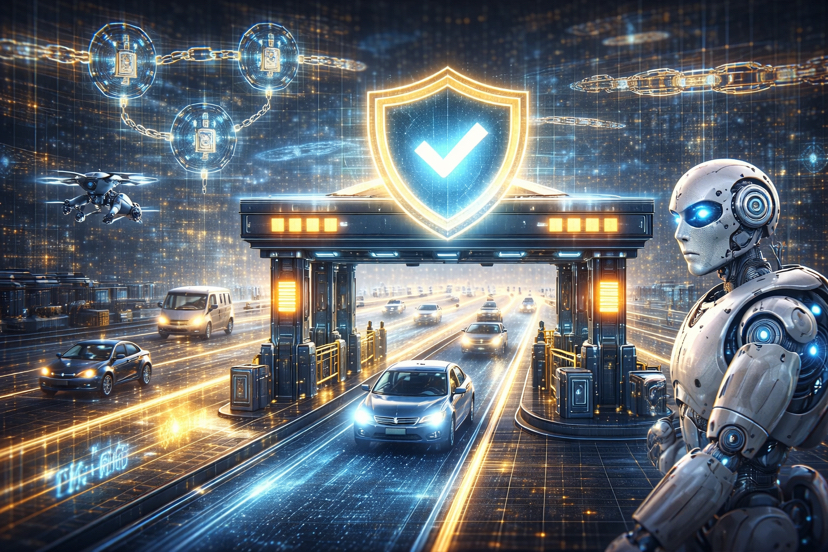
Think of it this way: blockchain solved the double-spending problem for digital money by introducing decentralized consensus. Mira applies a similar philosophy to artificial intelligence. Instead of trusting one model’s output, the network verifies claims across multiple agents before they are accepted as reliable. It replaces centralized authority with trustless validation. In a world moving toward autonomous AI agents that can trigger actions, move funds, or control machines, verification must come before execution.
The bigger shift is philosophical. We are entering an era where machines will increasingly act on our behalf. They will negotiate contracts, manage infrastructure, optimize supply chains, and operate physical systems. If those agents are operating on unverified intelligence, the risk scales exponentially. Mira positions itself as the checkpoint before action — the toll booth where AI must prove its output before moving forward.
For investors and builders, the opportunity may not lie in guessing which AI model will dominate the next cycle. Models will evolve. Architectures will improve. But regardless of which model wins, autonomous systems will require validation infrastructure. Every intelligent output that leads to real-world consequences will need proof. In that sense, Mira isn’t competing in the AI model race. It is building the reliability rails beneath it.
Artificial intelligence is scaling fast. But intelligence without verification is unstable. In the machine economy that is forming, truth will need infrastructure. Mira Network is building that infrastructure — the toll booth for AI truth. @Mira - Trust Layer of AI #mira $MIRA
