
I’ve been in enough cycles to recognize a pattern in myself.
If something doesn’t move fast, I start questioning it.
That impatience has cost me more than bad entries ever did.
When I first started digging into the Fabric Foundation, I felt that same friction. No loud influencer push. No ridiculous APY hooks. No short-term dopamine narrative. Just a thesis: machines will need economic coordination.
At first, that felt too slow.
Then I realized slow is usually where the real architecture is hiding.
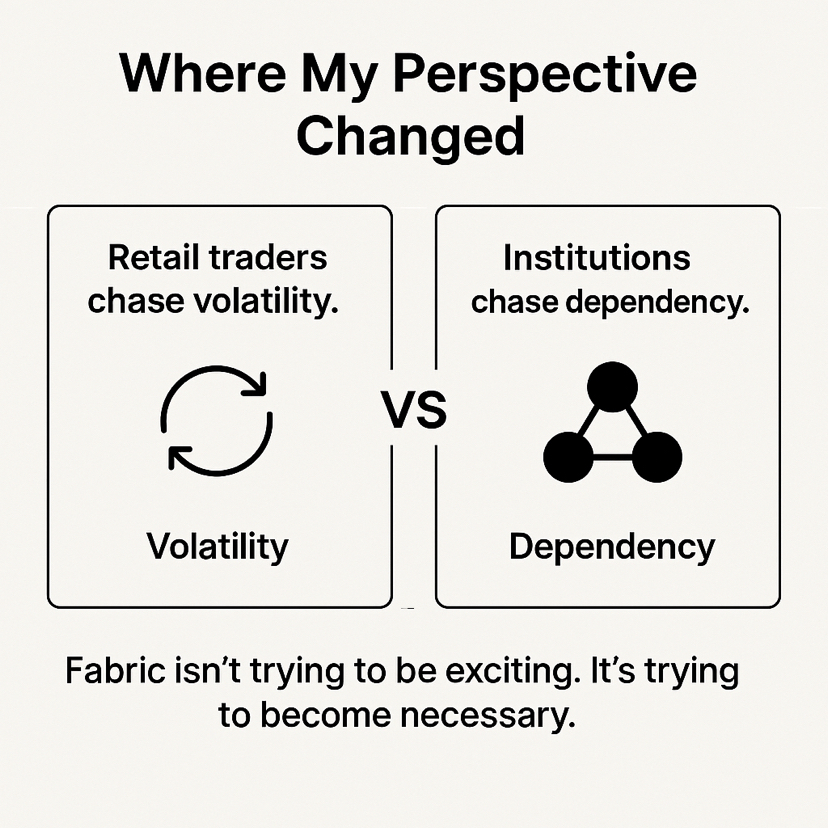
Where My Perspective Changed
I trade. I build. I study token models obsessively.
And over time, I’ve noticed something uncomfortable:
Retail traders chase volatility. Institutions chase dependency.
Dependency is boring. It doesn’t trend on X. It doesn’t 3x in a week. But when systems depend on something, removing it becomes expensive.
Fabric isn’t trying to be exciting. It’s trying to become necessary.
That’s a different game.
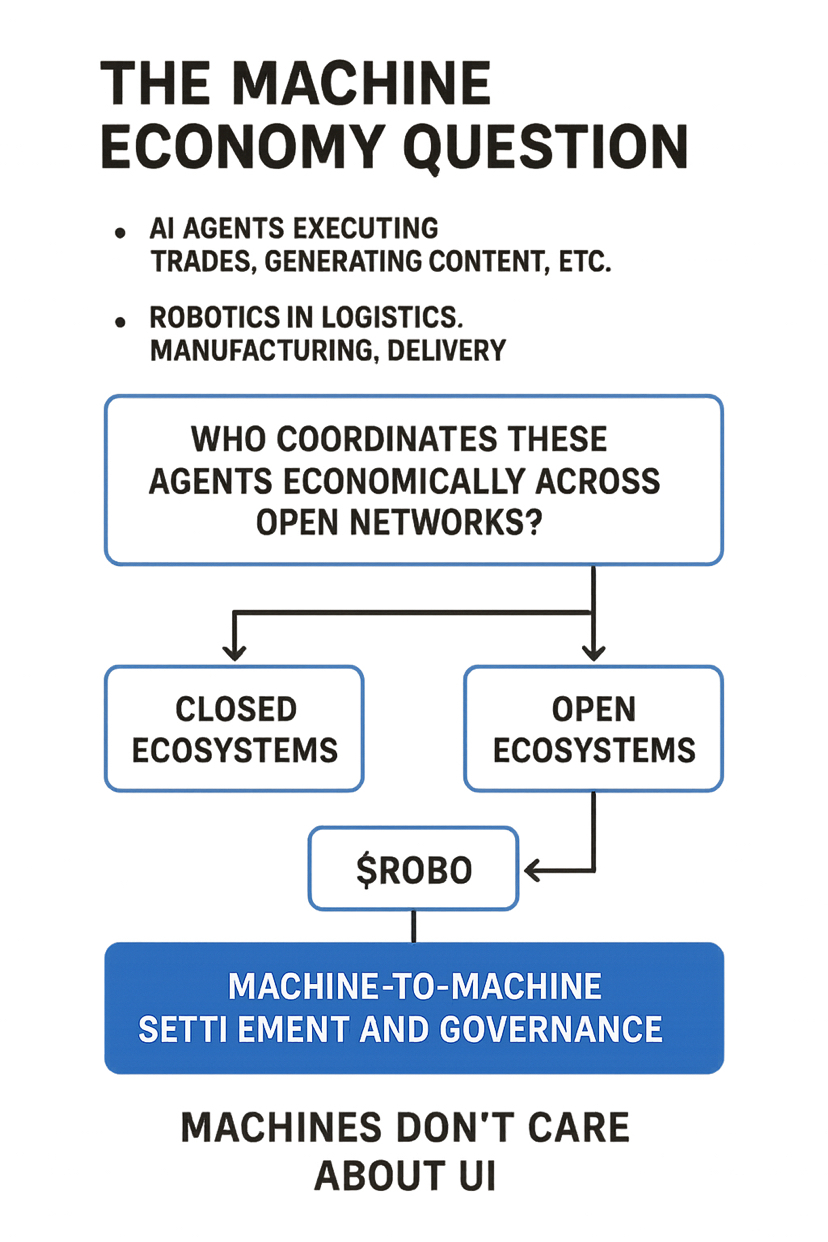
The Machine Economy Question
We’re already watching AI agents execute trades, generate content, automate workflows. Robotics is scaling in logistics, manufacturing, even delivery systems.
The uncomfortable question nobody wants to price in:
Who coordinates these agents economically if they operate across open networks?
Closed ecosystems solve it internally.
Open ecosystems need rails.
That’s where $ROBO’s positioning matters. It’s not targeting humans. It’s targeting machine-to-machine settlement and governance logic.
Most people don’t see it because they’re still thinking in retail user flows.
But machines don’t care about UI. They care about protocol guarantees.
My Personal Mistake (And Why I’m Careful Now)
I once ignored another infrastructure token because “adoption wasn’t fast enough.” Six months later, it quietly integrated into multiple backend systems. Price followed usage, not marketing.
That lesson stuck with me.
So when I look at ROBO now, I’m not asking when it pumps. I’m asking:
Does the architecture make sense if machine economies expand?
If the answer is yes — time becomes less threatening.
The Real Risk
Execution.
If Fabric fails to attract actual robotics or AI integrations, the thesis collapses. Infrastructure without traffic is just code.
But if even a fraction of autonomous systems start using decentralized coordination rails, the token shifts from speculative asset to operational unit.
That transition is where asymmetry lives.
My Honest Take
This isn’t a comfort play. It’s a patience play.
It requires believing that autonomous systems won’t be fully controlled by centralized giants forever.
That’s a strong opinion.
But every cycle, the projects that look “too early” are either dismissed… or quietly embedded into the future.
I’ve learned to respect quiet infrastructure.
Sometimes the loudest opportunity is the one nobody is shouting about.
#ROBO @Fabric Foundation $ROBO
