
@Fabric Foundation #ROBO $ROBO
FABRIC is an emerging decentralized platform designed to serve as the trusted, open, and collaborative backbone of the AI robotics ecosystem — enabling secure flows of data, tasks, and value among intelligent machines, humans, and applications.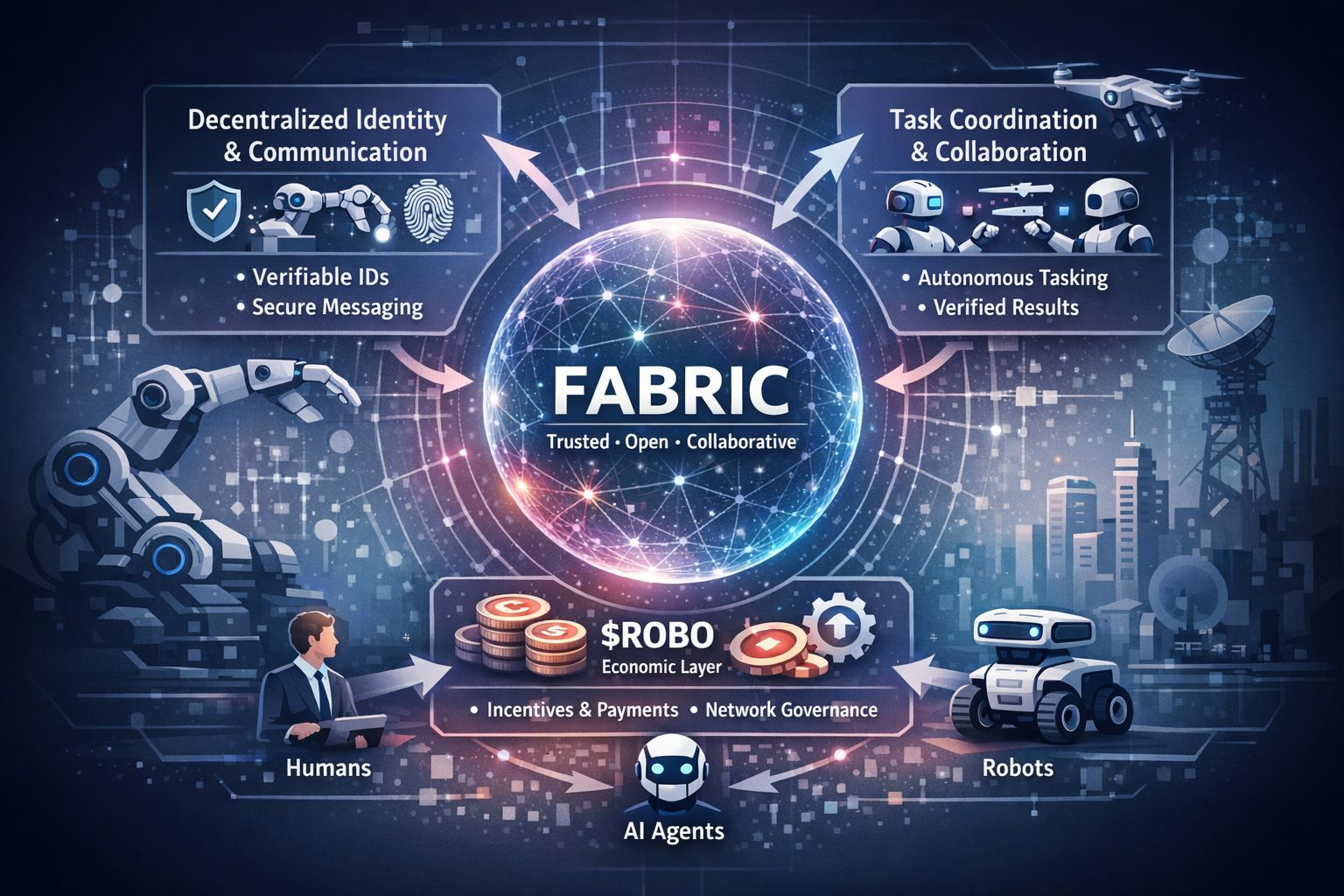
What Is FABRIC?
At its core, FABRIC is a collaboration and coordination infrastructure that allows autonomous robots and AI agents to interact, exchange information, perform coordinated tasks, and settle incentives in a transparent and verifiable way. It is part of the ecosystem led by the Fabric Foundation, a non-profit dedicated to safe, open, and inclusive development of robotics and artificial intelligence.
The platform provides:
A Trusted Open Framework where software, humans, and machines share a common communication protocol.
Secure Data and Task Flows using cryptographic methods and decentralized verification so that commands and results can be trusted between independent participants.
An Economic Layer that supports value exchange between humans, developers, robot owners, and builders.
Fabric Foundation: The Mission Behind FABRIC
The Fabric Foundation is an independent non-profit organization focused on building governance systems, economic infrastructure, and coordination frameworks for AI and robotics operating in the physical world.
Why It Exists
As AI moves from digital environments into real-world robotics and autonomous systems, several challenges arise:
Physical safety and accountability when machines operate in human environments.
Real-time coordination under resource constraints such as energy, bandwidth, and risk management.
Governance and economic gaps, since traditional legal and financial systems were not designed for autonomous machine participants.
The Foundation addresses these challenges by creating decentralized infrastructure that allows robots to coordinate tasks, identify themselves securely, and operate under shared governance without reliance on centralized control.
Key Components of the FABRIC Ecosystem
1. Decentralized Identity and Communication
Each robot or AI agent in the FABRIC network is assigned a unique verifiable identity. This ensures that actions, data exchanges, and task completions can be authenticated and recorded transparently.
This layer supports:
Secure human and machine identity verification
Encrypted messaging and task instructions
Verifiable record-keeping of actions and outcomes
2. Task Coordination and Collaboration
FABRIC enables decentralized task allocation and execution by:
Matching tasks with capable robots and agents
Tracking verified completion
Recording performance transparently
This replaces centralized control systems with an open network model where collaboration is governed by protocol rules rather than proprietary intermediaries.
3. Economic and Incentive Infrastructure ($ROBO)
A central part of the ecosystem is $ROBO, the native utility and governance token of the network. It is designed to:
Cover network usage fees for identity verification and task settlement
Enable staking and participation mechanisms
Align incentives among developers, operators, data providers, and builders
Token holders can participate in governance decisions that shape protocol upgrades, economic parameters, and network policies.
Vision and Ecosystem Impact
FABRIC aims to build an open, scalable robotics economy where:
Developers can build interoperable robotics applications
Hardware and software systems collaborate securely
Humans and autonomous agents coordinate transparently
Economic value flows fairly between contributors
By combining decentralized identity, coordination protocols, and incentive mechanisms, FABRIC seeks to ensure that intelligent machines are not only autonomous — but also capable of secure collaboration and responsible value creation.
Conclusion
FABRIC represents a forward-looking infrastructure layer for the AI robotics era. By integrating decentralized governance, verifiable identity, collaborative task execution, and economic incentives, the platform works toward a future where robots and AI systems operate securely, transparently, and in alignment with human interests.