I have seen crypto projects that attract the market with big promotional stories.. The real question is whether any project can actually build effective infrastructure over the long term. Fabric Foundation is an example of this test.
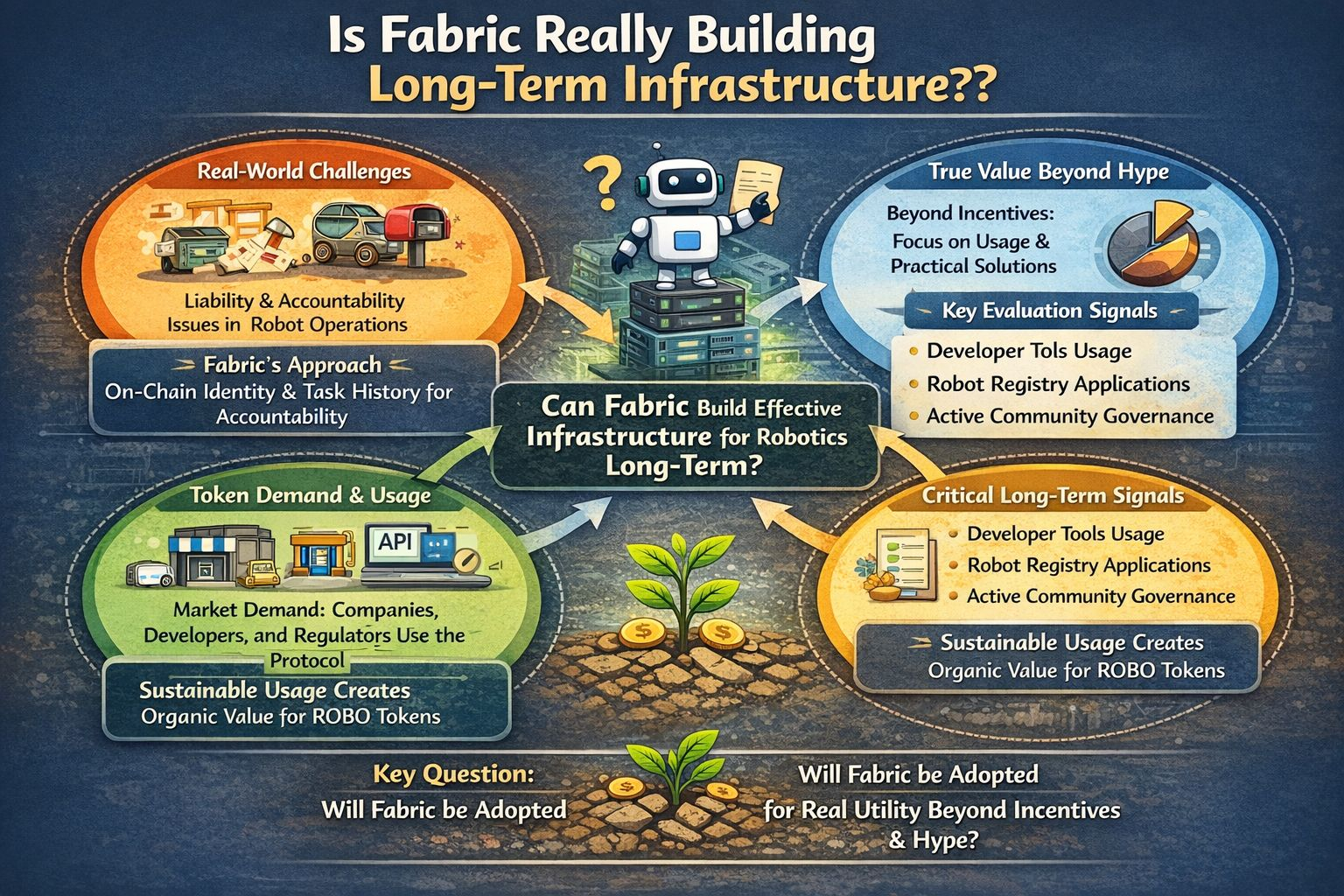
When robots operate in commercial environments, liability and accountability become real problems. If an autonomous delivery robot damages property or a robot arm injures a worker, current legal and technical frameworks are insufficient to resolve these issues. Fabric is trying to solve this problem.
Fabric is attempting to fill this gap through on-chain identity, task history and governance frameworks that make every step of a robots actions trackable and accountable. This is not a technical innovation. It's an important step toward long-term practical solutions in the robotics industry. Fabric is working on this.
Understanding a projects strength requires looking beyond incentives or community numbers. For Fabric the projects true value will become clear after March 20 when financial incentives or special rewards end. We will see if developers, robot companies and regulatory bodies will voluntarily use the Fabric protocol. Without being paid to do
If they begin using Fabric not under incentive pressure. For genuine utility thats a strong signal that the project is organically adoptable and moving toward long-term infrastructure. This is what we need to watch.
During a campaign trading volume, community tasks or content rewards can attract people.. The real product-market fit test comes when users start using the protocol regularly without incentives. For Fabric this test watches not numbers, but real usage and actual accountability applications. That is the credible standard for evaluating a projects long-term viability.
Fabrics token ROBO isn't created for trading or incentives. Real long-term value comes from -speculative demand that reflects the projects actual usage. Fabrics circulating supply is currently 2.2 billion with a supply of 10 billion.
The key question is whether the market can absorb these tokens. Not just through incentives but through genuine necessary demand. In Fabrics model this demand clearly comes from three sources: companies registering robot fleets on-chain because its legally or operationally valuable to them; developers using the protocol because it gives them capabilities not replicable and regulatory bodies and insurers using the behavioral record system because it reduces verification costs and ensures accountability.
All these sources create buying pressure on ROBO tokens. Not driven by market hype or incentives but by real usage and necessity which can ensure the tokens lasting value. This is how it works.
We all know that a natural tendency in crypto markets is to price in potential at current valuations. When an attractive infrastructure project emerges the market generally doesn't wait to see if real infrastructure will be built. It prices in possibility and hope. This is true for Fabric well.
The market is already pricing in the tokens usage, developer progress and community participation.The timeline and effectiveness of actual infrastructure development differs from market enthusiasm. For this reason treating early market metrics. Trading volume, rewards, community activity. As direct indicators of product-market fit is dangerous.
Real evaluation comes when users start regularly using the protocol without incentives or price hype. The only credible measure of Fabrics long-term success is usage, developer tools and robot operational applications. Not market noise or temporary sentiment. These signals will show how long the project truly survives.
Fabrics genuine long-term success cannot be understood through incentives or market hype alone. To understand the projects progress certain important signals must be watched:
Developer Tools and Standards Publication. If developers build tools or standards using Fabrics protocol without being paid to do it shows the technology is practically useful and genuinely needed.
Hardware and Robot Operational Applications. If robot deployment companies use Fabrics registry infrastructure it proves that business and operational requirements are real.
Governance Proposals and Influence on Network Decisions.If the community and token holders actively participate in the projects governance and submit proposals, on network decisions it shows the project is building functional infrastructure. Not meaningless symbolic participation.
These signals don't generate trending hashtags or price threads. They are what indicate whether Fabric will survive long-term and establish itself as critical infrastructure. If the robot economy materializes the open accountability layer Fabric describes will be indispensable.
But the question remains. Within this project this community and this token structure will Fabric become the infrastructure that endures and becomes necessary? The answer isn't yet. Anyone who tells you otherwise is just trying to sell you something.@Fabric Foundation