
Fabric Protocol begins with an observation that many discussions about robotics quietly overlook. As machines and intelligent agents grow more capable, the real difficulty may not lie in building smarter robots but in coordinating them safely with humans and with each other. When autonomous systems begin operating across shared environments, questions about trust, governance, and transparency become unavoidable.
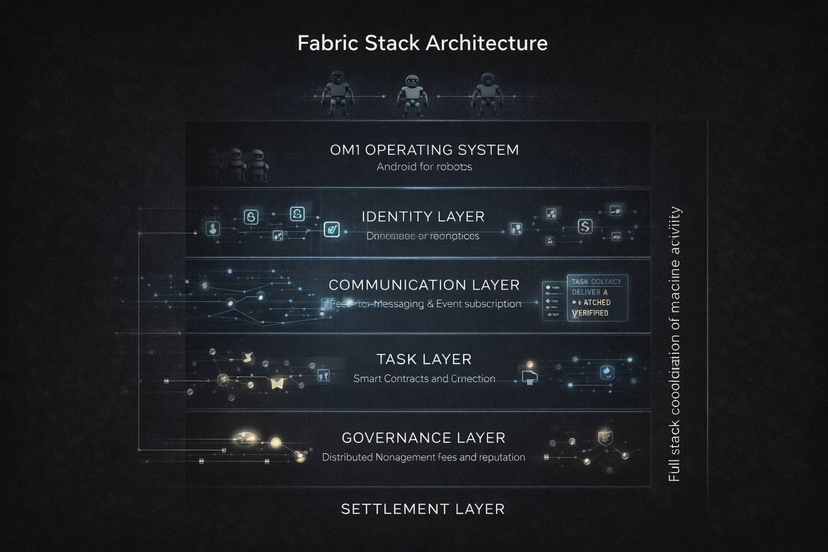
This is the challenge Fabric Protocol attempts to address. Supported by the non-profit Fabric Foundation, the protocol explores the idea of a global open network designed for the construction, governance, and collaborative evolution of general-purpose robots. Instead of treating machines as isolated systems, Fabric Protocol frames robotics as an ecosystem where agents, humans, and infrastructure must coordinate continuously.
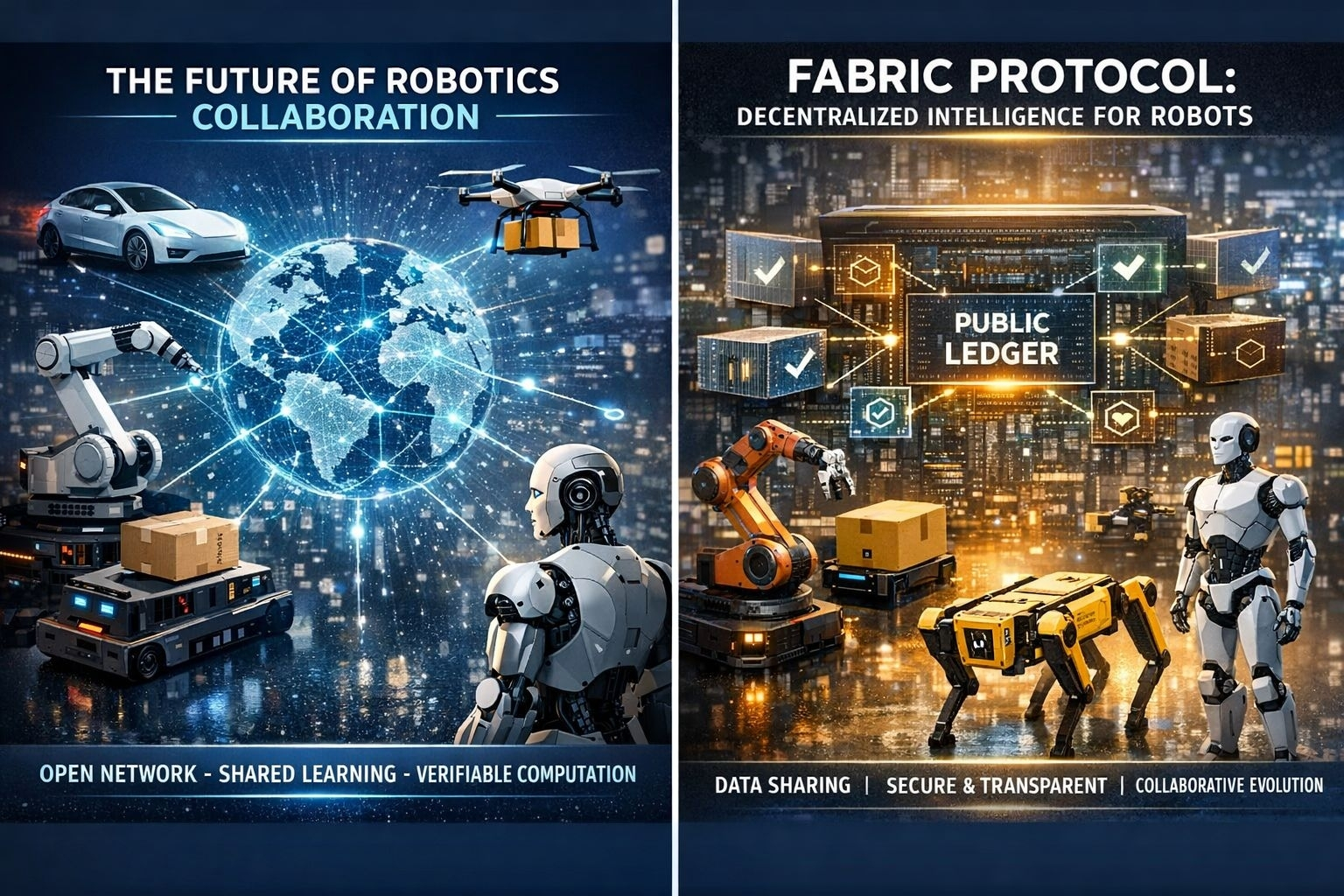
The architecture behind this idea combines verifiable computing, agent-native infrastructure, and coordination through a public ledger. By organizing data, computation, and regulation within a transparent environment, Fabric Protocol introduces a framework where robotic activity can be observed, validated, and governed collectively. This approach attempts to reduce uncertainty when intelligent machines interact with complex human systems.
Looking ahead, the evolution of robotics may depend less on individual machine intelligence and more on the infrastructure that allows machines and people to collaborate with trust. Fabric Protocol quietly raises an important question: if robots become part of everyday systems, what kind of network ensures their actions remain verifiable, accountable, and aligned with human environments? The ideas surrounding $ROBO hint at one possible direction for that future.
@Fabric Foundation #ROBO $ROBO
