Most people look at AI tokens and see charts, volatility, and speculation. They see code, automation, and algorithms moving faster than human hands ever could. But when you look closely at Robo, it doesn’t feel like just another digital asset chasing a narrative. It feels like an idea about what automation could become when it starts to resemble human intention.
Robo isn’t trying to replace people. It’s trying to amplify them.
In a world where markets never sleep and decisions are measured in milliseconds, humans can’t manually manage every opportunity. We get tired. We hesitate. We second-guess. Autonomous systems don’t. But pure automation without direction can be reckless. That’s where Robo’s personality begins to take shape — not as a cold machine, but as a structured assistant operating within clear rules.
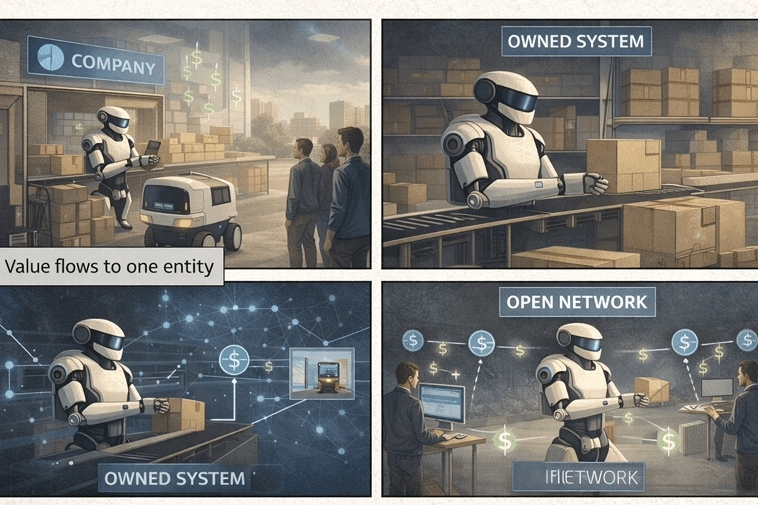
Think of Robo as the infrastructure layer where artificial intelligence meets blockchain logic. AI handles analysis. Blockchain ensures transparency. Smart contracts execute without bias. Together, they form a system that doesn’t rely on emotion, yet still serves human goals. It’s not about removing people from the equation; it’s about building systems that carry out intentions consistently and reliably.
What makes Robo compelling is its quiet ambition. It’s not just about bots that trade faster. It’s about autonomous agents that can negotiate, validate data, execute agreements, and interact with other systems independently. That shift — from automation to autonomy — is subtle but powerful. Automation follows instructions. Autonomy interprets objectives and acts within defined boundaries.
And boundaries matter.
Humanizing Robo means recognizing that trust is central to its design. The blockchain backbone ensures that actions are traceable. Smart contracts reduce ambiguity. Every execution is recorded, verifiable, and transparent. In an ecosystem increasingly filled with opaque algorithms, that transparency feels almost ethical.
Robo represents a future where financial systems operate with machine-level efficiency but human-level oversight. It suggests a world where decentralized agents can coordinate without centralized control, where decisions are data-driven yet rule-bound, and where value moves seamlessly across digital environments.
There’s something poetic about it. For centuries, humans built tools to extend physical strength. Then we built computers to extend calculation. Now we are building autonomous networks to extend decision-making itself. Robo sits at that intersection — not as a replacement for judgment, but as an extension of it.
Markets evolve in cycles. Narratives come and go. But infrastructure tends to outlast hype. If Robo succeeds, it won’t be because it shouted the loudest. It will be because it built quietly, consistently, and with purpose.
In the end, Robo isn’t just code executing commands. It’s a reflection of what we value in systems: clarity, consistency, accountability, and efficiency. It embodies the idea that technology works best not when it tries to act human, but when it supports human ambition without being clouded by human weakness.
And maybe that’s the most human thing about Robo — it exists to help us do more, with fewer limits, and with greater confidence in the systems we rely on.