
The Fabric Foundation is building what the internet never had for robotics — a sovereign, open protocol that lets machines think, coordinate, and govern themselves without centralized control
Conceptual rendering of the Fabric Protocol's decentralized robot coordination network — nodes represent individual agents; lines represent verifiable communication channels.
In laboratories from Osaka to Oakland, a quiet revolution is underway. Robots are no longer isolated machines; they are becoming nodes in a living, breathing computational fabric. And yet, the infrastructure required to coordinate them — securely, transparently, at global scale — has never existed. Until now.
The Fabric Foundation is staking its claim as the architect of that missing layer. Through a nonprofit mandate and an open-protocol philosophy, the organization is building something the robotics industry has conspicuously avoided: a shared, neutral commons where machines can communicate, verify each other's capabilities, and be held accountable under a governance framework no single corporation controls.
The ambition is enormous. The timing, its supporters argue, is urgent.
Why a Neutral Protocol, and Why Now
The first generation of industrial robots was defined by isolation — each arm, AGV, or conveyor system sealed into proprietary silos. The second generation brought network connectivity, but that connectivity remained fragmented across vendor ecosystems that rarely spoke to one another. As general-purpose robots emerge — machines designed not for one task on one line but for any task in any environment — that fragmentation becomes untenable.
"When your robot is operating in thirty different buildings owned by thirty different companies, you cannot have thirty different versions of what trust means," says one infrastructure researcher familiar with the Fabric approach. "You need a protocol layer — the same way the internet needed TCP/IP before commerce on it was possible."
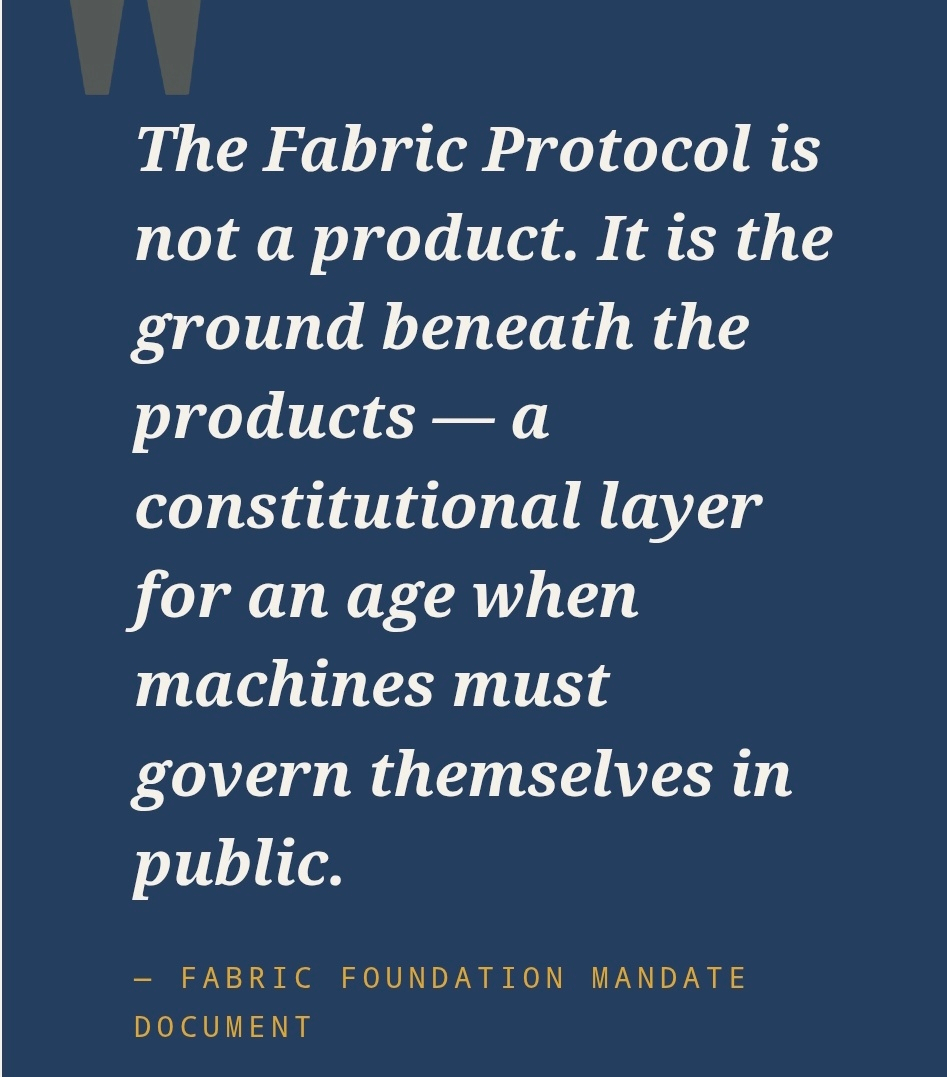
The Foundation's answer is a public, permissionless ledger that records the data, decisions, and deployments of robots operating under its framework. Think of it less as a blockchain for robots and more as a constitutional substrate: a set of rules no single entity owns, enforced by verifiable computation, that any machine, developer, or regulator can audit at any time.
The Architecture of Verifiable Trust
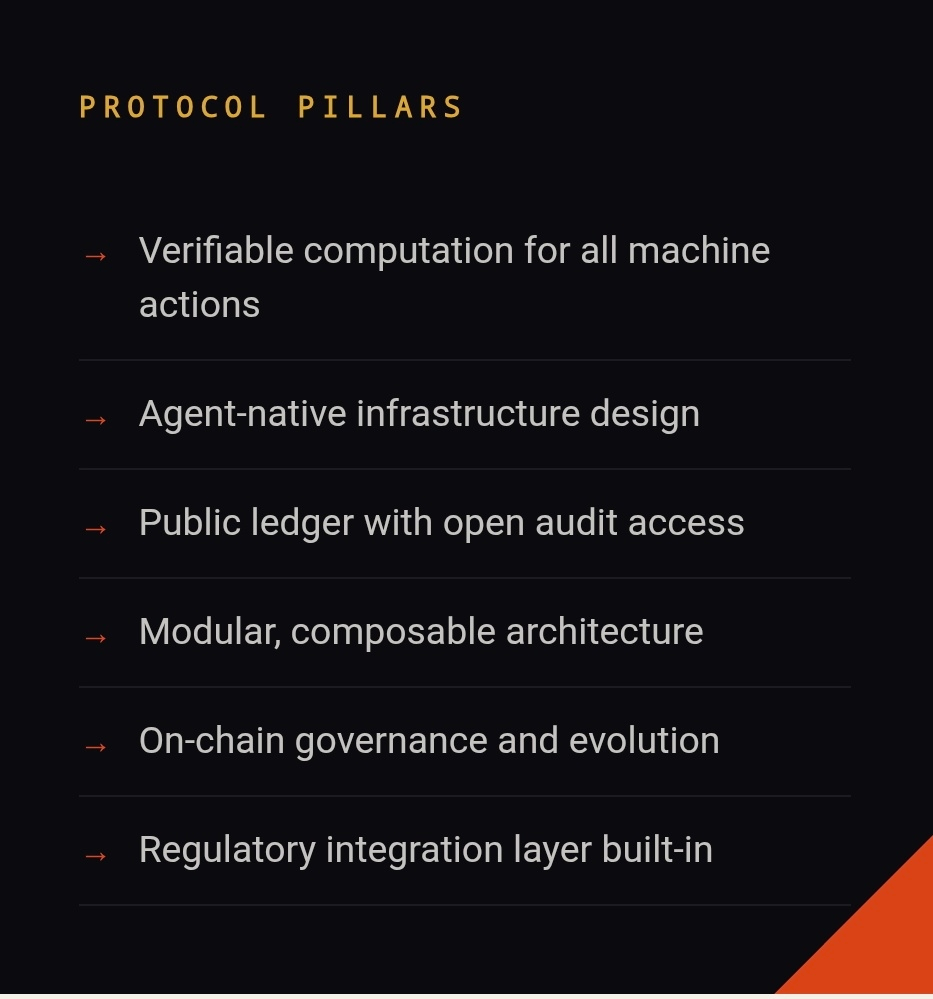
At the heart of the protocol is a concept the Foundation calls agent-native infrastructure — a departure from architectures designed for passive devices and a deliberate embrace of autonomous agents as first-class citizens of the network. Traditional IoT frameworks assume devices that receive commands; agent-native infrastructure assumes entities that reason, decide, and act.
This distinction carries profound technical consequences. Where conventional systems log what happened after the fact, Fabric's architecture uses verifiable computing techniques to make intention and execution cryptographically provable in real time. A robot operating under the protocol does not simply report its actions to a central server — it produces proofs of those actions that any node on the network can verify independently, without trusting the robot itself.
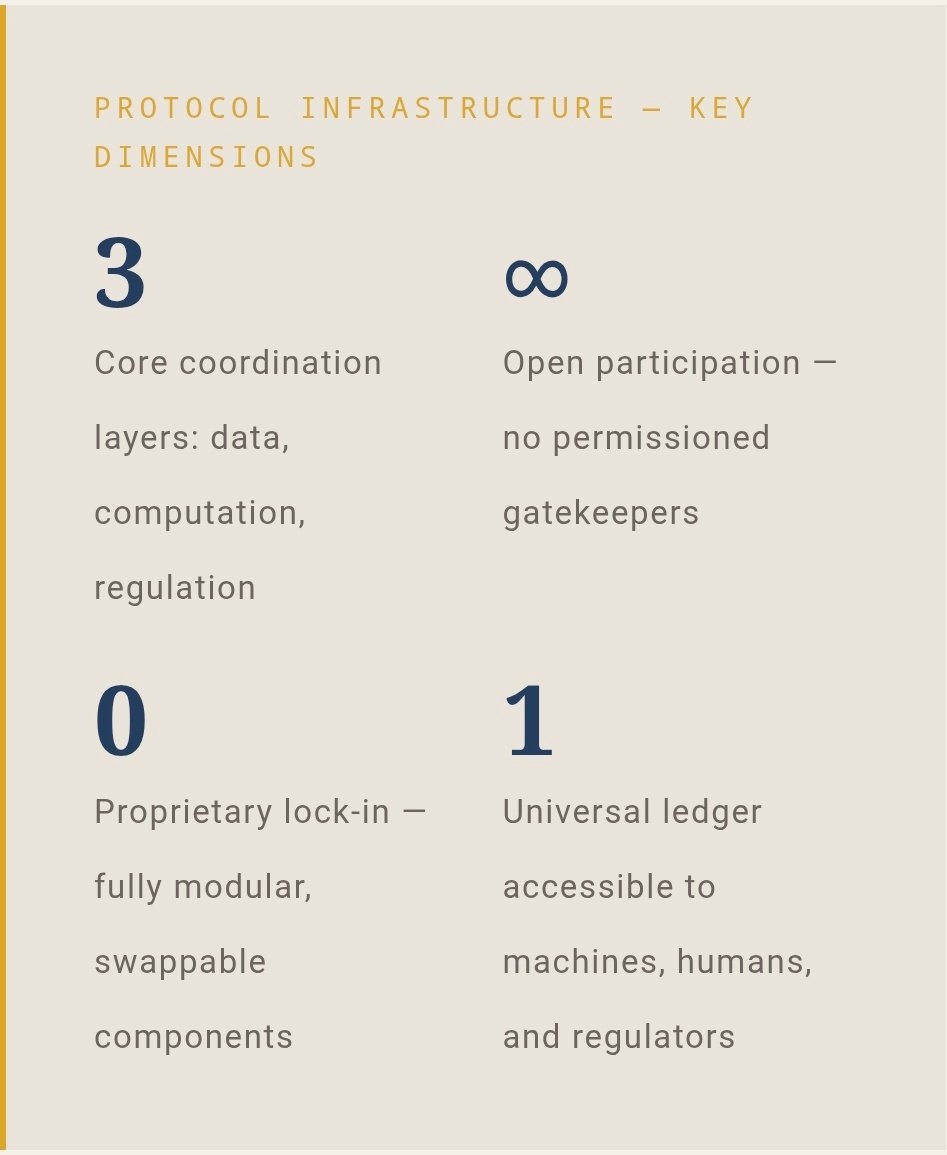
The modular design of the protocol is equally intentional. Rather than building a monolithic system, Fabric has decomposed the problem into interchangeable layers: data provenance, computational verification, and regulatory compliance operate as distinct but composable modules. An operator can adopt the data layer without the regulatory module; a regulator can query the compliance layer without running any robot infrastructure. The protocol is designed to grow into contexts its designers have not yet imagined.
Governance as Infrastructure
Perhaps the most provocative aspect of the Fabric Foundation's work is its treatment of governance not as an afterthought but as a technical primitive. The protocol encodes governance rules directly into its architecture — a move that reflects hard-won lessons from the first generation of decentralized systems, where governance was often bolted on after the fact, with predictably messy results.
Under the Fabric model, the evolutionary path of the protocol itself — which features are added, which deprecated, how disputes between participants are resolved — is mediated through on-chain processes as auditable as the robot data they govern. The Foundation acts as steward, not sovereign; the protocol belongs to its participants.
This structure positions the Fabric Foundation in a role without clear precedent: a nonprofit that writes the rules of a machine civilization rather than controlling it. It is, by design, an organization built to make itself less necessary over time — and therein may lie its most radical claim to legitimacy.
The Human Equation
Amid the technical architecture, one question surfaces repeatedly: what does this mean for the humans who work alongside these machines? The Foundation's framing — safe human-machine collaboration — is more than marketing language; it is encoded into the protocol's design constraints.
Specifically, the protocol requires that any robot action with potential human impact produce a verifiable record of the safety checks performed before that action was executed. Regulators, employers, and workers themselves will have the ability to audit these records in real time. The Foundation argues this makes the protocol inherently pro-accountability: not because machines will be perfectly safe, but because their errors will be impossible to hide.
Whether that promise holds up under the pressure of deployment at scale remains the defining test ahead. The infrastructure to weave a new world of intelligent machines is now being laid, thread by thread. What patterns emerge from it — whether they bind or whether they set free — depends on choices being made now, in the quiet work of protocol design.
The loom is open. The weaving has begun.