
@Fabric Foundation addresses a growing concern in my daily work as a crypto trader. I scan market updates each morning. I see headlines about artificial intelligence advancing rapidly. Robots now assist in warehouses and homes. Yet everyday people face real risks. Machines might act in unexpected ways. Centralized companies control most systems. This leaves little room for human oversight.
I have traded digital assets for over eight years. Safety issues appear more often now. One wrong update in a factory robot can halt production lines. Personal assistants might share private data without consent. Users worry about accountability. Who ensures these machines follow human values? Without proper structure misalignment happens fast. I observe this pattern across many AI projects.
Fabric Foundation builds public infrastructure to solve these problems. It creates decentralized identities for machines. Each robot receives a verifiable record on a public ledger. This record tracks actions clearly. Coordination between machines becomes transparent. Humans set rules through governance. The system prevents any single entity from dominating. I see this as a practical step toward balance.
The protocol enables safe collaboration in real settings. Machines register their capabilities on chain. They accept tasks only under agreed conditions. Payments and data exchanges happen securely. Staking mechanisms add accountability. Operators bond tokens to guarantee performance. This setup keeps everything predictable. I appreciate how it turns abstract alignment into working tools.
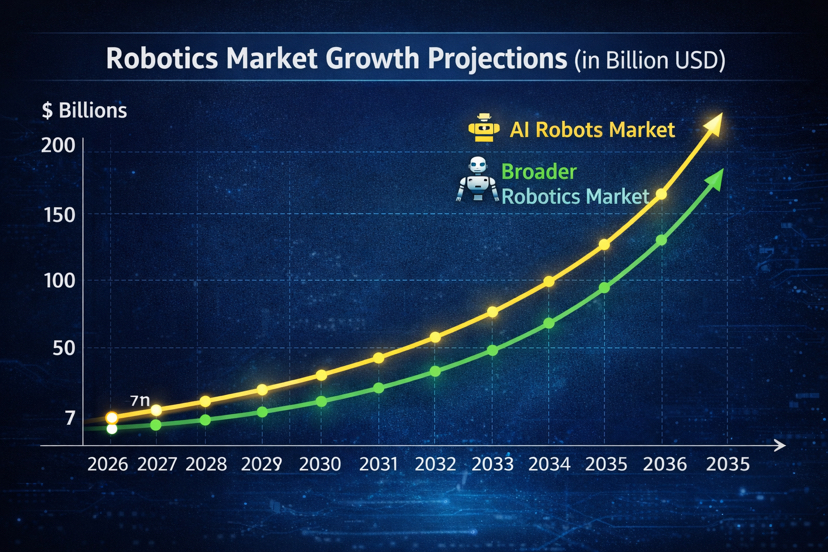
Consider the scale of what we face. The artificial intelligence robots market stands at around seven billion dollars this year. Projections show growth to 60B dollars by 2034. Broader robotics could reach nearly two hundred billion dollars by twenty thirty five. Unitree builds capable humanoid robots. NVIDIA supplies powerful computing. Fabric Foundation works alongside such leaders. It adds the missing layer of open coordination.
I have analyzed many decentralized AI tokens. Most focus on software models alone. Few address physical robots directly. Fabric Foundation stands apart here. It tackles winner takes all risks in robotics. It provides on chain identity and payments. It creates open human machine alignment infrastructure. Funding reached twenty million dollars last year from top investors. This level of backing shows serious intent.
As a trader I evaluate utility first. The $ROBO token powers network fees and staking. Holders participate in governance with time locked votes. Rewards flow to contributors who register hardware or validate tasks. This creates aligned incentives. I hold positions in similar sectors. Yet Fabric feels more grounded. It avoids pure speculation. It targets real world deployment in manufacturing and logistics.
Daily news reminds me of the stakes. Autonomous systems now handle deliveries and surgery support. Without safeguards small errors compound quickly. Fabric Foundation offers a calm alternative. It uses blockchain to keep humans in the loop. Machines gain freedom to collaborate. Humans retain clear control mechanisms.
I reflect on my early trades in blockchain projects. Many promised revolution but delivered centralization. This foundation learns from those lessons. It prioritizes transparency and community input. The approach feels honest and sustainable.
We stand at a turning point with intelligent machines. Fabric Protocol provides a thoughtful foundation for progress. It promotes safety without slowing innovation. How will these systems shape our daily routines in the coming years? I plan to watch closely and participate where it makes sense. The path ahead looks steady with the right infrastructure in place.