Most people look at crypto through price charts.
But recent headlines made me rethink something deeper.
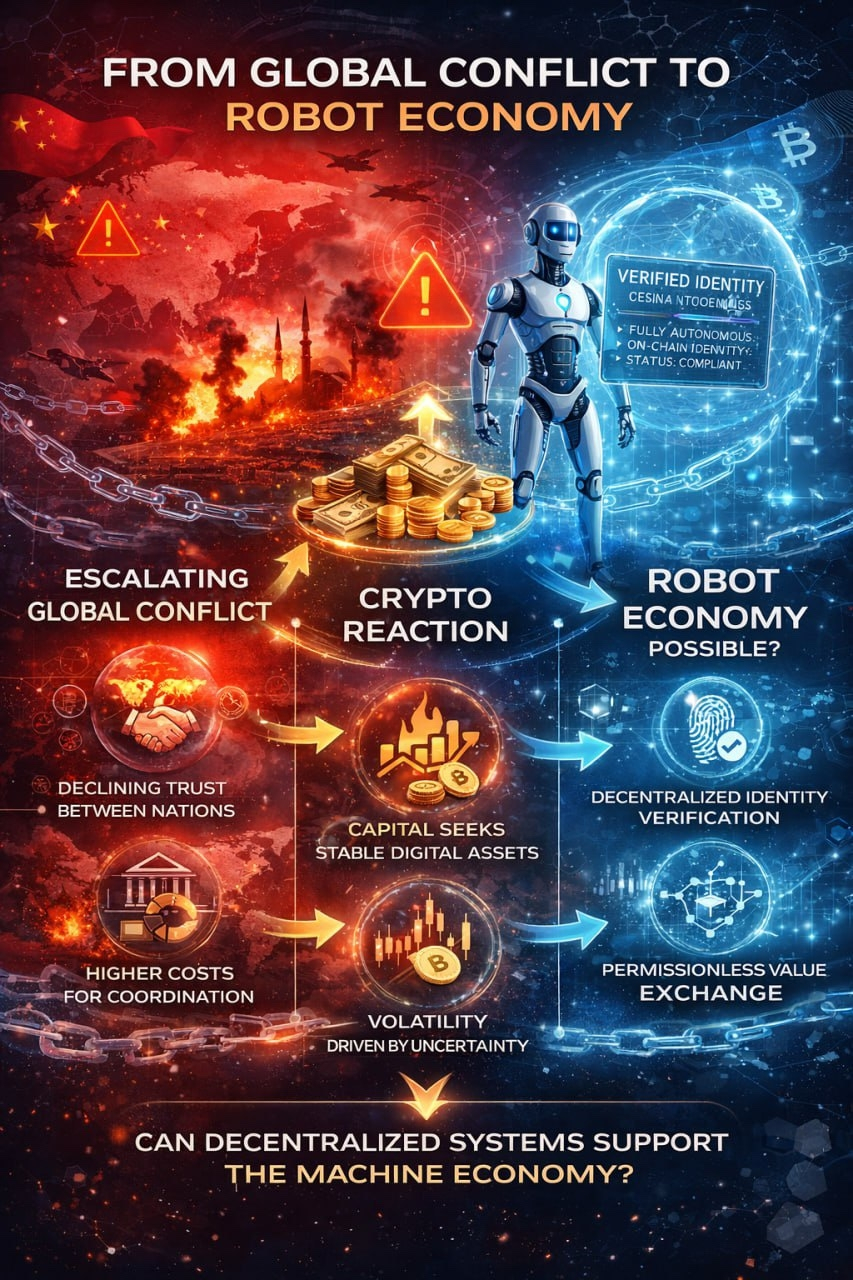
China just said that US and Israeli strikes on Iran violate international law, warning that the conflict is widening.
And that made one thing clear to me:
The world is entering a phase where coordination is becoming harder, not easier.
1️⃣ The real problem isn’t war it’s systems
Geopolitical conflict is not just about military action.
It exposes something bigger:
Trust between nations is weakening
Global coordination relies on fragile centralized decisions
Cross-border cooperation is getting more expensive
If humans struggle to coordinate globally, imagine what happens when billions of AI agents and robots start operating across borders.
The question isn’t whether technology is ready.
The real question is:
Who defines trust in a machine-driven world?
2️⃣ Why ROBO starts to feel relevant
Many people only see ROBO as a token.
But the more interesting part is the idea underneath.
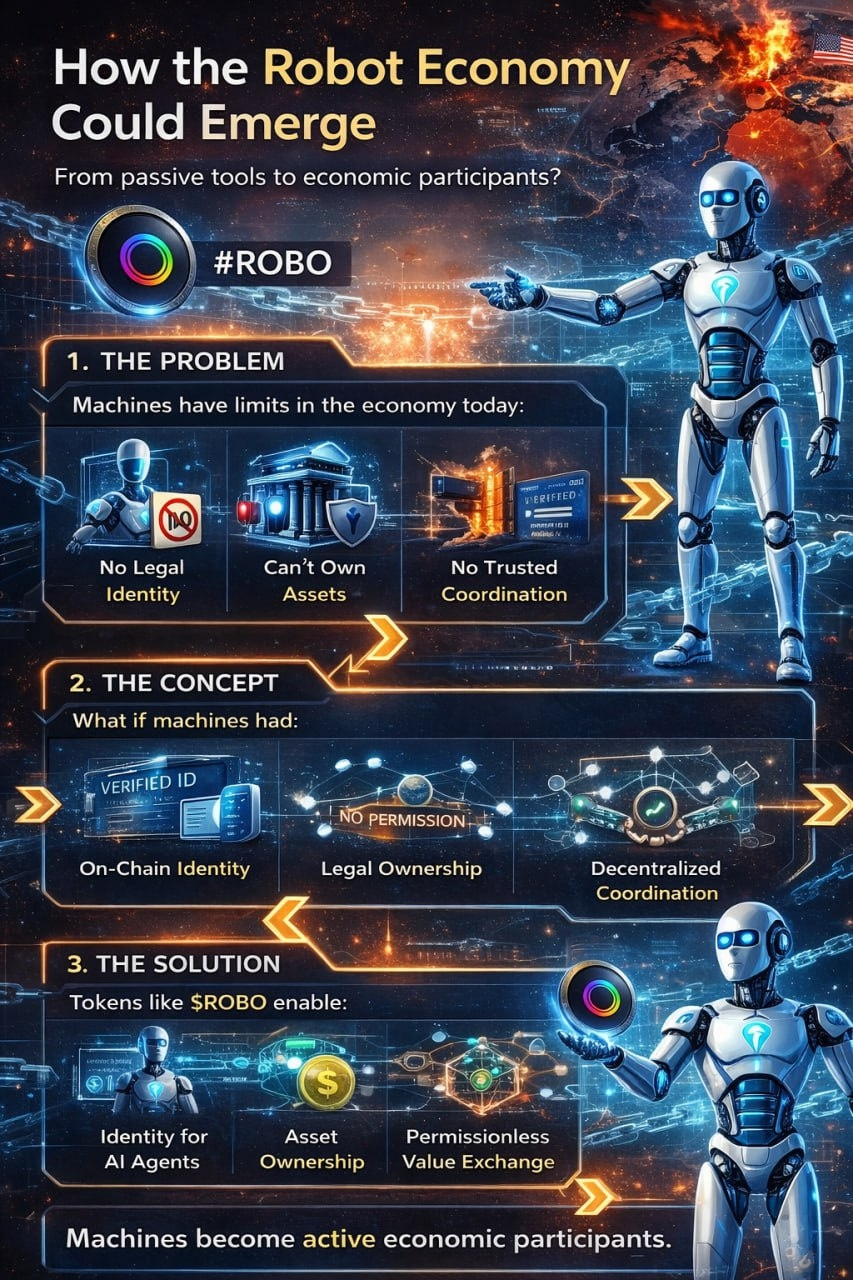
If machines become economic participants, they will need:
Verifiable identity
Transparent activity records
Permissionless value exchange
A coordination layer beyond national systems
Today’s financial infrastructure was built for humans.
Machines don’t have legal identity, bank accounts, or native economic rights.
That means even if robots create value, they still can’t truly participate in the economy.
ROBO is trying to explore that missing layer.
3️⃣ The real risk: narrative moves faster than reality
I’m still cautious.
Crypto history shows that narratives often move faster than infrastructure.
Incentives can create volume.
But volume doesn’t mean real demand.
What actually matters is:
Are real machines interacting on-chain?
Does activity continue when rewards fade?
Are developers building without short-term incentives?
If not, then it’s still just a story.
4️⃣ Why this moment matters
A widening global conflict reminds us that the future may be more fragmented.
And fragmentation increases coordination costs.
If a machine economy ever becomes real, it cannot depend entirely on traditional centralized systems.
It will need open, verifiable infrastructure that works across borders.
ROBO may not be the final answer.
But it is at least asking the right question.
5️⃣ The question that matters most
Prices go up and down.
News cycles change every day.
What matters is simple:
When the hype fades, does usage remain?
If machines eventually gain on-chain identity and start exchanging value autonomously,
then we are no longer talking about a narrative.
We are watching the early stages of a new economy.