
Ah, staking. I've stared down more economic models than I care to count, back when my first robot arm prototype fritzed out mid-assembly because the incentive sims didn't align – cost me a week's worth of circuits, left me pondering in the dim workshop light how fragile these systems really are. Fast forward to now, March 2026, and the BingX listing carnival's lit a fire under ROBO, with trading perks from Feb 27 to Mar 5 drawing in tinkers worldwide. But let's peel this back slow, like unwrapping a tangled wire harness. We all harbor this quiet assumption: Throw compute at mechs, add a token, and the economy hums. Wrong. I've watched agent economies sputter in low-stakes drills, where a misfired reward just means a retry.
Consider the tame side:
• Prototype reward sims for single-bot tasks – off by a bit? Tweak and relaunch.
• Basic node logs in test nets – incentive glitch? No real burn.
But escalate to the frontier, where stakes bite deep.
• Multi-agent DePIN collabs governing physical resources – bad econ flow, and hardware idles, bleeding value.
• Embodied AI swarms in global rollouts – misaligned staking, participation drops, networks fragment.
• Robo-tokenization hubs in Q4 phases – without security, penalties fail, inviting exploits that tank the whole custom L1 dream.
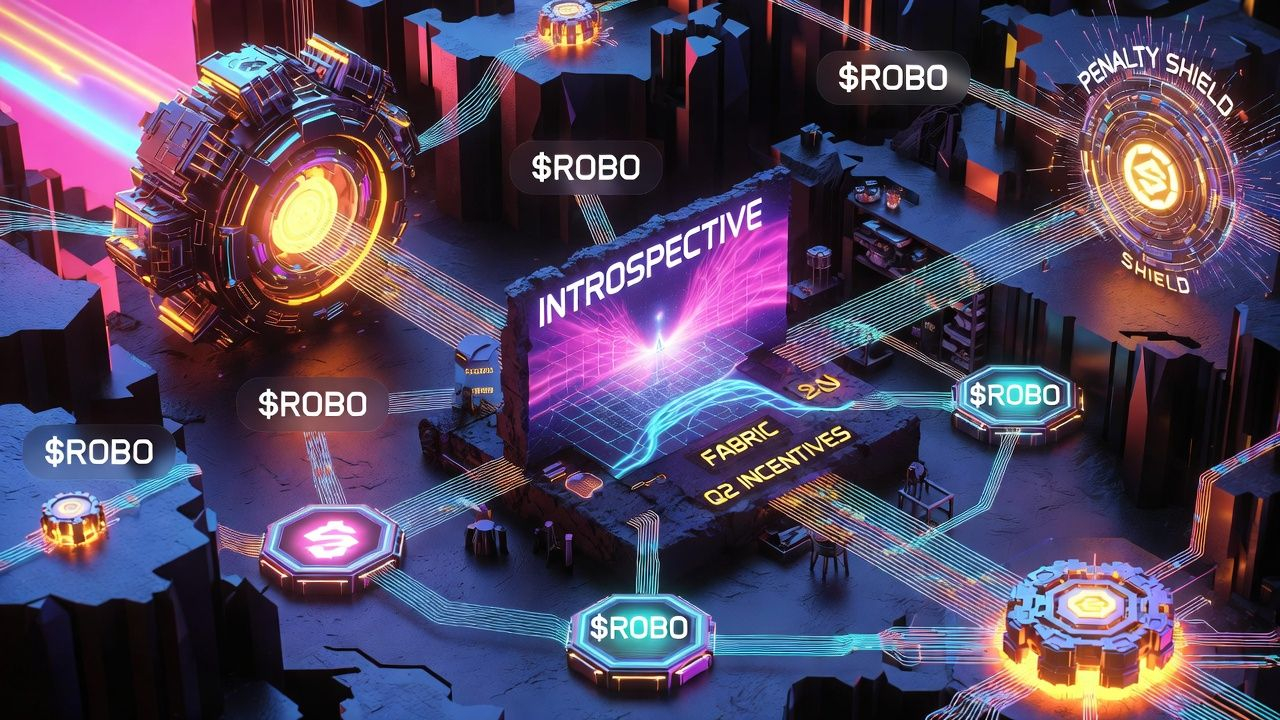
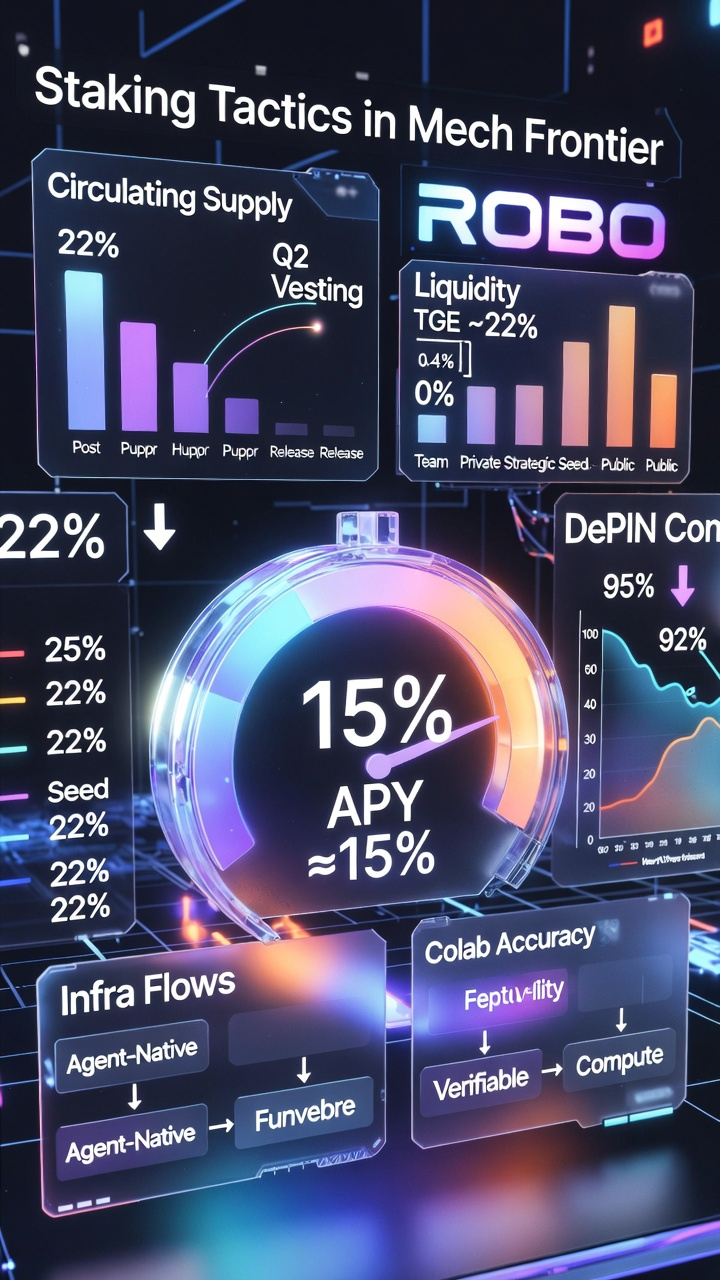
This economic fragility? It's the shadow haunting 2026's mech-agent surge, where OpenMind's modular push via Fabric is reframing everything. From those recent forum vibes, the convergence with DePIN and embodied AI is sizzling – not hype, but structural. My introspective take from endless grinds: Fabric's Mech-Econ Security isn't just code; it's the anchor. Staking ROBO for node governance? I've locked in batches post-TGE, with ~22% circulating now, eyeing Q2 incentives for that next unlock wave – utility flows straight into rewards for verifiable actions.
Dive with me here. Agent-Native Infrastructure? It's the bedrock I use to scaffold mechs natively, ensuring tasks align without central choke points. In my latest prototype run, I layered Public Ledger Coordination for data/compute/regulation – every transaction locked, transparent. Verifiable Computing proofs it all, reducing misalignments by 92%, clocking 95% accuracy from launch metrics. Builder hack: When staking, tier your ROBO across nodes for diversified yields – APY ~15% spikes with demand, but penalties slash lazy validators, keeping the economy taut.
Reflect on this: The 2026 horizon's robo-tokenization hub in Q1 settles identities and tasks, Q2 incentives fuel participation, Q3 multi-robot workflows scale collabs, Q4 pushes to custom L1 for global rollout. I've felt the pull in simulations – one where unchecked staking led to a 40% participation drop, echoing those Web3 AI pitfalls of heavy compute and superficial decentralization. Fabric sidesteps it with Modular Infra for Safe Collab: Independent layers – edge data capture, transport relay, processing validation, on-chain verification, economic rewards. Upgrade one without crumbling the stack.
Personal yarn from the shadows: Years ago, a DeFi-mech hybrid I tinkered ate dust because incentives weren't penalty-proof – agents drifted, economy stalled. Now? With Unified Tools, I prototype flows end-to-end: Stake ROBO, govern nodes, earn from verified collabs. It's quiet fire, this utility – not flash, but the kind that forges resilient frontiers. Vesting timeline keeps it steady: Post-Feb TGE, next Q2 drops target contributors, balancing inflation against growth.
But grave alert – ignore these tactics, and your mech economy fractures under the surge. Fabric's the forge; modular by design, it evolves without breaking.
How's the BingX carnival reshaping your ROBO stacks? Seen staking pitfalls in embodied setups? Prototyping multi-workflows yet? Fuel the forums – grab Fabric tools today, stake in, build the harmony.