
@Fabric Foundation The first time I came across Fabric Protocol, I didn’t feel the usual rush that follows a bold announcement. There were no grand claims about transforming civilization overnight, no countdown to a token event, no exaggerated timelines. After watching several crypto cycles rise and collapse under the weight of their own ambition, I’ve developed a habit of stepping back when something sounds too certain about the future. Fabric felt different, not because it promised less, but because it seemed focused on something quieter. It wasn’t trying to build a smarter robot. It was trying to build a shared structure around robots.
The timing of its appearance is not accidental. We are entering a period where machines are no longer confined to research labs or single-company deployments. General-purpose robotics is slowly becoming a coordination problem. Hardware teams, software engineers, data contributors, regulators, insurers, and operators all intersect around a machine that moves in the real world. Yet each group keeps its own records, its own version of events. When something changes, updates travel unevenly. When something fails, accountability becomes layered and unclear. The industry has grown more capable, but not necessarily more aligned.
Fabric seems to notice this friction rather than the spectacle. Instead of asking how to make machines more autonomous, it asks how humans stay synchronized around them. That distinction matters. In most current systems, trust is private and fragmented. Logs sit on company servers. Compliance reports are archived separately. Governance discussions happen in closed channels. It works, but only within tight boundaries. As soon as machines cross institutional lines, the structure begins to strain.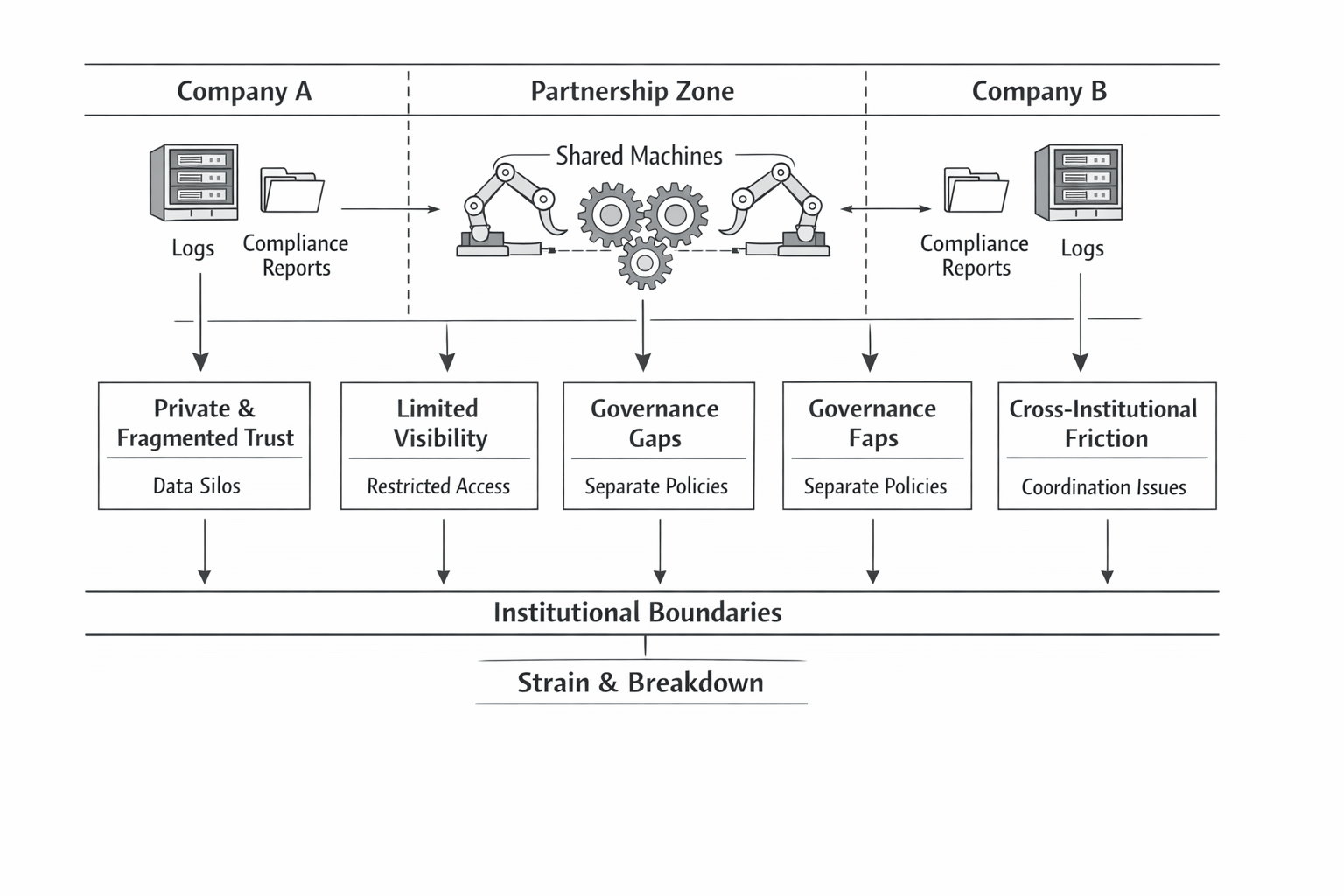
The idea of coordinating through a public ledger might sound familiar in crypto circles, but Fabric approaches it less as a financial tool and more as a shared memory. It treats computation, updates, and governance decisions as events that deserve to be recorded in a way that all parties can reference. Not to create spectacle, but to reduce ambiguity. There is something almost conservative about that instinct. Before increasing autonomy, clarify responsibility.
What makes the design interesting is not complexity, but restraint. Fabric does not attempt to own the robot. It does not try to replace manufacturers, or regulators, or software teams. Instead, it positions itself as connective tissue. A layer where different actors can coordinate without surrendering control. In earlier crypto cycles, many protocols tried to absorb entire industries into token-based ecosystems. Fabric seems more comfortable remaining infrastructure, even if that means slower visibility.
That trade-off is important. By choosing to operate as a neutral layer, it gives up the excitement of immediate end-user adoption. There are no flashy dashboards for consumers, no viral incentives. Growth here would likely happen through institutional pilots, small integrations, careful compliance reviews. It would not trend because a new robot was shipped. It would grow when a group of stakeholders quietly decide they need a more transparent way to coordinate.
There is also a deliberate simplicity in how it frames governance. Rather than introducing complex token dynamics or experimental voting systems, it leans into the idea that governance is record-keeping plus consent. Decisions are logged. Updates are traceable. Responsibility is visible. In a space that often equates innovation with complexity, this feels almost understated. Yet in robotics, where safety and accountability are not theoretical concerns, clarity often matters more than novelty.
Of course, restraint brings its own questions. Public infrastructure can be slow to adapt. Balancing transparency with privacy is not trivial, especially when dealing with sensitive operational data. Institutions may hesitate to anchor critical processes to a shared ledger, even if the logic is sound. And there is the broader uncertainty: will general-purpose robotics scale fast enough to justify such coordination layers in the near term, or will adoption stretch over decades?
Having watched previous waves of blockchain enthusiasm collide with real-world friction, I’m cautious about assuming inevitability. Infrastructure projects often look elegant in principle but struggle in deployment. The real test will not be whether Fabric’s architecture makes sense, but whether stakeholders feel comfortable using it when stakes are high. Trust is not granted by design alone; it accumulates through consistent performance.
Still, there is something quietly compelling about its posture. It does not frame itself as the future of robotics. It frames itself as preparation. As machines become more capable, their interactions with human systems become more complex. Contracts, updates, compliance, and shared accountability will not disappear. They will intensify. Fabric seems less interested in predicting what robots will do and more interested in ensuring that when they do it, the surrounding ecosystem remains coherent.
In that sense, the project feels less like a bet on a specific technological breakthrough and more like a bet on coordination itself. If robotics evolves gradually, Fabric’s approach aligns with that pace. If adoption accelerates unexpectedly, the need for shared infrastructure may surface abruptly. Either way, the underlying question remains the same: how do multiple institutions manage a machine that none of them fully own?
I am not certain Fabric will become foundational. Many thoughtful systems remain niche because timing, incentives, or market appetite do not align. But I also don’t dismiss it. In a sector that often celebrates intelligence and speed, Fabric is asking about memory and alignment. That is a different kind of ambition. Quieter, perhaps less glamorous, but difficult to ignore.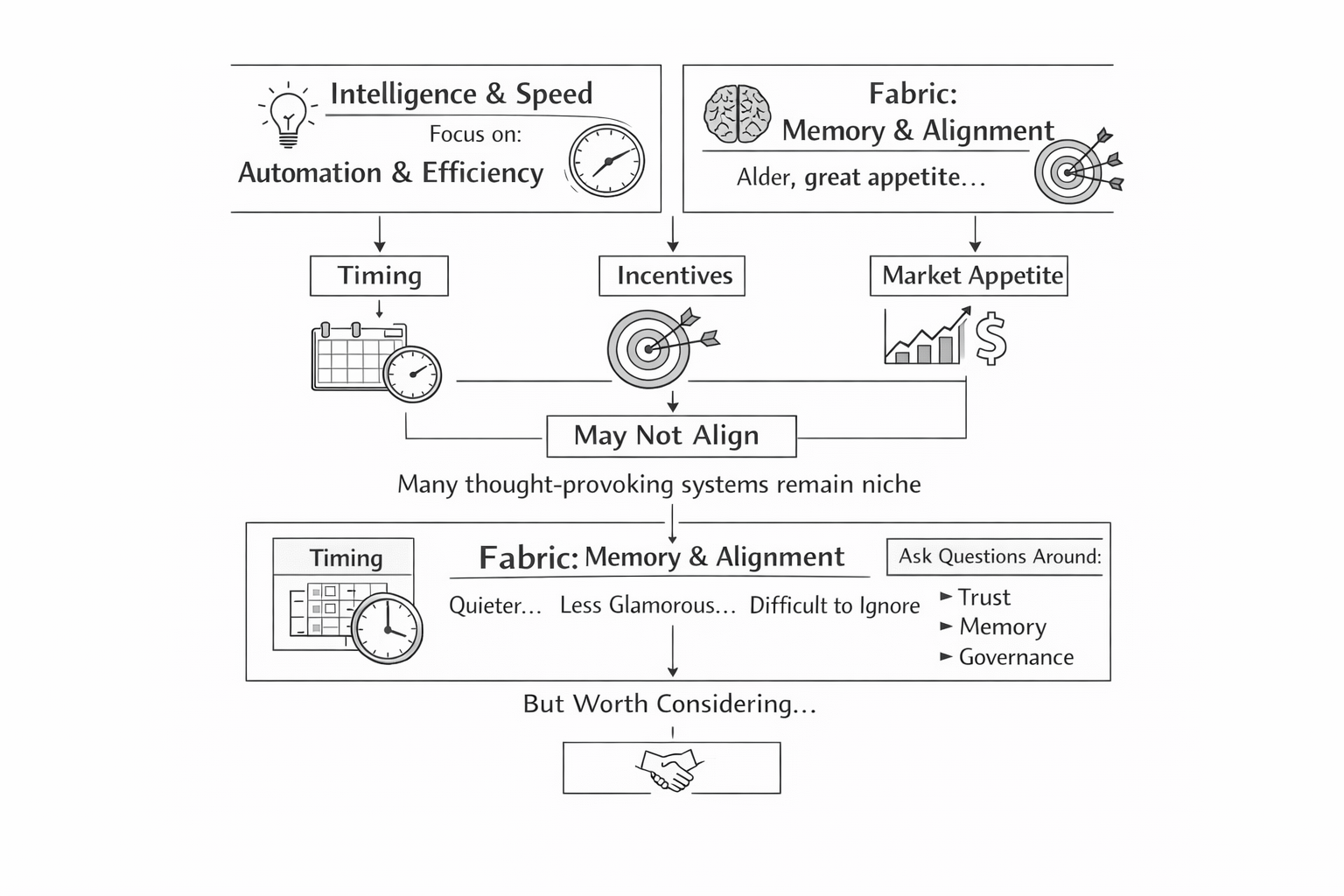
After several cycles in this space, I’ve learned that the loudest narratives are rarely the most durable. Projects that survive tend to solve mundane coordination problems that only become visible over time. Fabric does not attempt to impress with spectacle. It attempts to reduce friction where responsibility overlaps. Whether that becomes essential infrastructure or remains a specialized layer will depend on forces beyond its control. What is clear, at least to me, is that it is trying to address a structural tension that will not simply disappear as machines become more capable.
And maybe that is enough for now. Not certainty, not prediction, but direction.