
I recently got a chance to explore
@Fabric Foundation #ROBO $ROBO , and honestly, I’m impressed. What caught my attention first was how thoughtfully it tackles some of the biggest challenges in robotics today: scaling safely, integrating systems from different teams, and keeping everything accountable. Unlike many robotics platforms that feel isolated or overly technical, Fabric Protocol feels alive—it’s a collaborative ecosystem where robots, developers, and organizations can work together safely and efficiently.
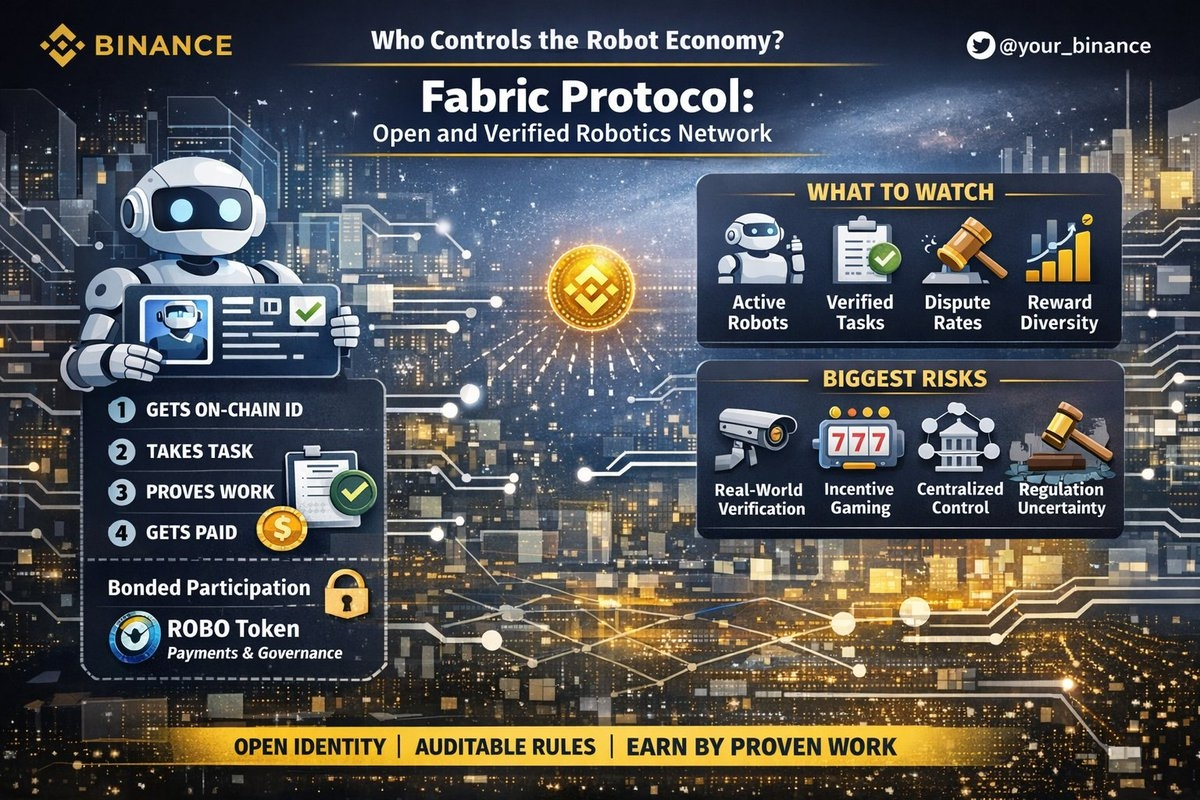
One thing that really amazed me was seeing robots from different teams communicate and collaborate seamlessly. Coordinating multiple robots in real time is tough, but Fabric Protocol makes it look natural. Its distributed computation and agent-native infrastructure let robots make decisions instantly while keeping everything transparent. That means I could see how well each robot was performing, and the metrics were clear and verifiable—a huge plus for trust and safety.
What’s really exciting is how AI is integrated into the system. Robots aren’t just following pre-programmed routines—they can enhance perception, reasoning, and planning in real time. For example, I saw robots sharing sensor data, learning from each other, and adjusting their actions on the fly. Whether it’s warehouse automation, search-and-rescue, or complex manufacturing, this ability to collaborate and think collectively is a game-changer. Suddenly, instead of isolated machines, you have a whole ecosystem of intelligent agents working together.

Another thing that stood out was the governance and community involvement. Fabric Protocol isn’t just a tech platform; it’s designed to be ethical and trustworthy. Stakeholders can participate in decisions, updates, and AI model integrations, making sure that the system evolves responsibly. It’s reassuring to see that community input isn’t just a checkbox—it’s central to the platform. Knowing that there’s oversight and shared responsibility makes me confident that the system can scale safely without cutting corners.
The modular design is another highlight. Fabric Protocol is flexible enough to accommodate startups, large corporations, and research labs alike. You can test, deploy, and scale robots without getting locked into a single vendor or stack. This also encourages experimentation—developers can innovate quickly, try new approaches, and push boundaries while staying within safety and interoperability standards. I could see how this kind of setup would encourage rapid development in robotics without compromising reliability.
I also really appreciated the public ledger system. It’s not just a technical detail—it’s the backbone of trust. Every action, decision, and computation is recorded transparently, making it easy to audit performance, verify AI outputs, and maintain accountability. In fields where safety and regulation matter, this level of visibility is invaluable.
What struck me the most is that Fabric Protocol feels like more than just technology—it’s a philosophy shift. Traditional robotics platforms often focus purely on efficiency or capability, but Fabric Protocol puts collaboration, ethics, and accountability front and center. It envisions a world where humans and robots work side by side, where robots augment human capabilities instead of replacing them, and where every system update is transparent and community-driven.
I also loved how the system balances innovation with safety. Developers can experiment with complex multi-agent workflows, teach robots new skills, or integrate cutting-edge AI without risking catastrophic errors. If something goes wrong, the verifiable infrastructure immediately makes it visible and auditable. It’s a perfect mix of freedom and oversight.
Looking at the bigger picture, the implications are huge. Imagine industrial factories where diverse fleets of robots coordinate in real time, or healthcare environments where robots support caregivers while adhering to strict ethical standards. Even in research, Fabric Protocol allows collaboration across teams without sacrificing security or trust. It’s easy to see how this could redefine robotics across industries.
Overall, exploring Fabric Protocol ($ROBO) has left me genuinely excited. The combination of distributed computing, modular architecture, AI integration, transparent governance, and community-driven evolution creates a platform that’s not only advanced but also ethical and reliable. It’s exactly what’s needed to build scalable, safe, and collaborative human-robot ecosystems.
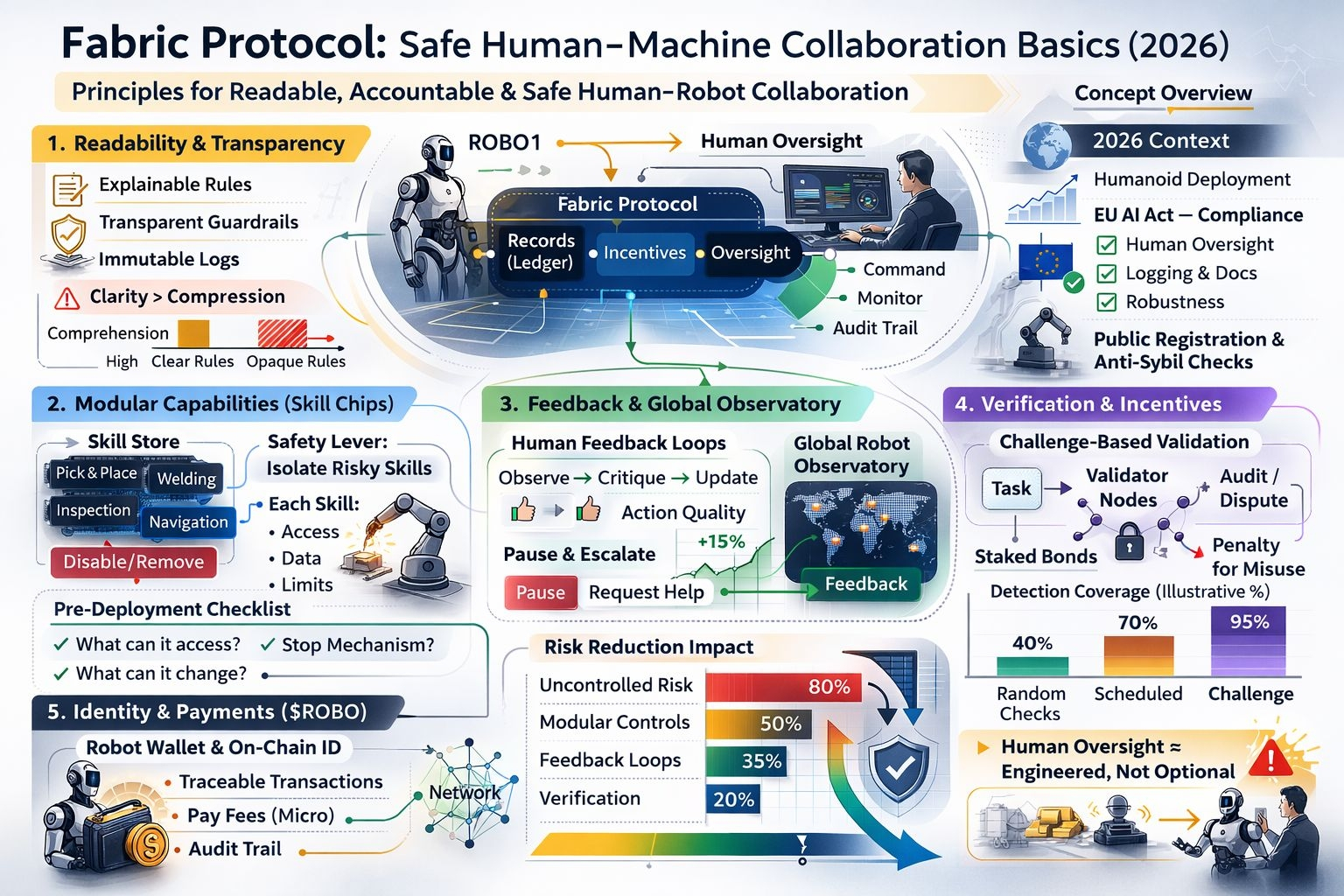
In short, Fabric Protocol exceeded my expectations. It’s not just promising innovation—it delivers it in a transparent, accountable, and human-centered way. For anyone curious about the future of robotics and AI, this platform is a must-watch. It’s exciting to imagine how the network will grow, how the community will contribute, and how it will continue shaping the future of human-robot collaboration.
Fabric Protocol isn’t just a network—it’s a foundation for the next generation of intelligent, collaborative, and trustworthy robotics.