

When headlines broke about US strikes on Iran, Bitcoin’s first reaction was not what “digital gold” advocates might have hoped for. Instead of rallying alongside traditional havens, BTC dropped below $64,000 before stabilizing, while gold surged and safe-haven currencies like the Swiss franc and Japanese yen strengthened. At first glance, it looked like Bitcoin failed its safe haven test. But the first 24 hours of a geopolitical shock rarely tell the full story. Bitcoin trades 24/7, making it one of the only global liquidity outlets available when traditional markets are closed. That structure often turns BTC into a pressure valve for panic selling. Add leverage and forced liquidations, and the initial drop becomes more about positioning and liquidity than long-term conviction.
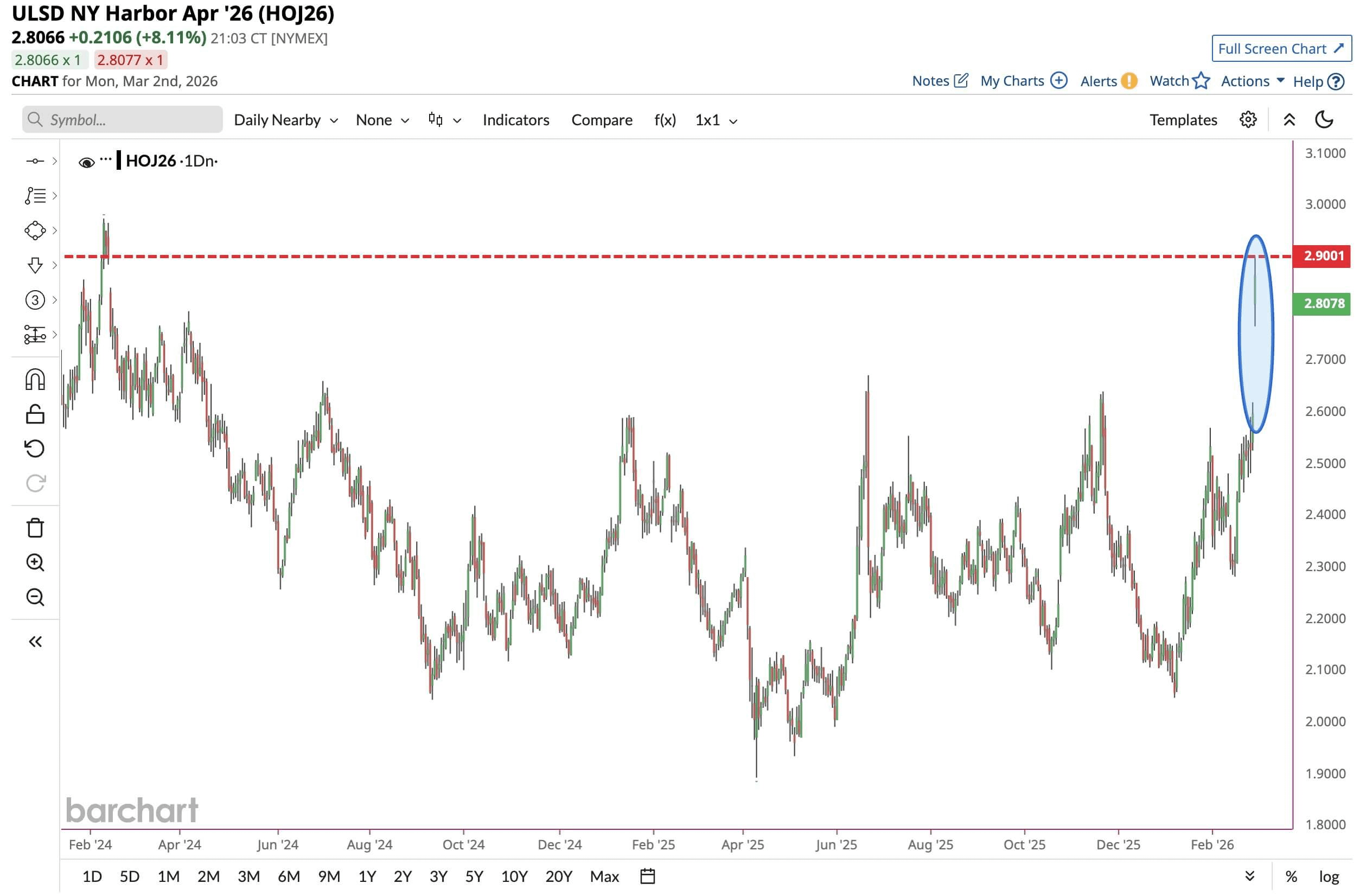
The more important variable now is oil. Energy prices are the transmission channel between geopolitical tension and global macro conditions. With oil jumping nearly 9% toward $80, markets are watching closely. If crude climbs toward $90–$100 and inflation re-accelerates, central banks may delay easing. Stronger real yields and a firm dollar historically pressure high-beta assets like Bitcoin. In that environment, gold typically benefits more directly from fear and inflation hedging. However, if oil stabilizes and tensions remain contained, the panic unwind could favor assets that were aggressively sold first — and Bitcoin has historically been one of the strongest rebound candidates once forced selling subsides.
Another major difference this cycle is institutional infrastructure. Spot Bitcoin ETFs have created a transparent capital channel, with nearly $2 billion in outflows earlier this year signaling defensive positioning even before the latest escalation. That cuts both ways. ETFs can amplify outflows during fear, but they can also accelerate recovery if sentiment turns. Meanwhile, rising stablecoin dominance and billions in stablecoin inflows suggest capital is not fully exiting crypto — it is waiting. Options markets show hedging activity increasing, but not outright capitulation. That positioning implies dry powder exists if macro conditions improve.
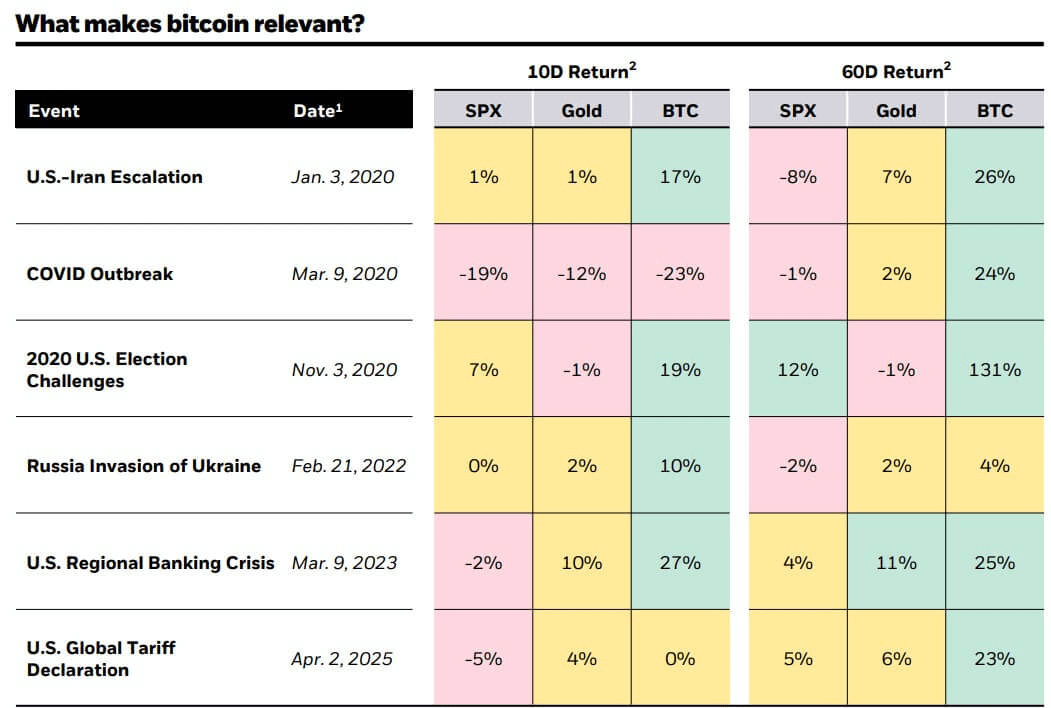
BlackRock’s historical data adds context. In past geopolitical shocks, Bitcoin often struggled initially but outperformed over the following 60 days. During the January 2020 US-Iran escalation, Bitcoin rose roughly 26% over two months, outperforming both gold and equities. The pattern suggests that Bitcoin’s safe haven status may not be defined by the first reaction candle, but by its recovery phase once macro clarity emerges.
The next 60 days now depend on which scenario unfolds. If oil stabilizes around $80 and inflation fears fade, Bitcoin could rebound toward $80,000 with a 10–25% recovery window. If oil remains elevated in the $90–$100 range, BTC could struggle within a wide band between $56,000 and $73,000 as tighter financial conditions limit upside. In a severe energy disruption or liquidity event, downside toward sub-$50,000 becomes plausible. Conversely, if growth fears push markets to price in faster monetary easing, Bitcoin could become one of the primary beneficiaries of renewed liquidity expectations.
So did Bitcoin fail its safe haven test? In the first hours, perhaps. But historically, Bitcoin’s geopolitical story is not about the initial drop — it’s about how it behaves once markets decide whether fear becomes inflation, or inflation becomes easing. That decision, more than the weekend headlines, will shape what comes next.
#bitcoin #BTC #crypto #Macro #Geopolitics