Right away, while pondering Robo Coin, a single thought stuck around, shouldn’t a world run by machines be open to all? Not locked down by big firms or those who got in first. This isn’t about exclusivity. What pulls me in is the chance it offers regular people. Instead of just being another token named ROBO, it acts like a vote. A say in how robot systems grow. Systems that might one day shape where we live, how things get made, even how houses work. Ownership spreads wider here.
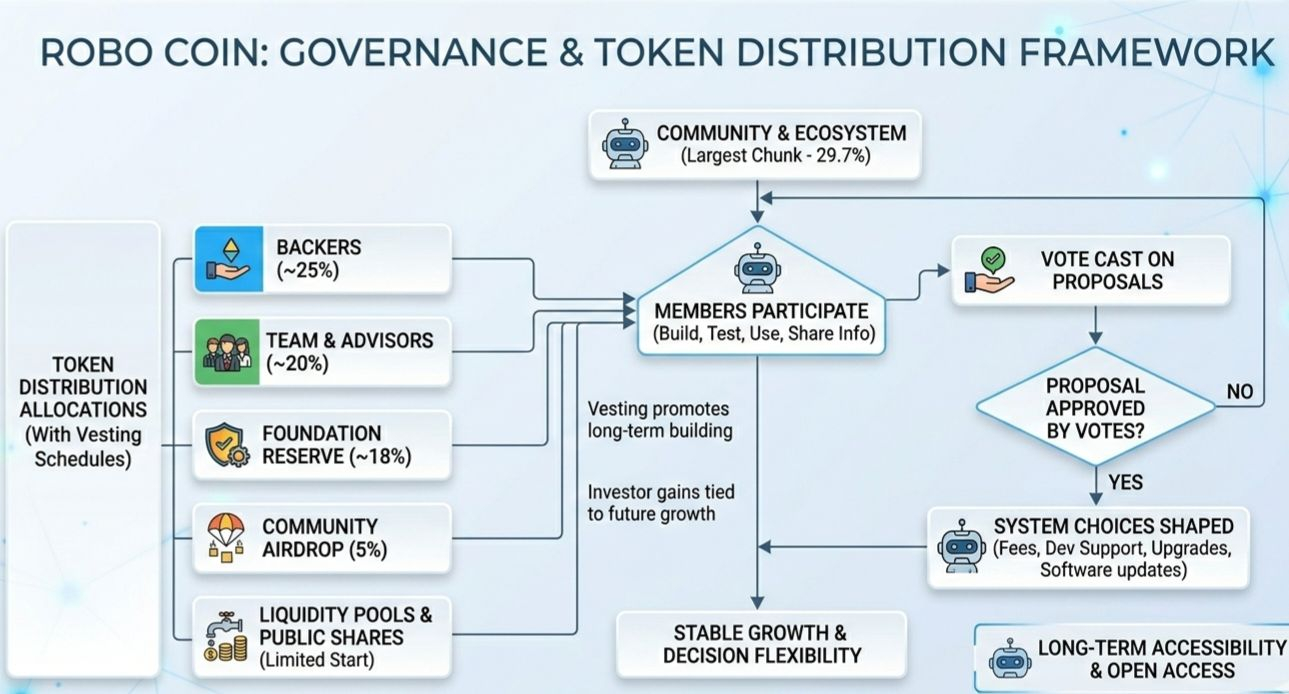
Connected to the Fabric Foundation’s goal, Robo Coin supports a transparent system where machines exchange information freely. Open access defines this space, anyone can join, anyone can contribute. Governance unfolds in public view rather than behind walls. Token ownership opens paths to shape choices on pricing models, upgrades, support needs and how tools grow together. Decisions emerge through visible processes instead of quiet backroom talks.
What sticks with me most is how powerful it feels. Conversations around belonging and collective responsibility pop up everywhere, yet actual designs putting them into practice? Almost nonexistent. When machines begin moving through warehouses, factories, hospitals, homes, the frameworks behind them ought to listen widely, who shapes them matters more than speed or scale ever will.
Why ROBO Is More Than Just Trading
Some folks see tokens mainly as bets on price moves. True enough. Yet ROBO seems built for more than that. Through it, owners help decide where the robot system goes next, like votes stitched into ownership.
How the network grows depends on choices about fees, support for developers, updates to software, yet also long-term goals. Shaping affordability and openness leans heavily on those same decisions, though time tests their real effect. Future flexibility ties back to who decides what gets funded, when changes roll out because user access shifts slowly. Affordability sticks around only if upgrade paths stay clear, while community trust builds quietly behind scenes. Lasting access comes down to balance, between speed, cost control, plus room to evolve without breaking things.
What stands out to me? The way tokens roll out slowly across several years. Early team members get theirs bit by bit, just like everyone else. Because of this slow release, people lean toward building for the future instead of chasing quick wins. Knowing rewards come only if the system thrives tends to shape behavior, more planting trees, less grabbing fruit.
To me, this shifts the narrative from “How fast can I profit?” to “How do we build something that lasts?”
A Closer Look at Token Distribution
A pattern shows up in how tokens are shared out. Not random, shaped on purpose to weigh funding, building, decision-making, along with people joining in.
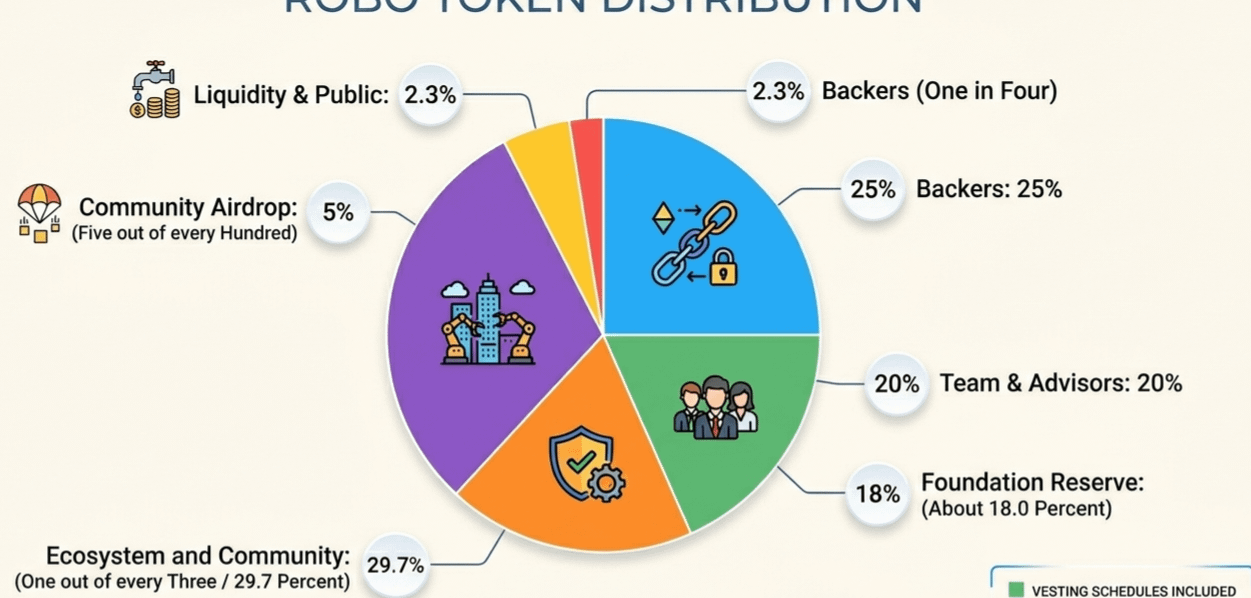
A chunk of the pie goes to backers about one in four tokens. Right when things start, only part shows up in their hands. The rest dribbles out slowly, stretched across many years. That setup keeps anyone from dumping fast. It ties investor gains to how well everything grows down the road.
This shows dedication. When investors go for slow release of shares, it means they’re backing the future instead of chasing quick profits.
A fifth goes to the team and advisors, released slowly over several years. Because robotics demands constant experimentation, progress rarely comes fast. Tying rewards to lasting achievements just fits how things work here. When big advances need patience, common in this line of work, the setup ought to match that pace.
Over time, staying involved shows others they believe in the path they’ve set. This kind of consistency builds trust simply by being visible year after year.
About 18.0 percent of tokens sit in the Foundation Reserve, released both now and over time. Though some question foundations in decentralized spaces, fields like robotics demand alignment, rules, shared goals, careful study. Order matters even when things stay public. Oversight keeps progress steady.
This way of splitting things up shows that spreading power around isn’t about losing order instead, it builds clearer sightlines through the system, along with stronger responsibility inside its frame.
One out of every three tokens goes to the ecosystem and community, that’s 29.7 percent, the biggest chunk. Rewards flow to people who build, test, help or simply use the platform. A portion shows up right away; another part rolls out slowly through scheduled releases. This pacing helps keep momentum behind long-term efforts.
This idea stands out to me. Instead of giving control just to the first few, much of it goes to people actually shaping the system day by day. When someone shares useful information, checks robot functions or boosts efficiency, recognition follows. Participation shifts, no longer waiting, now doing.
A chunk of the tokens, five out of every hundred, goes straight to community members when things start up. Though some might only show up hoping for quick gains, it still spreads access wider. Starting real involvement means more than watching prices; shaping decisions is where value grows. What begins as free distribution could turn into shared control, if people choose to act.
Starting off small, liquidity pools and public token shares stay limited. That hints at a goal beyond just raising funds fast. Building out parts of the system step by step takes center stage here. Quick cash grabs take a back seat to long-term design.
Vesting Promotes Stability
Machines that walk or roll take time to build right. Because they need parts shaped just so, spaces where they can learn, then streets or rooms to test them live. Safety checks slow things down on purpose. Each update comes after careful tweaks, not overnight fixes. What counts here are steady steps forward, nothing like internet fame.
Over time, tokens come out bit by bit, just like the project grows step by step. Since everyone does not get their share at once, sudden price swings are less likely, which helps teams think ahead. With fewer wild shifts in value, creators stay focused on building things that matter down the road.
Patience shapes how systems grow, I think. Stability matters most when machines must operate on their own. What feels like a money rule at first turns out to be about time, built into the design slowly.
The Bigger Picture Autonomy With Responsibility
Built to act on their own, robots push us to rethink who answers when things go wrong. Though they follow code without asking, the rules behind that code should still carry our sense of right.
Starting off, Robo Coin's way of managing decisions tries to mix self-direction with accountability. Holding things together, the Foundation keeps control over daily operations. Rewards flow to those who contribute, keeping effort tied to outcome. Instead of short gains, investors and builders share a longer view. Change can rise from users, new ideas get proposed, then approved or dropped by votes.
This feels like a move toward spreading power more carefully. Because robots might weave into daily life so completely, control over them ought to stay broad rather than locked in one place.