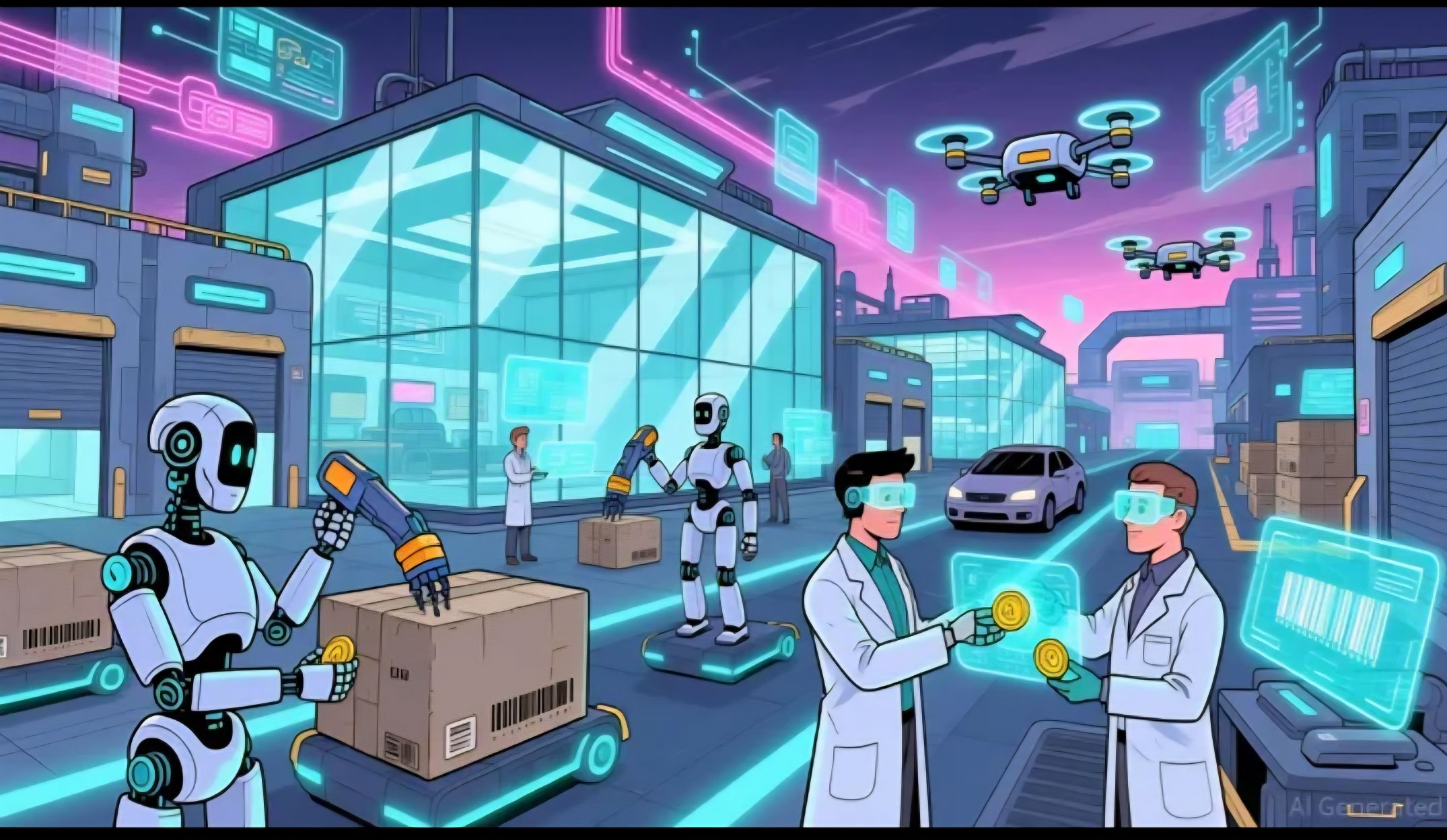
The Fabric Protocol has officially expanded its market presence with multiple exchange listings, marking a significant milestone for the ecosystem and dramatically enhancing liquidity for the ROBO token. This strategic move strengthens accessibility, deepens trading activity, and positions ROBO for broader adoption across the crypto landscape.
At the center of this momentum is the integration between Fabric Protocol and the emerging robot economy powered by ROBO. Fabric Protocol, developed to support decentralized infrastructure and real-world automation systems, provides the backbone for scalable and secure coordination between intelligent machines. With ROBO acting as a core utility asset within this ecosystem, increased exchange exposure directly translates into stronger market depth and healthier price discovery.
By securing listings on several prominent cryptocurrency exchanges, Fabric Protocol has significantly lowered the barrier to entry for both retail and institutional investors. Greater exchange coverage means higher trading volume, tighter spreads, and improved liquidity — three essential components for sustainable token growth. When liquidity improves, market volatility becomes more manageable, slippage decreases, and traders gain more confidence in entering and exiting positions efficiently.
The expanded listings also serve as validation of the project’s credibility and long-term vision. Exchanges conduct due diligence before onboarding new assets, and multi-platform availability demonstrates growing industry recognition. For ROBO holders, this development signals increasing trust and visibility within the broader blockchain market.
Fabric Protocol’s architecture is designed to power decentralized robotics, AI-driven automation, and real-world machine fcoordination. As industries begin integrating autonomous systems into logistics, manufacturing, smart cities, and supply chain operations, protocols like Fabric become essential infrastructure layers. ROBO fuels transactions, governance, and operational interactions within this framework, giving it intrinsic utility beyond speculative trading.
Enhanced liquidity further supports ecosystem expansion. Developers, partners, and enterprises are more likely to build on a protocol when its native asset has strong market stability and reliable exchange access. Liquidity creates a feedback loop — stronger adoption drives trading activity, which attracts more investors, ultimately strengthening the token’s position.
The timing of these listings is particularly important as the robot economy narrative continues gaining traction. Blockchain-powered robotics is transitioning from concept to implementation. As decentralized AI and machine automation evolve, projects offering verifiable coordination layers are positioned at the forefront of innovation. Fabric Protocol’s exchange expansion aligns with this broader technological shift.
For traders, the improved liquidity environment opens the door to more advanced strategies, including derivatives, arbitrage, and algorithmic trading opportunities. For long-term holders, it represents structural growth and infrastructure maturity.
Looking ahead, this is not merely about exchange exposure — it is about ecosystem acceleration. Fabric Protocol is building foundational infrastructure for the decentralized automation era, and ROBO stands at the center of that vision. Multi-exchange listings amplify visibility, strengthen liquidity, and reinforce market confidence.
As adoption scales and new partnerships emerge, the enhanced liquidity framework will serve as a catalyst for sustained growth. Fabric Protocol’s expansion is more than a listing update — it is a step toward establishing ROBO as a core asset in the evolving machine-driven digital economy.
@Fabric Foundation #ROBO $ROBO