

The cryptocurrency market is a living, breathing entity, a dynamic tapestry woven from technological innovation, economic shifts, regulatory murmurs, and an often-unpredictable human psychology. Just when you think you've grasped its rhythm, a new beat drops, sending ripples, or sometimes tsunamis, across the digital asset landscape. Keeping abreast of these constant "new updates" isn't just about staying informed; it's about understanding the underlying currents that shape investment decisions, developer roadmaps, and the very future of decentralized finance.
Today, we're diving deep into the recent developments surrounding some of the market's most prominent players and an undeniable cultural phenomenon: Bitcoin (BTC), the venerable king; Binance Coin (BNB), the powerhouse exchange token; Solana (SOL), the high-speed challenger; Ripple (XRP), the enterprise solution with a legal cloud; and the ever-effervescent world of Memecoins. Each has a unique story unfolding, influenced by distinct factors, yet all operating within the interconnected global crypto ecosystem.
Bitcoin (BTC): The Unyielding North Star in an Evolving Cosmos
Bitcoin, often hailed as digital gold, remains the undisputed heavyweight champion, and its "updates" often revolve less around fundamental technological overhauls and more around its macroeconomic narrative and infrastructure maturation. Recently, the spotlight has been firmly fixed on two pivotal areas: its role as a global macro asset and the continuous expansion of its Layer 2 solutions.
The approval and subsequent launch of spot Bitcoin ETFs in major financial markets have been monumental. This wasn't merely a new product; it was a watershed moment, marking Bitcoin's official entry into mainstream finance, making it accessible to a broader swathe of institutional and retail capital than ever before. The initial inflow numbers have been staggering, underpinning its narrative as a legitimate asset class, capable of competing with traditional investments. This institutional embrace is an "update" that transforms its market dynamics, shifting it from a niche, volatile asset to a more integrated component of global portfolios. The ongoing debate about allocation percentages, the comparisons to gold, and the analytical frameworks being applied by Wall Street are all indicators of this profound shift. It’s no longer a question of if institutions will adopt Bitcoin, but how much and how fast.
Beyond the trading desks, Bitcoin's technological resilience continues to be enhanced. The advancements in Layer 2 solutions, particularly the Lightning Network, are crucial. While Bitcoin's base layer prioritizes security and decentralization, its transaction speed and cost can be prohibitive for micro-payments. Lightning Network addresses this by enabling instant, low-cost off-chain transactions, settling them later on the main chain. Recent updates have focused on improving user interfaces, increasing routing efficiency, and expanding merchant adoption. Furthermore, the burgeoning interest in concepts like "drivechains" or even novel sidechains demonstrates a vibrant ecosystem still striving to augment Bitcoin's utility without compromising its core tenets. These aren't flashy protocol changes but rather methodical improvements that underscore Bitcoin's long-term viability as both a store of value and a medium of exchange, making it more practical for everyday use – a silent but significant "update" for its future.
The upcoming halving events also loom large, a pre-programmed "update" that historically catalyzes significant price action. As the issuance rate of new Bitcoin is cut in half, the scarcity narrative intensifies, feeding into its digital gold thesis. While past performance is no guarantee, the anticipation of these supply shocks remains a perennial driver of market sentiment and strategic positioning.
Binance Coin (BNB): The Ecosystem Enabler in a Regulatory Maze
BNB, the native token of the Binance ecosystem, is inherently tied to the fortunes and developments of Binance, the world's largest cryptocurrency exchange. Recent "updates" for BNB have been a mixed bag of significant ecosystem growth and persistent regulatory challenges.
On the ecosystem front, the Binance Smart Chain (BSC), now known as BNB Chain, continues its aggressive expansion. Updates have focused on increasing network scalability, security, and developer tooling. The BNB Chain has carved out a significant niche as a cost-effective alternative for DeFi applications, NFTs, and GameFi projects. Recent developments include enhancements to its underlying infrastructure to support more complex dApps, improved cross-chain functionality, and initiatives to onboard more developers through grants and hackathons. These continuous technical improvements directly benefit BNB by increasing its utility as a gas token and a staking asset within a thriving decentralized application environment. The growth of new projects launching on BNB Chain, and the sustained transaction volumes, are key metrics indicating its health.
However, the "new update" that has perhaps cast the longest shadow over BNB has been the intensified global regulatory scrutiny faced by Binance itself. Settlements with regulatory bodies, leadership changes, and ongoing compliance efforts have dominated headlines. While these are challenging periods, they represent a pivotal "update" in Binance's journey towards becoming a fully regulated and compliant financial entity. The argument is that stringent compliance, while painful in the short term, could ultimately pave the way for broader institutional acceptance and reduce long-term operational risks. For BNB, a successful navigation of this regulatory landscape could unlock new avenues for growth and solidify its position, not just as an exchange utility token, but as the backbone of a compliant, global Web3 ecosystem. Conversely, any missteps could amplify volatility.
Furthermore, BNB's utility within the centralized Binance exchange, offering trading fee discounts, participation in launchpads, and staking opportunities, continues to evolve. Binance frequently "updates" its offerings, integrating BNB into new features and services, ensuring its demand remains robust within its primary use case. This symbiotic relationship between the exchange's offerings and the token's utility is a core update mechanism for BNB.
Solana (SOL): The Scalability Contender's Resilience and Reinvention
Solana burst onto the scene promising unparalleled speed and low transaction costs, aiming to be the "Ethereum killer." Its journey has been characterized by explosive growth, followed by significant challenges, and now, a remarkable resurgence. Recent "updates" showcase its resilience and strategic pivot towards a more stable and developer-friendly environment.
A major focus for Solana has been network stability. After experiencing several outages in its earlier days, which cast doubts on its reliability, recent engineering "updates" have drastically improved uptime and network performance. These aren't glamorous features but fundamental necessities for a blockchain aiming for mass adoption. Improvements in transaction processing, validator coordination, and overall network robustness have been critical in rebuilding developer and user confidence. This underlying stability allows for more complex applications to thrive without fear of disruption.
The developer ecosystem on Solana is another area seeing significant "updates." There's been a renewed emphasis on fostering innovation, particularly in DeFi, NFTs, and consumer-facing applications. Initiatives to simplify development, provide better tooling, and attract talent are bearing fruit, leading to a steady stream of new projects choosing Solana. The introduction of new virtual machines or execution environments that could further broaden its compatibility with other chains, or simplify the migration of dApps, are also often discussed as potential future updates that could expand its reach.
Furthermore, Solana's strategic embrace of specific market niches is an important "update." Its high throughput has made it a preferred blockchain for certain types of gaming (GameFi) and payment solutions. Partnerships and integrations in these sectors are continuously announced, solidifying its position as a go-to platform for applications requiring rapid, high-volume transactions. The growth of these specific use cases acts as a strong demand driver for SOL, which is used for transaction fees and staking within the network.
Finally, hardware integrations and innovative consumer devices built on Solana, or leveraging its blockchain, represent a forward-looking "update." This push beyond purely digital applications into tangible consumer tech could open up entirely new markets and use cases, showcasing Solana's potential for real-world impact beyond traditional crypto finance.
Ripple (XRP): The Enterprise Network Amidst Legal Tussles
XRP's trajectory has been unique, marked by its strong focus on enterprise adoption for cross-border payments and a protracted legal battle with the U.S. Securities and Exchange Commission (SEC). Recent "updates" have largely been dictated by the ongoing legal saga and Ripple's continued efforts to expand its utility in financial infrastructure.
The most significant "update" for XRP has undoubtedly been the series of partial legal victories for Ripple against the SEC. While the case isn't entirely concluded, rulings classifying XRP as not a security when sold on exchanges, and the implications for programmatic sales, were monumental. These decisions provided much-needed clarity and relief, leading to significant price rallies and a renewed sense of optimism among XRP holders and proponents. The ongoing legal process, and any further resolutions, remain the primary "update" vector for XRP, as they directly impact its regulatory standing and market accessibility.
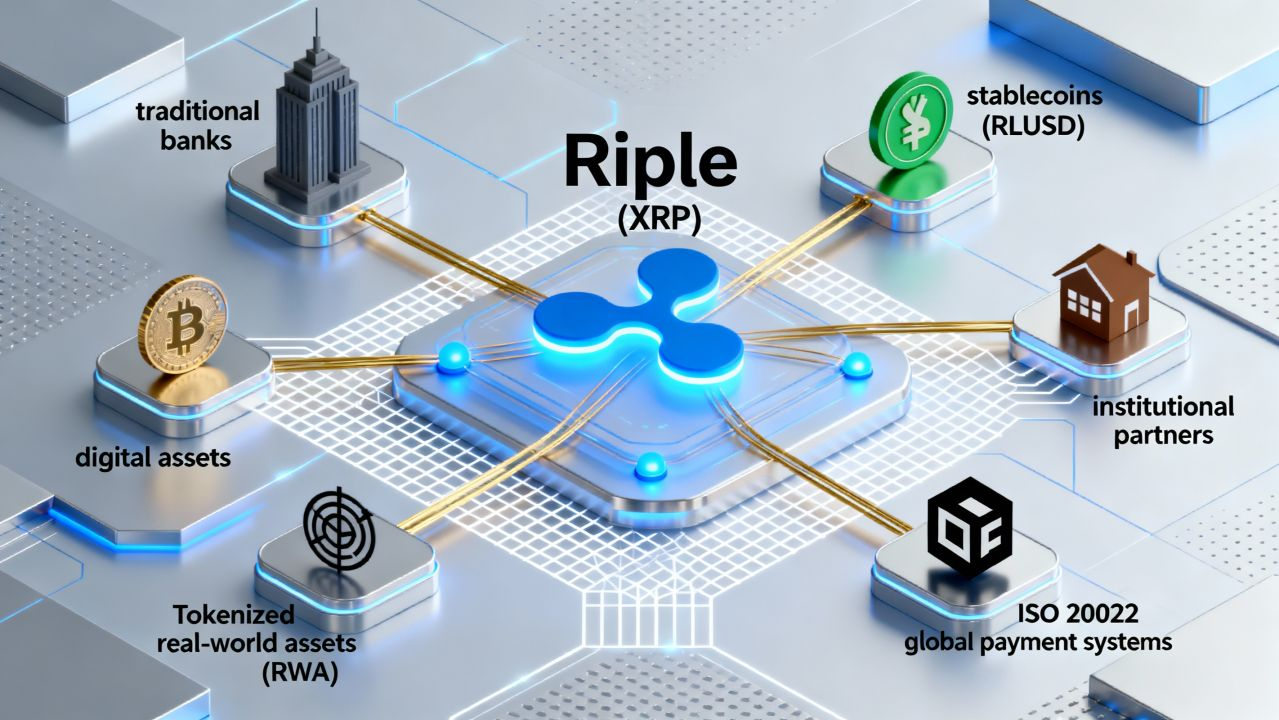
Beyond the courtroom, RippleNet, Ripple's network for facilitating cross-border payments, continues to see "updates" and expansions. Ripple's strategy involves partnering with banks and financial institutions globally to offer faster, cheaper, and more efficient international money transfers using XRP as a bridge currency. Recent announcements often highlight new partnerships, pilot programs in emerging markets, or technological enhancements to RippleNet that improve its efficiency and reach. These business development "updates" are crucial for XRP's long-term utility and adoption, as they demonstrate its real-world application beyond speculative trading.
Furthermore, Ripple's ventures into other areas of blockchain technology, such as central bank digital currencies (CBDCs) and tokenization platforms, represent strategic "updates" to its overall business model. By offering expertise and technology to governments and financial institutions looking to explore CBDCs, Ripple is positioning XRP Ledger as a viable infrastructure layer for future digital currencies. Similarly, its focus on tokenizing real-world assets could open up new use cases for XRP as a settlement layer. These diversified efforts aim to future-proof Ripple's business and expand XRP's utility beyond its initial focus on remittances.
Memecoins: The Cultural Phenomenon's Unpredictable Evolution
Memecoins, often born from internet culture, social media trends, and collective humor, defy traditional crypto analysis. Their "updates" are less about whitepapers and roadmaps and more about community engagement, viral trends, and the inherent virality of their meme. However, even within this seemingly chaotic corner, patterns of evolution are emerging.
The primary "update" for memecoins is their increasing sophistication. While Dogecoin and Shiba Inu initially paved the way as purely community-driven, humor-based tokens, newer memecoins are often launching with some semblance of utility, a charitable component, or even an underlying ecosystem. This shift from pure meme to "meme-plus-utility" is a significant development. For instance, some memecoins are now integrating into DeFi protocols, offering staking, or even being used in gaming platforms, attempting to give them a more sustainable value proposition beyond speculative frenzy.
Another crucial "update" in the memecoin space is the maturation of their communities and marketing strategies. What began as organic, often haphazard, viral campaigns has evolved into more organized, though still decentralized, community efforts. Influencer marketing, creative social media stunts, and coordinated pumping efforts are common. The sheer speed at which a new memecoin can gain traction and achieve massive market capitalization is an ongoing "update" that highlights the power of collective attention and social proof in the digital age. This also means that market sentiment, celebrity endorsements, or even a well-placed tweet can serve as a potent "update" that sends prices soaring or crashing.
The regulatory landscape is also becoming an "update" factor for memecoins. As their market caps grow and more retail investors participate, regulators are starting to pay attention. While direct regulation of memecoins is complex, broader regulatory frameworks around decentralized exchanges, token issuance, and investor protection will inevitably impact this space. The challenge for memecoin developers and communities is to navigate this evolving environment while retaining the decentralized, playful spirit that defines them.
Finally, the resilience of established memecoins like DOGE and SHIB, surviving multiple market cycles, is an "update" in itself. It shows that some memecoins can transcend their initial hype and cultivate loyal communities, sometimes even inspiring development beyond their initial scope (e.g., Shiba Inu's layer-2 solution, Shibarium). This suggests a possible future where the most resilient memecoins might evolve into more established, albeit still quirky, crypto assets.
#BTC #BNB #Solana #XRP #Memecoins🤑🤑 $BNB $BTC $SOL
