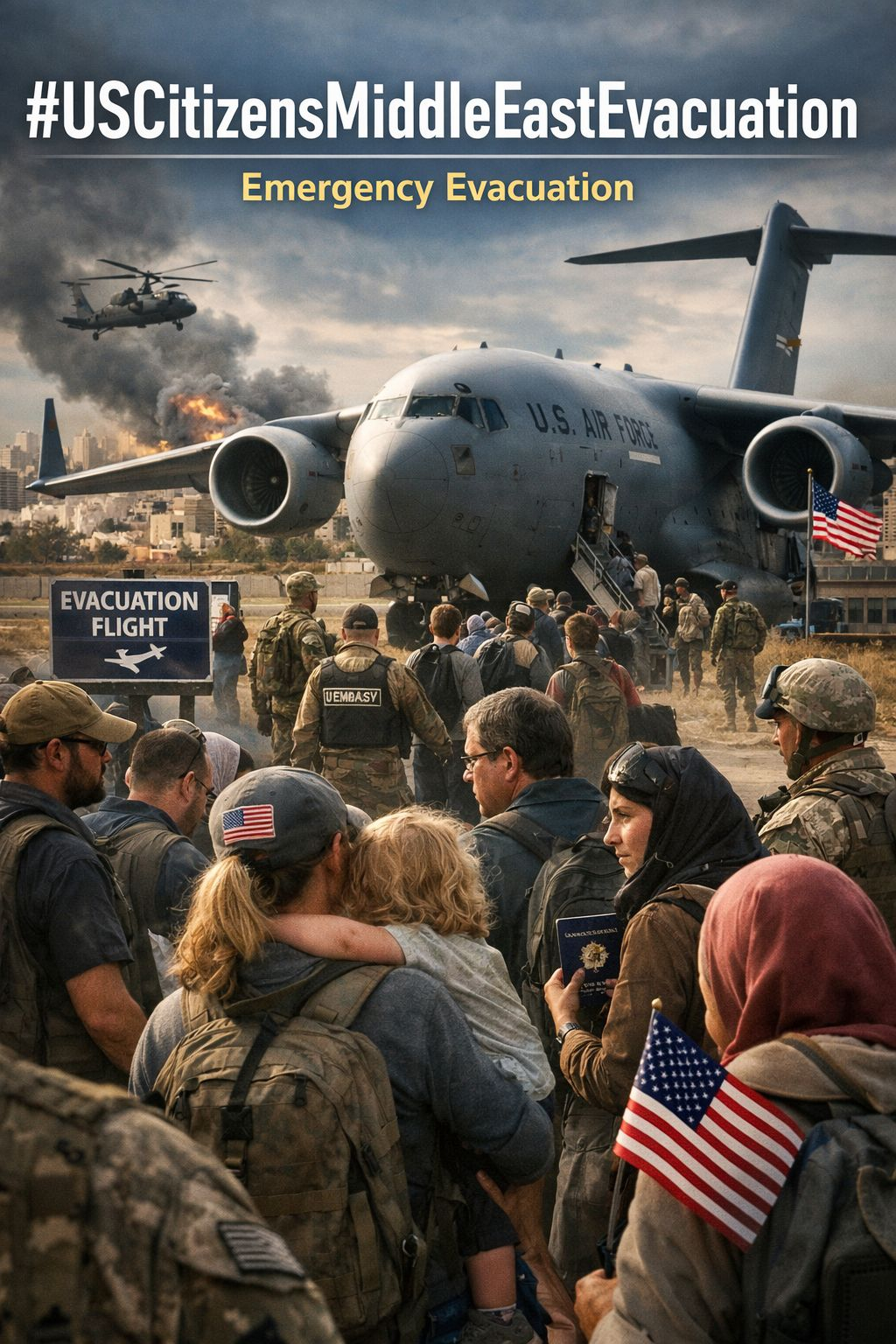
The #USCitizensMiddleEastEvacuation trend reflects growing concerns over escalating instability across parts of the Middle East. As regional tensions intensify due to military activity, diplomatic strain, and security threats, the United States government has taken precautionary measures to safeguard its citizens abroad.
The United States Department of State has issued updated travel advisories and, in certain high risk areas, authorized the voluntary departure of non essential personnel and family members from U.S. embassies.
In coordination with the United States Department of Defense, evacuation planning includes chartered flights, military transport options, and coordination with allied nations to ensure safe passage.
U.S. embassies across the region are urging citizens to enroll in the Smart Traveler Enrollment Program (STEP) to receive real time alerts and instructions. Officials emphasize that evacuation decisions are based on evolving threat assessments and intelligence reports.
While not all countries in the region are affected equally, heightened caution remains in areas experiencing direct conflict or political volatility.
American citizens are advised to monitor official channels, maintain emergency documentation, and prepare contingency plans.
The situation remains fluid, with authorities continuing to assess risks and respond as needed to protect U.S. nationals overseas.