

Picture a near future where robots don’t just move goods across warehouses or assemble products on factory lines they actually manage their own expenses, pay for maintenance, and earn income for the work they complete. This is the direction @Fabric Foundation is building toward. Instead of chasing marginal improvements in speed or hardware precision, the focus is on something far more transformative: financial independence for machines.
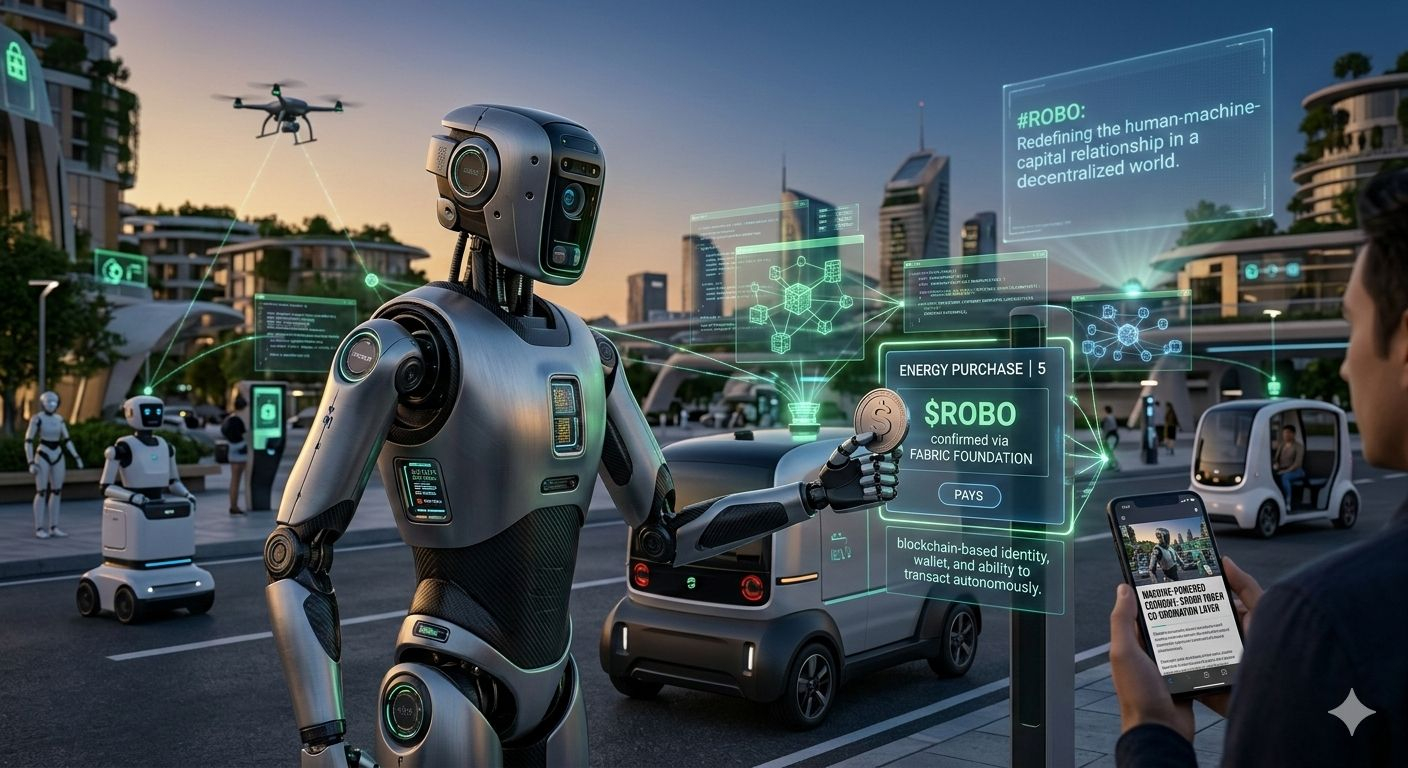
Think about it this way what if a delivery robot could automatically purchase replacement parts, pay for charging, and reinvest its earnings without waiting for human approval? That’s the leap Fabric is aiming for. By turning robots into autonomous economic participants, they move beyond being tools and become actors within a programmable marketplace.
At the center of this system is $ROBO, the token designed to directly connect machine output with measurable rewards. Rather than relying on speculation, the model ties verified robotic work to on-chain incentives. Productivity generates value, and value flows back through a transparent mechanism. It’s not just automation it’s economic alignment.
Developers worldwide are beginning to see the importance of shared coordination between machines. Instead of isolated bots operating in silos, imagine fleets from different manufacturers collaborating seamlessly bidding on tasks, verifying completion, and settling payments automatically. Fabric provides open infrastructure that standardizes these interactions, reducing friction and eliminating trust barriers.
Recent network growth highlights this momentum. Increased agent participation and stronger staking engagement show that builders are testing real use cases, not just ideas. The appeal lies in clarity: clear task validation, structured payouts, and governance designed to prevent fragmentation as adoption scales.
With new integrations across DeFi and expanding staking incentives for $ROBO the ecosystem is strengthening its feedback loop more verified work leads to more rewards, which attracts more builders and machines. It’s a compounding cycle rooted in utility, not hype.
As automation becomes central to global industries, programmable machine economies may outpace traditional models. #ROBO positions itself at that intersection where robots don’t just operate efficiently, but participate, transact, and grow within a decentralized economic framework.