Lately I have been thinking a lot about fees in crypto. Not just gas fees but the entire way value moves across networks. Every cycle we talk about scalability and throughput. We debate modular stacks and new virtual machines. But we rarely stop and ask a simpler question. Who is really paying for what and why?
Most fee models in crypto feel inherited from older systems. You use blockspace and you pay. You trade and you pay. You bridge and you pay. It makes technical sense. Yet it does not always reflect where real value is created.
That is why Fabric Foundation caught my attention.
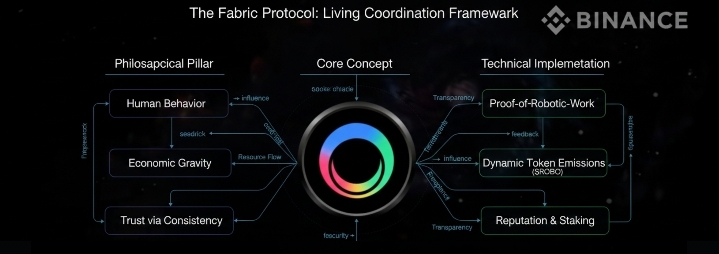
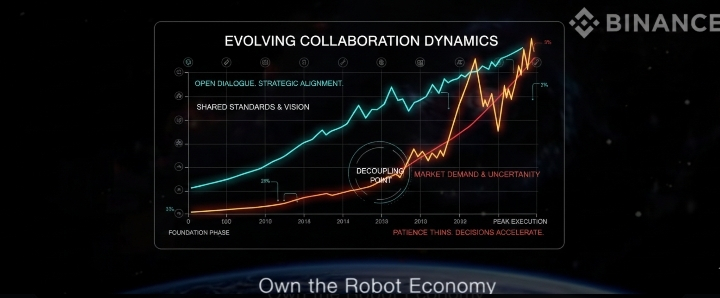
From what I understand Fabric is not simply adjusting percentages or reducing gas costs. The idea goes deeper. It focuses on user attention as a core economic input instead of just transaction activity. That shift might sound small at first. I think it changes the entire mental framework.
If you zoom out attention is already the currency of the internet. Social platforms monetize it. Streaming platforms monetize it. Search engines monetize it. Even crypto projects depend on it. Yet most chains still treat blockspace as the only scarce resource that matters.
What stands out to me is that Fabric seems to recognize attention as a real source of value. Transactions are often a byproduct. Liquidity can be a byproduct. Even total value locked often follows where attention flows. Attention is usually the spark.
I have noticed over the years that the projects that win are not always the most technically advanced. They are the ones that capture sustained attention. Think about NFT cycles. Think about meme coin seasons. Think about airdrop waves. Attention moves capital whether we like it or not.
Traditional fee models do not directly reward attention. They reward volume and usage. So users end up paying to participate even though their participation is what gives the network life.
Fabric appears to flip that relationship.
Instead of assuming users must always pay to engage the model explores ways to align fees with the value users generate by being active and visible. In simple terms attention is not just consumed. It is treated as productive.
This is where things get interesting.
If attention has measurable value then fee structures can evolve. Validators builders and liquidity providers may not rely purely on extracting from transactions. Value might circulate in a more balanced way that reflects engagement and contribution.
I have been in this space long enough to see how rigid fee systems can slow growth. High gas fees kill experimentation. Trading fees discourage smaller participants. Even small friction can push users away over time.
A model that reduces that friction by recognizing user presence as value feels different. It suggests that the ecosystem does not only survive on fees collected from activity. It can also account for the energy users bring into the system.
From a design perspective that is bold.
Fee models define incentives. Incentives shape behavior. If you reward liquidity you attract capital that moves quickly. If you reward staking you encourage lockups. If you reward attention you might encourage creativity and community building.
Of course there are risks.
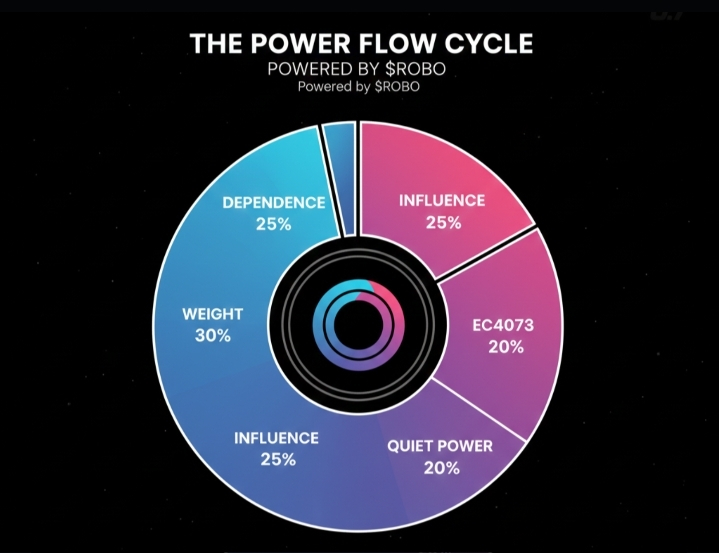
Attention based systems can be gamed. We have all seen what happens when metrics become targets. Airdrop farming and fake engagement become common. Measuring genuine attention in a decentralized way is not simple.
That was my first reaction. How do you measure attention without central control. How do you avoid turning it into another short term points game. Those are real challenges.
Still every new economic design begins imperfectly.
Liquidity mining was chaotic in its early days. Yield farming went through extreme phases. NFT royalty models sparked debate. Over time mechanisms adapt. They get refined by real market pressure.
What I appreciate about the direction Fabric is taking is that it recognizes blockchains are no longer just financial settlement layers. They are social environments. They are cultural arenas. Social systems revolve around attention.
More projects now blend social activity with on chain identity. Wallets feel like profiles. Activity forms reputation. Influence starts to matter in economic terms. The value of a participant is not only their balance but also their presence.
Fabric seems to lean into that shift rather than ignore it.
I also find it useful to compare this to how the early internet evolved. Infrastructure came first. Monetization came later. Web2 monetized attention through ads and data extraction. Web3 reacted against that but never fully solved how to natively value attention without exploiting it.
Maybe this is part of that next step.
If attention becomes an acknowledged asset then the relationship between protocols and users changes. Users are not just fee payers. They are contributors whose engagement sustains the network.
There is also a psychological layer to this.
When users constantly feel like they are paying to exist on chain it creates subtle resistance. When they feel recognized as stakeholders the dynamic shifts. Participation feels more meaningful.
I have seen communities thrive when engagement is valued. People stay longer. They create content. They help others. That kind of organic growth compounds over time.
There is an economic implication as well. If fees are shaped by attention then protocols may compete on experience and narrative rather than pure yield. Builders might focus more on culture and community design.
Crypto could use more of that.
For years we have recycled similar financial primitives. Each iteration becomes more efficient yet the relationship between protocol and user remains mostly transactional. Fabric questions that assumption at the root.
Should fees always be extracted from action alone. Or can they reflect the broader value users create simply by being present and engaged.
I am not claiming this will be a guaranteed breakthrough. New incentive systems are fragile. They require testing in real conditions. Markets are not forgiving.
But I respect projects that experiment at the incentive layer rather than only adding features.
Crypto at its core is an incentive machine. Code can be copied. Incentive design is harder. It determines how people behave and how networks evolve.
If Fabric manages to build a system where attention is valued without being exploited it could influence other builders. Fee structures might become more adaptive. They might feel less extractive and more circular.
When I step back it reminds me that we are still early in understanding decentralized economies. We borrowed ideas from traditional finance. We improved some aspects. We are now questioning others.
That feels healthy.
It means the space has not settled into fixed assumptions. We are still willing to ask whether the foundation makes sense. Rethinking fees might seem technical. In reality it touches the core of how value flows.
Fabric focus on attention based fee design might evolve into something different over time. It might face setbacks. Still the direction feels aligned with a more social and community driven crypto landscape.
Personally I find that encouraging.
It reminds me that this space is not only about charts and yields. It is about experimenting with new economic relationships. It is about redefining how value is recognized and distributed across networks.
If user attention truly becomes a first class economic input on chain we may look back and see this as a quiet turning point.
For now I am watching with curiosity and cautious optimism.
Whenever someone challenges the incentive layer I pay attention. And in a system that increasingly values attention itself that feels fitting.