

When I first encountered the architecture behind Fabric Foundation, my mind immediately drifted to the wilder fringes of science fiction. I imagined fully autonomous societies, AI agents trading services in the blink of an eye, and a world where data was no longer a commodity to be hoarded, but a fluid, verifiable resource.
While those grand visions still excite me, what truly keeps me up at night is the realization that Fabric isn’t just a distant dream; it’s a foundational shift poised to upend some of our most critical, and often most inefficient, real-world industries today. We aren't talking about a new app or a marginal improvement. Fabric is building a protocol for verifiable data and autonomous AI agent economies.
Think of it as the internet for data that can prove its own truth. This isn't just about the "immutability" we heard about during the blockchain craze; it’s about making data "self-aware" in a transactional sense. It allows data to move, be utilized, and be paid for without human intermediaries.
Here are the sectors where I believe this disruption will hit first and hardest.
1. The Great Untangling: Supply Chain & Logistics
If you’ve ever dealt with global shipping, you know it’s a labyrinth of paperwork and "trust me" spreadsheets. A single container might cross five borders and pass through a dozen companies, each using proprietary, outdated systems. This fragmentation leads to delays and billions in administrative overhead.
This is where Fabric shines. Imagine every pallet or container possessing its own verifiable data "passport". As it moves, its location, temperature, and custody are instantly recorded. No more arguing over whether a cold chain was maintained or when a shipment arrived. Payments can trigger automatically via smart contracts the moment verifiable conditions are met.
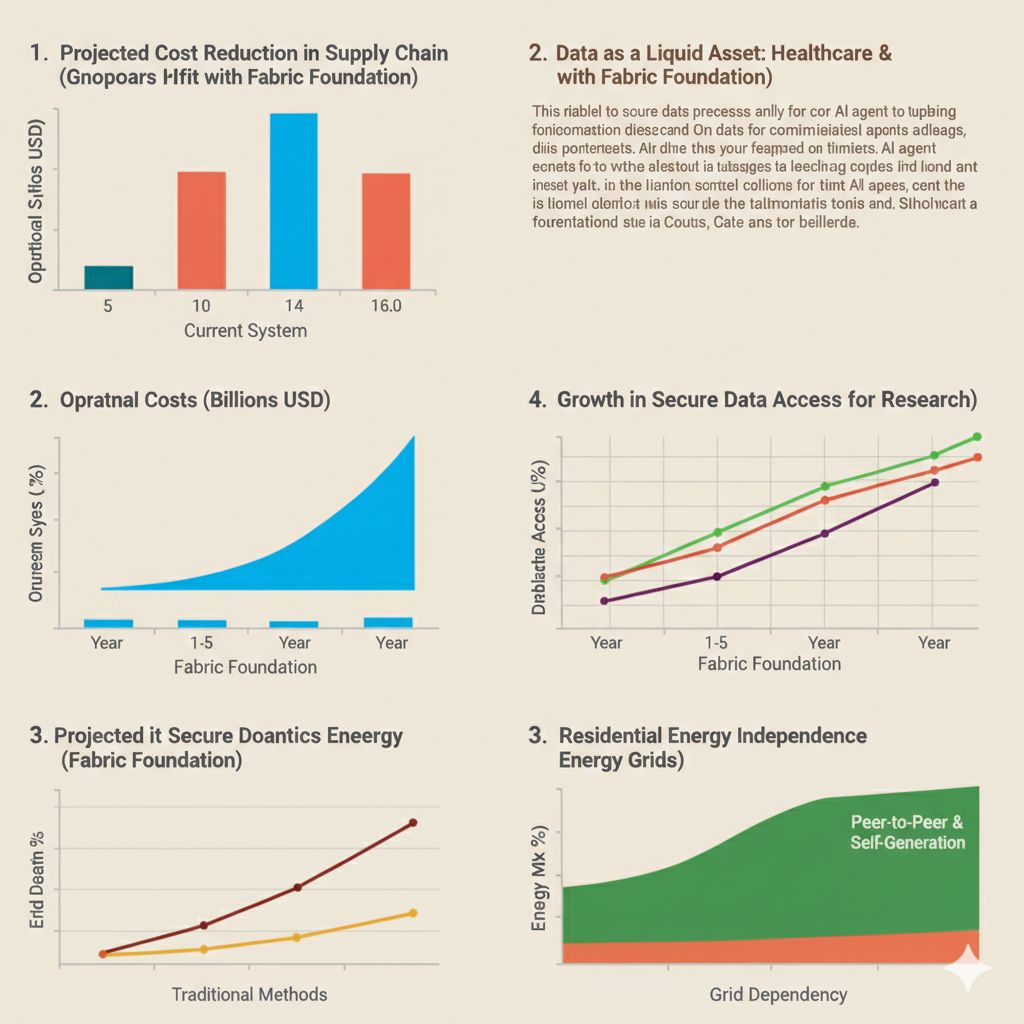
The disruption here is radical transparency. We’re talking about reducing bureaucratic bottlenecks from weeks to mere seconds, benefiting everyone from the local farmer to the global retailer.
2. Healthcare: Data Sovereignty as a Life-Saver
It is a modern paradox that our most valuable data—our DNA and medical history—is the least accessible to us. It’s locked in hospital silos, making it nearly impossible for patients to share it securely or for researchers to access the massive datasets needed for medical breakthroughs.
Fabric Foundation changes the math of ownership through Decentralized Identifiers (DIDs). Instead of giving a copy of your genome to a corporation, you grant an AI agent "permissioned access" to run a specific analysis. The researcher gets the insight, the AI handles the computation, and you—the owner—retain the raw data.
This transforms medical records from a liability into a liquid asset, allowing patients to contribute to global health science without sacrificing their privacy.
3. The Power Shift: Autonomous Energy Grids
Our current energy grid is a 20th-century relic—a top-down model struggling to integrate millions of residential solar panels and EV batteries. The "Smart Grid" has been a buzzword for years, but it has lacked a low-latency, high-trust protocol to actually function at scale.
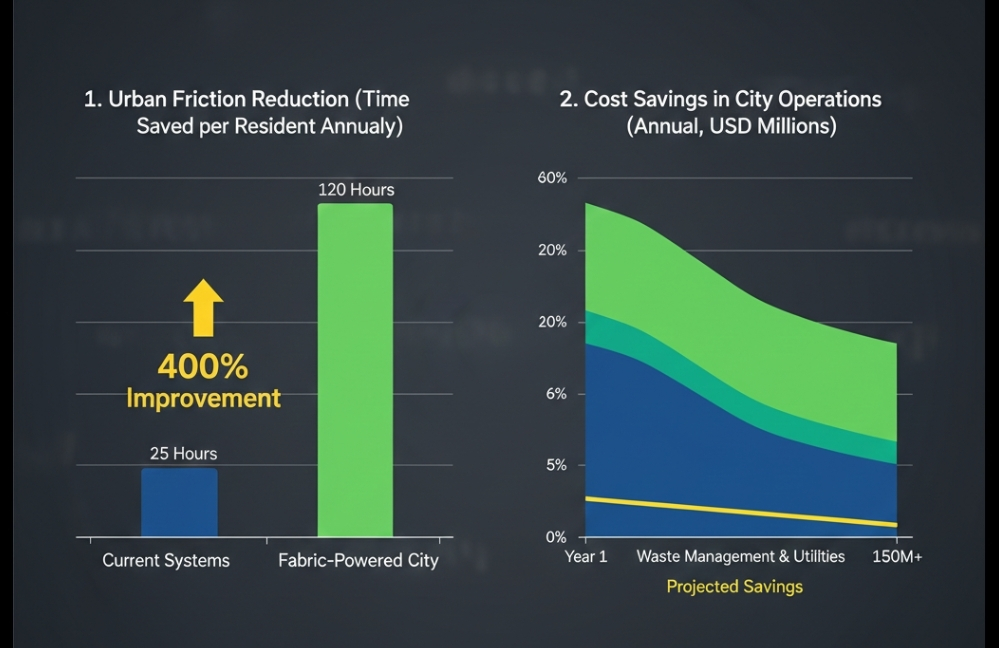
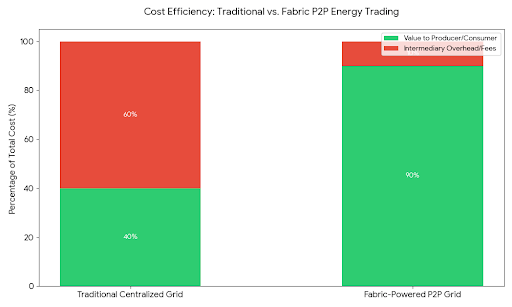
Fabric provides the "nervous system" for a decentralized energy market. In this ecosystem, your home is a node, not just a consumer. If your solar panels generate an excess of 5kWh at noon, your home’s AI agent can automatically find a neighbor whose car needs a charge. They negotiate a price, verify the transfer, and settle the transaction in real-time—all without a central utility provider taking a massive cut.
4. Smart Cities: From Friction to Flow
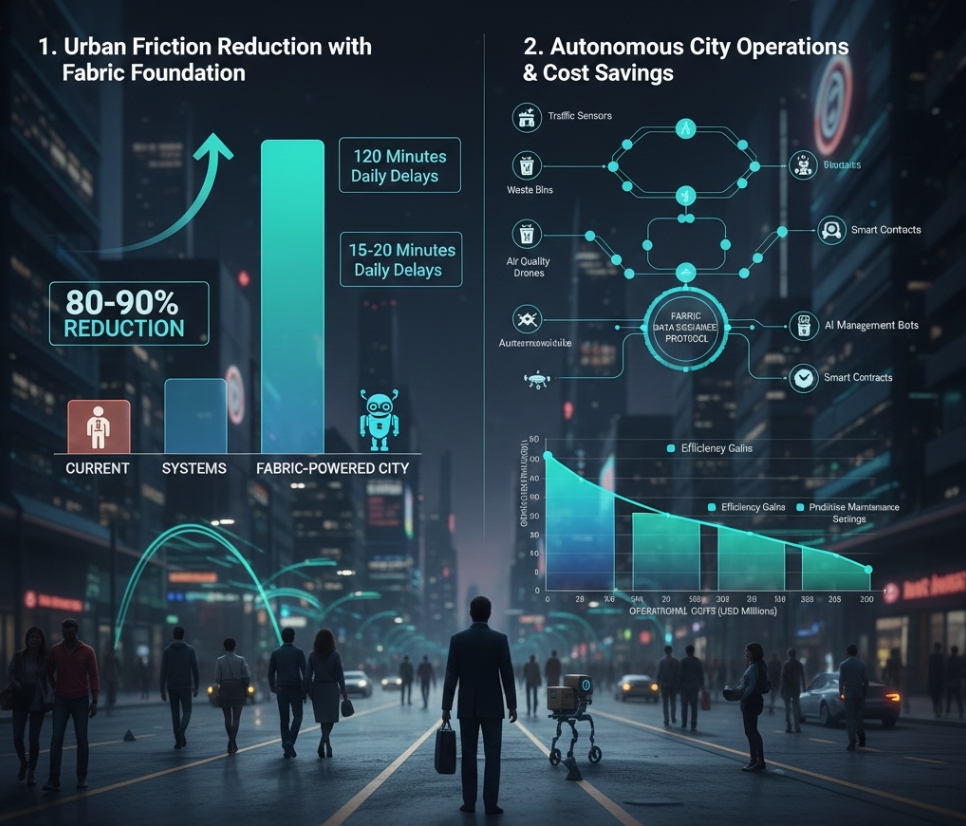
In our current "smart" cities, sensors for traffic, air quality, and waste management rarely talk to one another because they are built by different vendors on closed systems.
With Fabric, the city becomes a living fabric of verifiable data. Traffic lights can adjust in real-time based on data verified by autonomous vehicles; waste bins can signal for collection only when full, with payments to contractors handled instantly. This reduces "urban friction," turning city management from a reactive nightmare into a proactive, automated service.
The Bottom Line: Moving Beyond the Hype
The "Sci-Fi" label often acts as a barrier, making groundbreaking tech feel like something for our grandchildren. But the inefficiencies Fabric targets—the friction in our ports, the silos in our hospitals, and the waste in our power lines—are problems of the now.
We are entering an era where "trust" is no longer a feeling you have toward a brand, but a mathematical certainty baked into the protocol. The industries that realize this first won't just be "disrupted"; they will be the architects of a new, more efficient reality.
The question isn't whether this technology will change the world. The question is: which industry will be the first to stop calling it science fiction and start calling it a competitive advantage?