
The AI race isn’t about bigger models anymore — it’s about who can prove their outputs. That’s where @Mira Network steps in.
As AI agents begin executing DeFi trades, voting in governance, and coordinating autonomous systems, unverifiable outputs become systemic risk. A hallucinating chatbot is harmless. A hallucinating trading agent is catastrophic.
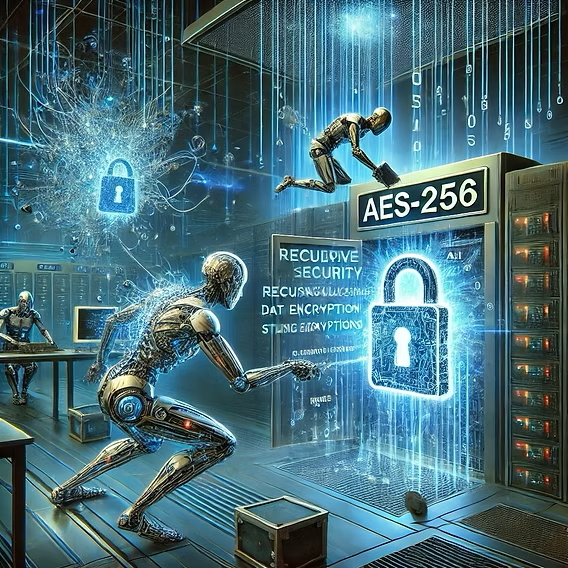
$MIRA positions itself as a verification-first infrastructure layer. Instead of competing to generate intelligence, Mira validates it. Through a validator consensus model, cryptographic proofs, and on-chain accountability, outputs are independently checked before trust is assigned. This turns AI from probabilistic guesswork into economically secured computation.
Unlike compute marketplaces such as Bittensor or io.net, or coordination layers like Allora and Gensyn, #Mira focuses on verifiable integrity. It is not optimizing intelligence supply — it is securing intelligence demand. That distinction matters as capital flows toward risk-adjusted AI systems.
Token utility is tightly aligned: staking secures verification nodes, validators earn for accuracy, and dishonest behavior is economically punished. As AI-native DeFi and autonomous governance expand, verification becomes a structural necessity, not a feature.
Key Insight: The future AI stack will require a trust layer as foundational as blockchain was to finance.
Risk Factor: Adoption speed — verification must integrate seamlessly or developers may choose convenience over security.
Future Catalyst: Partnerships with AI agent frameworks and DeFi protocols demanding provable outputs.
Strategic Takeaway: Infrastructure that secures AI integrity may outlast model cycles. $MIRA represents asymmetric exposure to that thesis.
#MIRA $MIRA @Mira - Trust Layer of AI
