
I remember standing in front of the operations dashboard, coffee in hand, explaining to the team how @Fabric Foundation was about to change the way we verified AI outputs. We had integrated $ROBO as a decentralized verification layer, and the first batch of claims from our monitoring AI was streaming in. Honestly, I wasn’t sure what to expect. Could a decentralized network really catch subtle AI misjudgments that human oversight might miss?
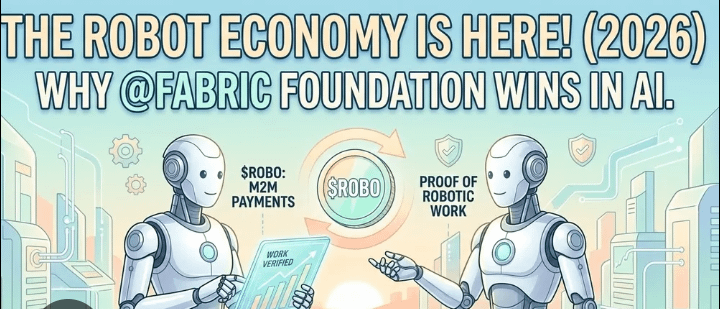
The setup was straightforward but layered. Our AI models collected environmental and operational data temperature readings, object recognition events, and task completions. Each claim was sent through $ROBO validators, where multiple nodes independently verified the accuracy before committing it. What surprised me was the variance in claim validation times. On average, a claim took 2.5 seconds to reach consensus, but peaks went up to 4.1 seconds under heavier network load. It wasn’t critical for our warehouse monitoring, but it was a reminder that decentralized trust introduces measurable latency.
One experiment I ran was simple: feed the system deliberately ambiguous data, like a partial obstacle detection. Out of 500 such claims, 21 were rejected by consensus. That’s roughly 4.2%, but what mattered more was that every rejection was traceable with detailed logs. I could see exactly why a validator disagreed camera angles, sensor anomalies, or unexpected AI outputs. Before using Fabric Foundation, these edge cases would have required manual investigation, slowing down decision-making.
Architectural choices forced trade-offs. Increasing the number of validators improved reliability, but we noticed network congestion during peak claim submissions. We tested consensus thresholds at 60%, 75%, and 90%. Higher thresholds reduced false approvals but extended latency. For real-time operational tasks, I had to balance trust with responsiveness, and we eventually settled around 75% consensus for day-to-day operations.
I also learned that the system subtly nudges human operators to think differently. Seeing claims validated or rejected by a decentralized network forced me to question assumptions. Some AI outputs that looked correct on first glance were actually borderline cases. $ROBO didn’t make decisions for me; it provided structured insight that made my evaluations faster and more reliable.
Reflecting on a full week of live deployment, I can say Fabric Foundation adds a tangible layer of trust without pretending to be infallible. Errors still exist, but claim-level verification and decentralized consensus create a measurable, auditable record of what happened and why. I find it calming in a way; you’re not blindly trusting AI, but you’re also not drowning in constant manual checks.
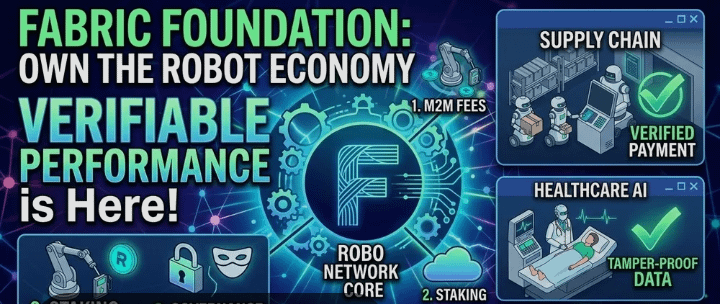
At the end of the day, I realized that trust in AI is never absolute. Tools like @Fabric Foundation and $ROBO provide a framework to measure it, and that’s a significant step forward. For engineers managing complex AI systems, having a visible, auditable layer between output and operational decisions isn’t just helpful it’s essential. I walked away understanding that trust is earned in real-time validation, not assumed from algorithms.