
AI has already changed how we work online. These agents can write, analyze, trade, and automate tasks faster than anything we’ve seen before. But here’s the catch: most of them are stuck inside walled off platforms, boxed in by APIs and company rules. They can process data all day, but when it’s time to actually do something in the real world, they still need a human to step in.
Now think bigger. What if these AIs didn’t just live behind screens, but moved out into the world inside robots that can work together, make deals, and improve themselves, all without waiting for permission? That’s the kind of future Fabric Protocol is chasing. The big question: Is this the next core layer of the internet built not for people, but for machines?

The Missing Link Between AI and the Real World
The internet let us talk. Blockchains let us move value without middlemen. AI brought brains to the table. But we’re still missing something: a way for smart machines to actually coordinate, safely and at scale, in the real world.
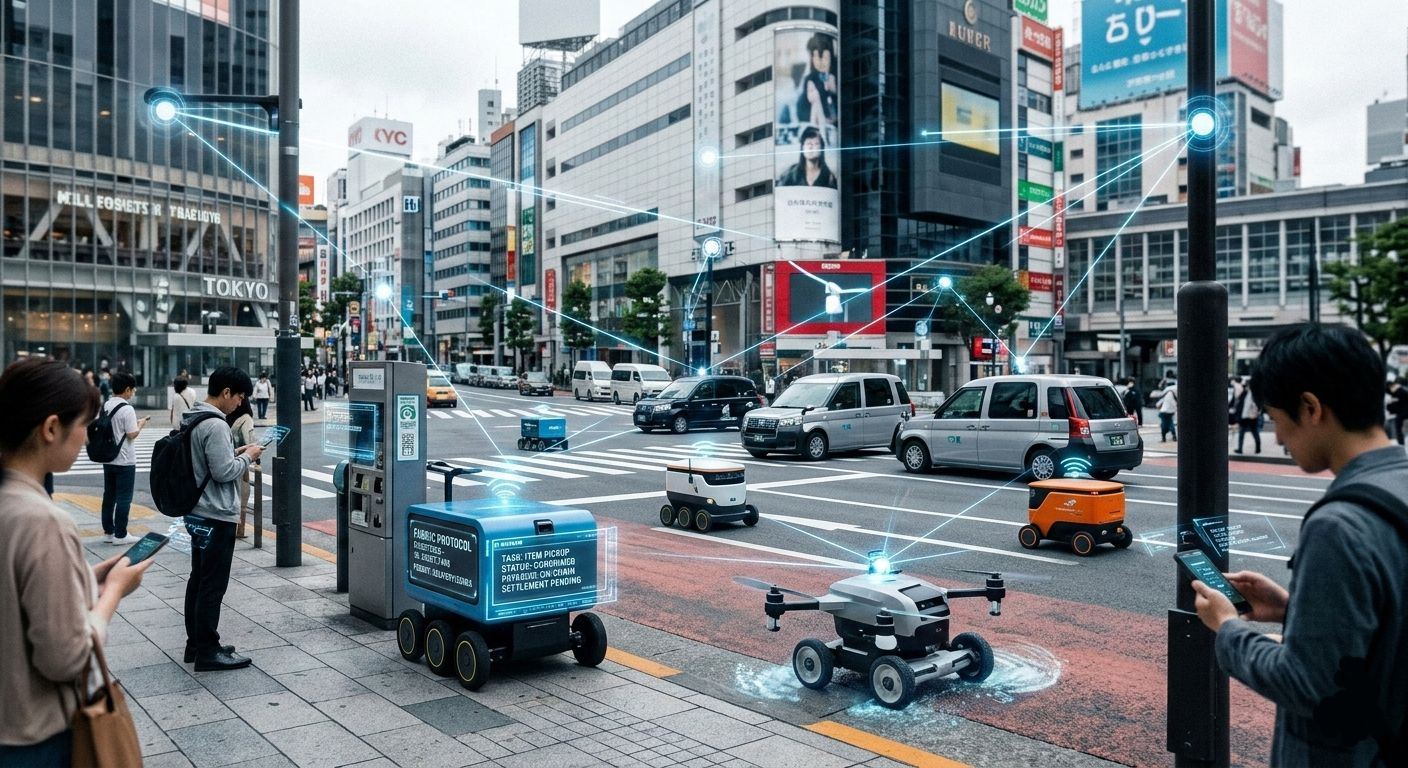
Sure, AI agents can already run code. But robots out in the wild? They have to deal with rules, regulations, proving their identity, and being held responsible if something goes wrong. A delivery robot can’t just show up and start working. It needs to prove who’s in charge, what it’s allowed to do, and how it’ll get paid. That’s not just software it’s infrastructure.
Fabric Protocol wants to be that infrastructure. It’s a public, open coordination layer where robots and AI agents can register, pick up jobs, record what they’re doing, and settle payments all on-chain, out in the open.
If this works, it could become the backbone for an Internet of Autonomous Machines.
From Walled Off Robots to Open Networks
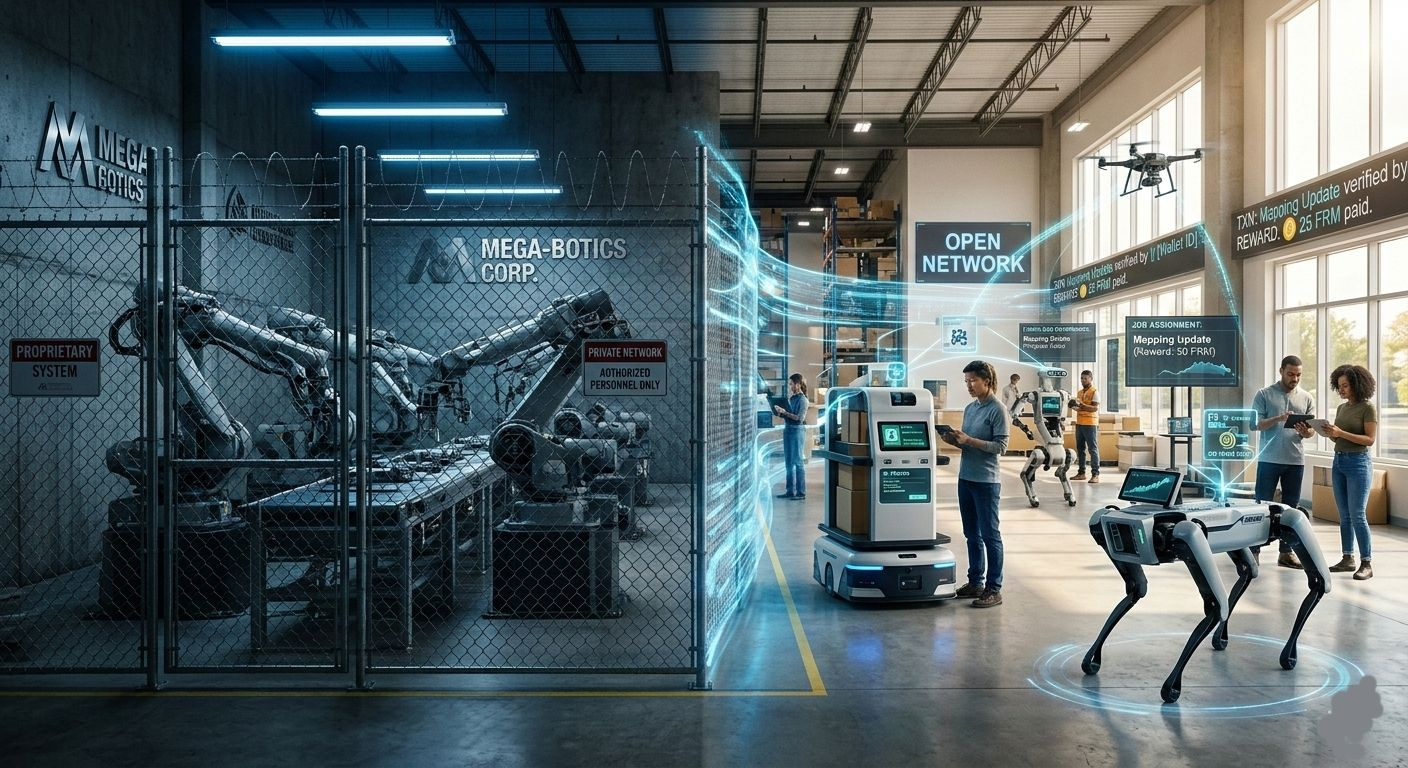
Right now most robotics projects are closed off. Big companies own the hardware, the software, and the data. That keeps everything locked down and limits what robots can actually do or who benefits.
Fabric wants to break those walls. Instead of closed systems, it’s building a shared, permissionless network where any robot that plays by the rules can join. Identity is cryptographically proven. Job assignments are transparent. Decisions are made by the community, not just one company. Payments move automatically.
In this world robots are not just dumb tools they become economic players.
Picture a warehouse robot bidding for jobs a mapping robot earning rewards for updating maps or a drone logging inspection results onto a public ledger. Every move is tracked, verifiable, and rewarded.
It’s a huge shift. Robotics turns from something only big companies can afford into an open, collaborative marketplace.
Trust, But Verify: How Fabric Builds Confidence
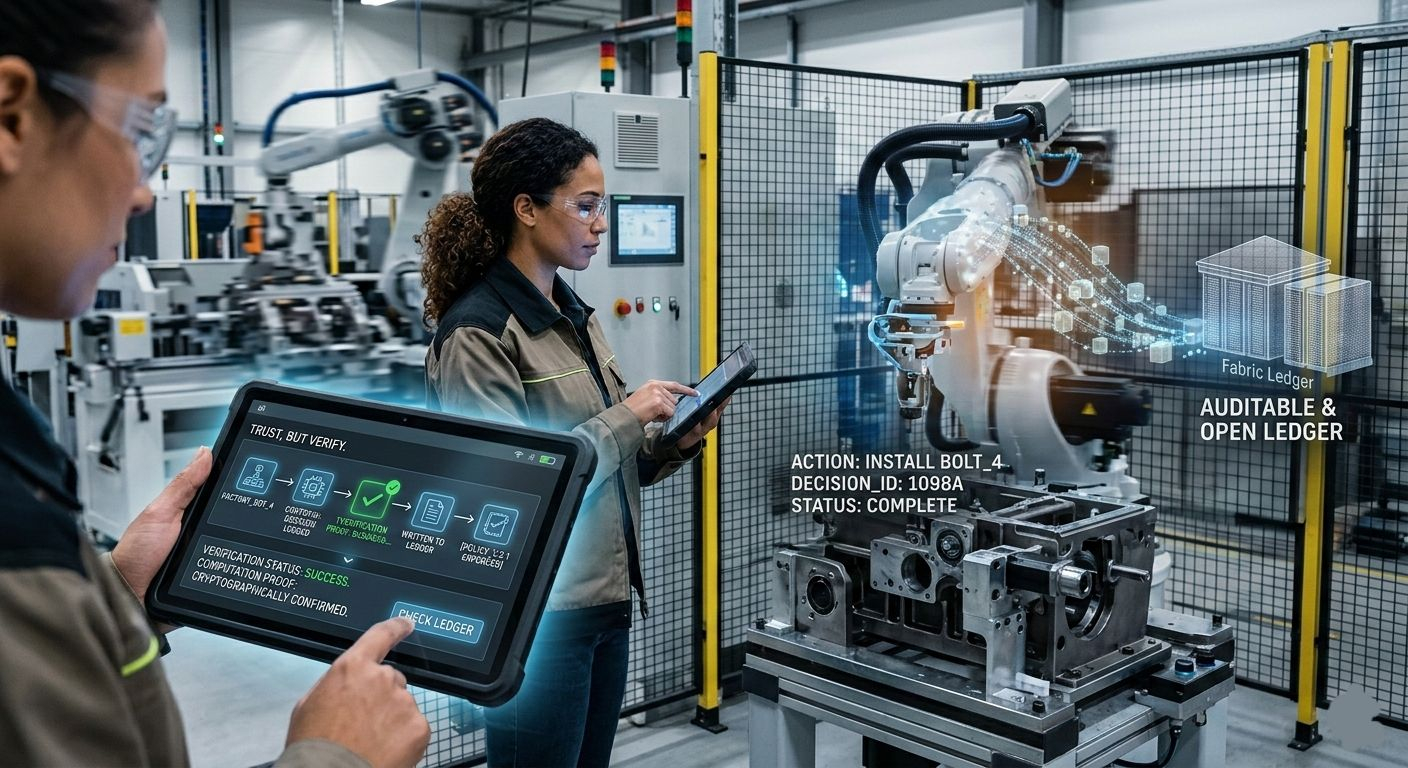
The biggest challenge for autonomous machines? Trust. How do you know a robot actually did its job? How do you check the decisions made by a black box AI running inside a drone or a factory arm?
Fabric’s answer: verifiable computing and open ledgers. Instead of trusting some company, you can check the cryptographic proof yourself. Smart contracts enforce the rules. The community can update policies as things change.
This means you don’t have to trust one company’s word. In places like hospitals, factories, or city streets, being able to check what happened and why matters more than ever.
It’s a bit like what TCP/IP did for the internet. Fabric wants to set the standard for how machines work together.
The New Economy of Machines
And here’s where things really get interesting. If robots can make deals and earn rewards on their own, you don’t just get smarter machines you get a machine first economy.
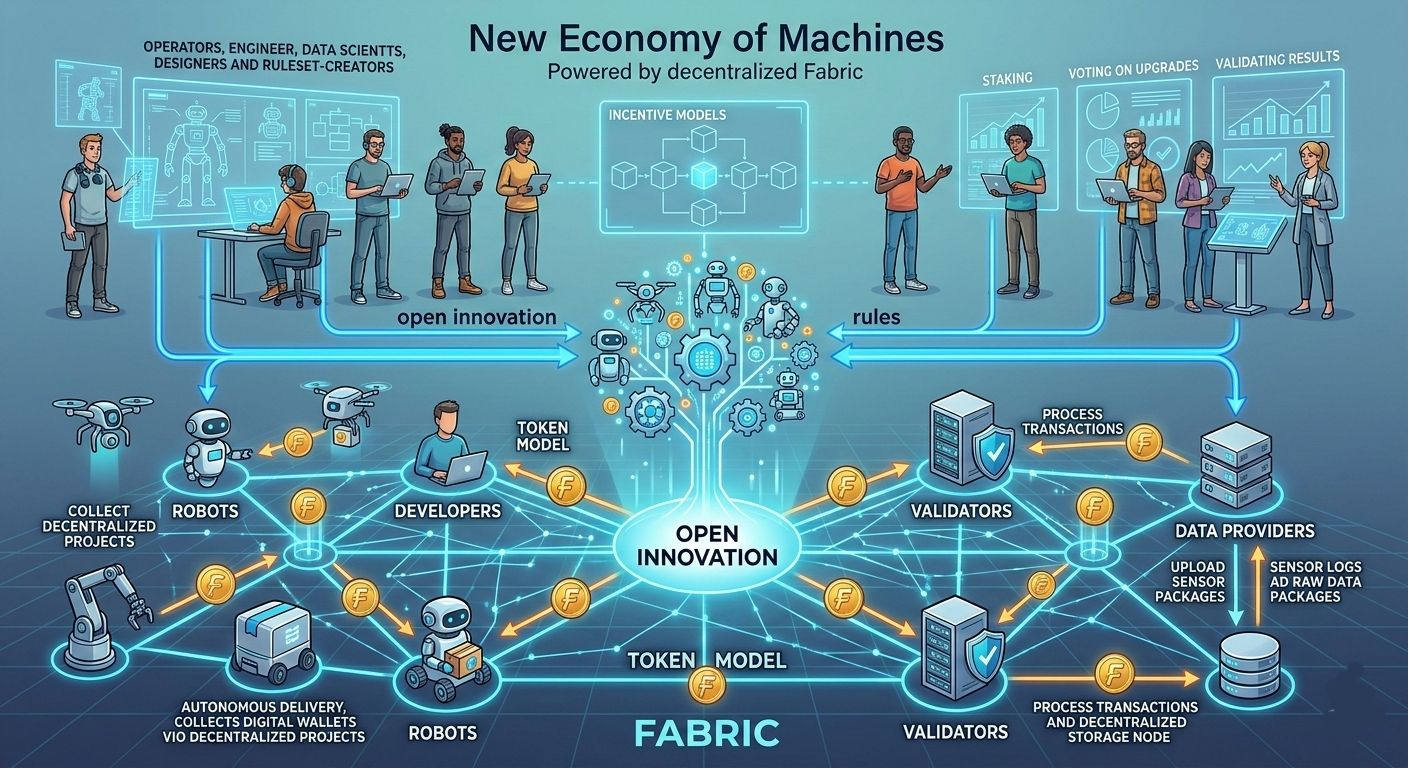
Fabric introduces its own token model. Robots, developers, validators, and data providers all get rewarded for doing valuable work. Staking, settling jobs, voting on upgrades it all runs through the network.
Humans aren’t out of the picture. They just move up the stack: designing tools, setting rules, validating results. The goal isn’t to automate people out, but to line up everyone’s incentives around open innovation.
This could unlock robotics for way more people. Instead of a few big companies calling the shots, a global network can help shape how robots evolve.
A New Layer for the Machine Age?
Every big tech leap added a new layer:
The web gave us instant information.
Blockchains let us trade value without middlemen.
AI gave us scalable smarts.
Now, Fabric wants to add one more: decentralized machine coordination.
Will it work? That depends on real world adoption, scaling up, dealing with laws, and getting robots out of the lab and into the wild. Robotics is tough hardware breaks, safety matters, and things move slower than in pure software.
But the vision is hard to ignore. If AI is the brain and robots are the hands, Fabric aims to be the nervous system that brings it all together.
