
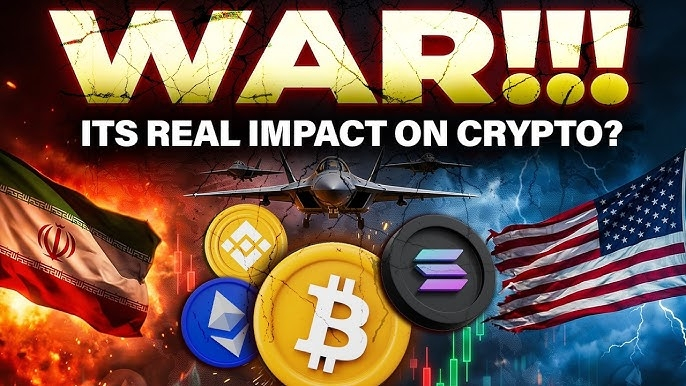
 Geopolitical tension between Iran, the United States, and Israel increases uncertainty across global markets. And when uncertainty rises, crypto doesn’t get immunity — it gets volatility.
Let’s be realistic.
Crypto still trades like a high-risk asset during global stress. When fear spikes, capital usually rotates toward cash, the dollar, and gold. Risk assets, including Bitcoin and altcoins, often face short-term pressure.
📉 Why Crypto Reacts During Geopolitical Tension
Here’s what typically happens:
Oil prices rise
Inflation expectations increase
Central banks face tighter policy pressure
Investors reduce risk exposure
Crypto sits in the risk category. So when global fear builds, leverage unwinds and volatility expands.
This doesn’t mean the long-term thesis breaks. It means liquidity becomes cautious.
🔥 Short-Term Market Effects
During conflict-driven uncertainty, you usually see:
Sudden spikes in volatility
Liquidation cascades
ETF flow shifts
Correlation with equities
The move is rarely about blockchain fundamentals. It’s about positioning and liquidity.
Markets react to fear faster than they react to fundamentals.
🧠 What Investors Should Actually Do
Stop reacting emotionally to headlines.
Instead:
Manage risk first.
Reduce leverage. Tighten invalidation levels. Volatile environments punish oversized positions.
Watch macro signals.
Oil, bond yields, dollar strength — these matter more than crypto Twitter during geopolitical stress.
Avoid the “safe haven” trap.
Bitcoin sometimes acts as digital gold — but during sudden global shocks, it often behaves like a tech stock.
Focus on structure.
Key support and resistance levels matter more than political narratives.
📌 The Bigger Picture
Geopolitical conflict creates uncertainty. Uncertainty creates volatility. Volatility creates opportunity — but only for disciplined traders.
If tensions escalate, markets may see deeper risk-off pressure. If tensions cool, liquidity can return quickly.
The question isn’t whether conflict exists.
The question is whether you’re positioned to survive volatility without emotional decision-making.
Risk control beats prediction. Every time.
.

