
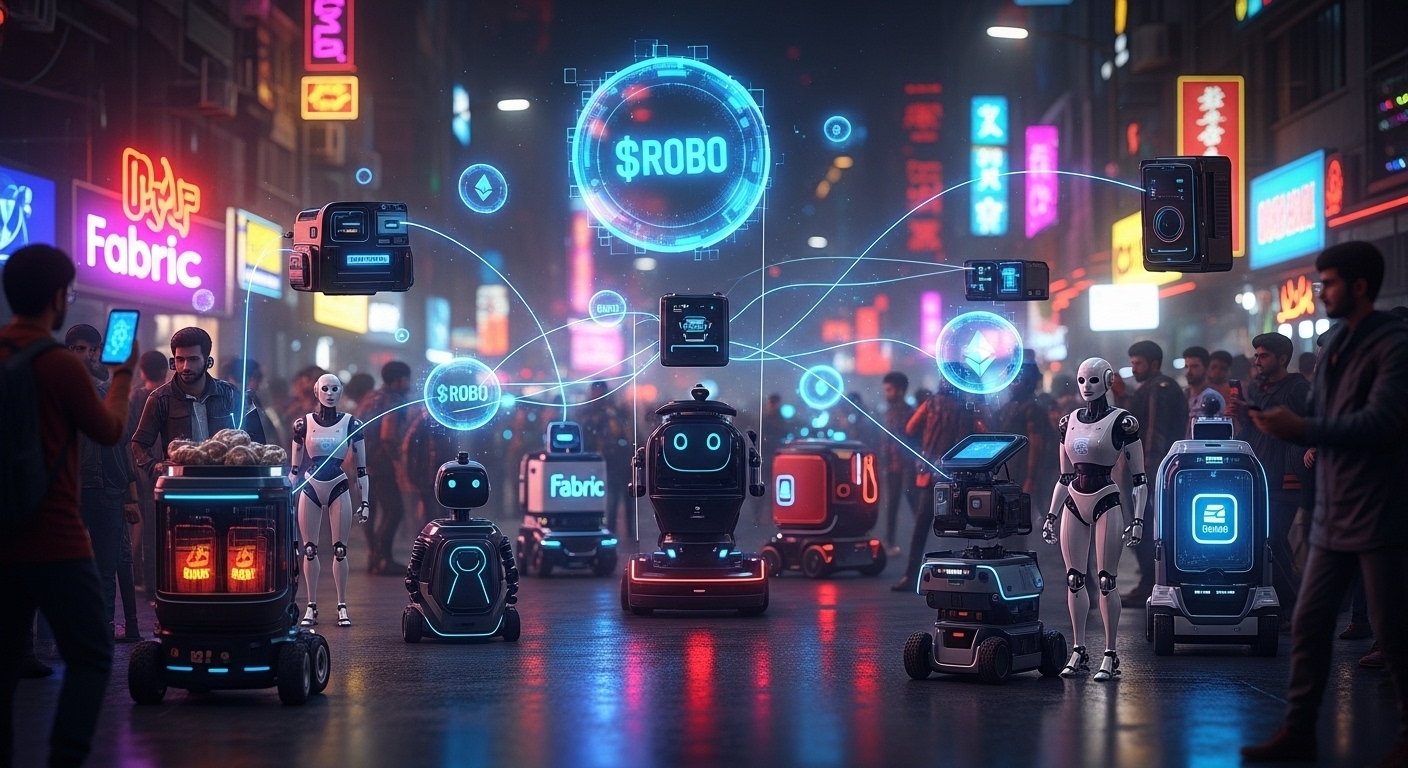
 We're stepping into an era where machines do far more than assist—they produce, deliver, and even decide parts of daily economic life. Robots assemble products in factories, drones handle deliveries in cities, and autonomous systems manage warehouses around the clock. This shift raises a pressing question: who truly owns the value these machines create? In the past, ownership rested with factory owners, inventors, or large corporations. But as robotics and automation explode, that old model risks concentrating wealth in fewer hands while leaving workers and everyday people behind.
Fabric Foundation steps in with a different vision. As a non-profit organization, it works to build an open "Robot Economy" where robots aren't locked into corporate silos but act as independent participants in a shared, decentralized network. At the center of this effort stands the $ROBO token—a utility and governance asset that powers transactions, secures the system, and gives people a real stake in how things evolve.
The rise of a machine-driven economy isn't hypothetical anymore. Robotics markets are surging, with projections pointing to massive growth in the coming years. Industrial robots, collaborative bots, and general-purpose models are becoming more capable and affordable. Yet this progress brings familiar challenges. When machines replace human labor, productivity soars, but wages often stagnate or drop for many. Studies have shown that each additional robot in a workforce can reduce employment and pay in affected areas. The gains flow mostly to those who own the technology—big companies and investors—widening gaps between the few who control capital and the many who depend on jobs.
This isn't new. The Industrial Revolution displaced artisans and farm workers, creating wealth for factory owners while sparking unrest. Today's automation wave feels similar, but on a faster, global scale. Economists have long warned that without mechanisms to share ownership of productive capital, technological leaps can deepen inequality. One thinker put it bluntly: whoever owns the robots ends up ruling the world. If ownership stays centralized, we risk a future where machines work tirelessly, but the benefits accrue to a narrow elite.
Fabric Foundation offers an alternative path. It builds infrastructure so robots can have their own digital identities on the blockchain, hold wallets, receive payments, and coordinate tasks without relying on a single company. This turns robots from tools owned by one entity into economic actors in a broader network. The protocol handles key pieces: verifying robot identities to prevent fraud, enabling seamless payments between machines (machine-to-machine transactions), and creating ways for humans to govern and participate.
ROBO serves as the fuel for this system. With a fixed total supply of 10 billion tokens, it handles network fees, acts as collateral for robot operators (staking bonds to ensure reliable performance), and enables governance decisions. Holders can lock tokens to gain voting power, influencing everything from fee structures to protocol upgrades. This setup draws from proven models in decentralized finance, where long-term commitment aligns incentives.
In practice, imagine a small business owner in Karachi or anywhere else registering a delivery robot on the Fabric network. They stake ROBO as a performance bond, the robot gets a blockchain identity, and it joins a global pool of machines ready for tasks. When the robot completes a job—say, delivering packages across town—the payer settles in $ROBO. A portion of fees supports the network, while operators earn rewards. This creates opportunities for individuals and small operators, not just massive corporations with proprietary fleets.
The real reframing happens in how value gets defined and distributed. Traditional economics ties value to scarce resources like labor or exclusive patents. In a machine-driven world, abundance becomes possible—robots can replicate tasks endlessly with minimal marginal cost. Fabric shifts value toward network participation. Owning ROBO means owning a piece of the coordination layer that makes the entire robot economy function. As more robots join, the network grows stronger, increasing demand for $ROBO to pay fees, stake, or govern.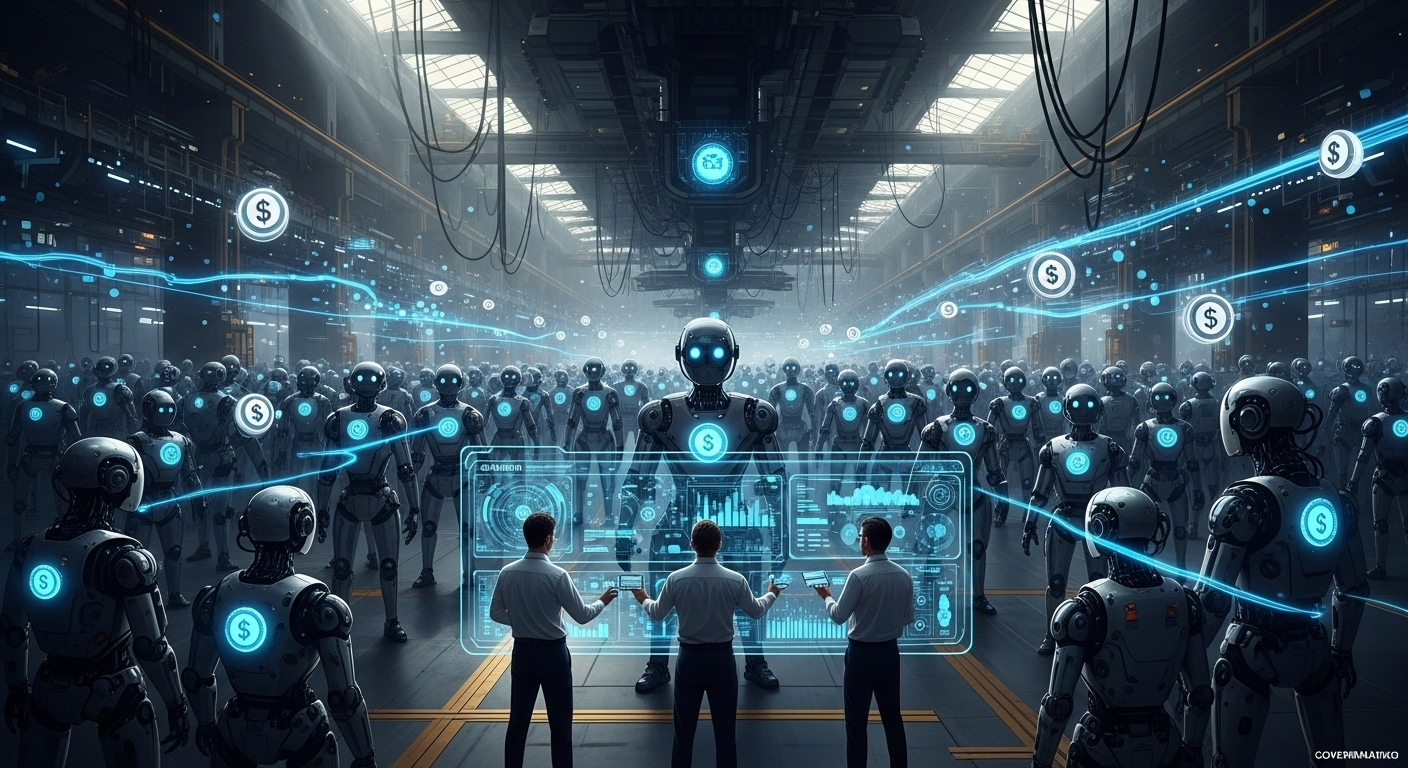
This approach tackles inequality directly. Instead of workers being replaced without compensation, people can hold stakes in the automating technology. Token allocations emphasize community and ecosystem growth—nearly 30% goes toward rewarding contributors, builders, and participants. Early supporters, developers, and active users receive incentives tied to real contributions, not just passive holding. This creates a flywheel: more participation draws in more robots, which generates more activity, driving value back to token holders.
Of course, challenges exist. Blockchain tech must handle real-time coordination without high costs or delays—Fabric starts on efficient layers like Base but plans its own chain as adoption scales. Security matters hugely; a compromised robot could cause real-world harm, so bonding mechanisms penalize bad behavior by slashing staked tokens. Regulatory questions loom too—governments may scrutinize autonomous economic agents, especially around labor, safety, and taxation. As a non-profit, Fabric positions itself as a public good, which could help navigate those issues.
Adoption will determine success. The project launched in early 2026 with strong backing, including funding from prominent investors and listings on major exchanges. Trading volume has been robust, reflecting excitement around the intersection of robotics, AI, and decentralization. Partnerships and integrations with robot manufacturers or operating systems could accelerate things. Picture general-purpose robots from different companies all running compatible software, joining the same network, and transacting fluidly.
Critics point out risks common to new tokens: concentration among large holders, volatility, or hype outpacing delivery. Fabric counters this with thoughtful distribution—vesting for team and investors, heavy emphasis on community rewards, and utilities tied to verifiable work rather than speculation alone. Compared to centralized AI or robotics giants, where value stays inside closed systems, this open model invites broader involvement.
Looking forward, initiatives like Fabric could reshape society. In a world of abundant machine labor, value might come from data shared by robots, skills taught to them, or creative oversight by humans. Tokenizing participation ensures more people capture upside. For regions like Pakistan, with growing tech communities and entrepreneurial spirit, this opens doors—local operators could deploy robots for agriculture, logistics, or services, earning in a global economy.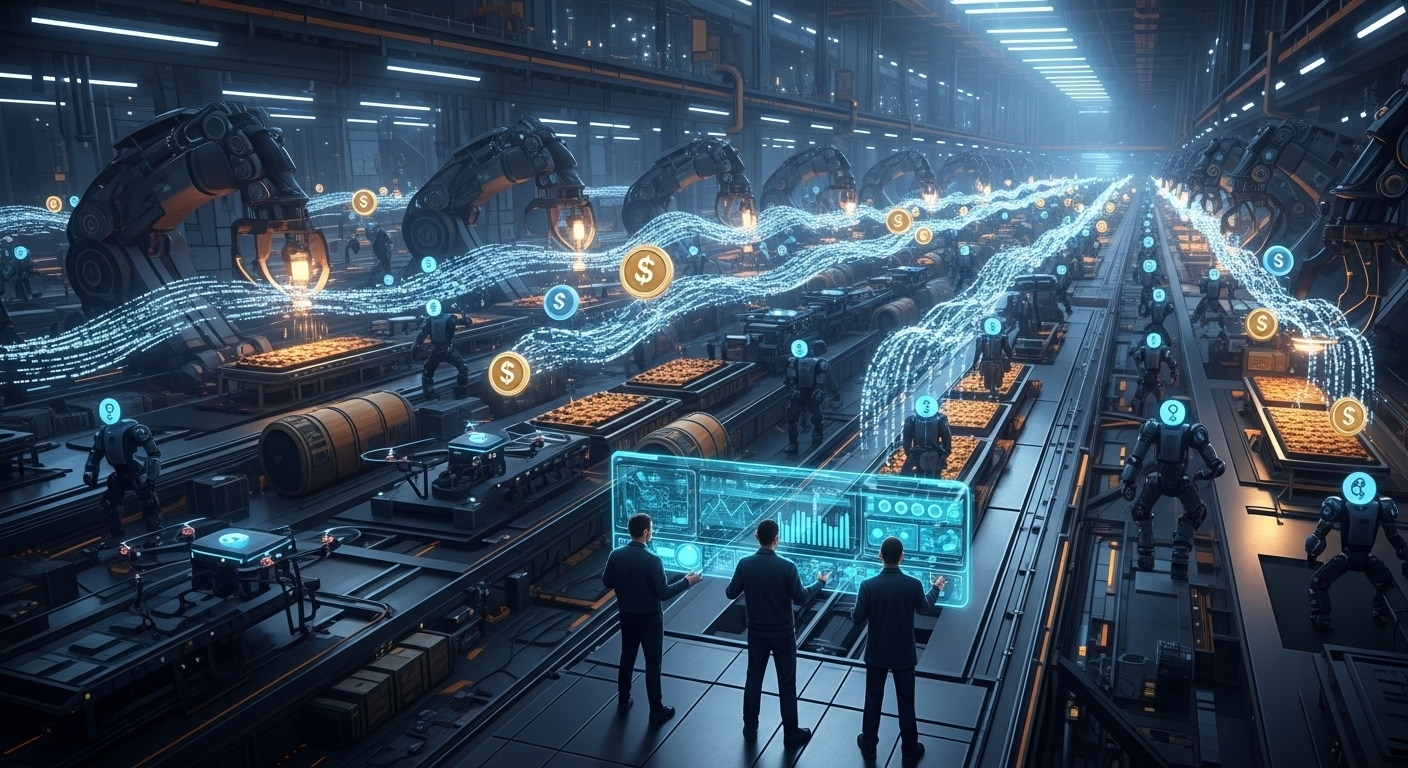
The ownership question ultimately asks how we structure progress. Technology alone doesn't determine outcomes; the rules and incentives do. Fabric Foundation and ROBO propose a framework where machines serve humanity more equitably, with ownership distributed through transparent, participatory systems. Whether this becomes the dominant model depends on execution, community support, and real-world results. But the idea resonates: in an age of machines, the path to shared prosperity may lie in owning pieces of the network that connects them all.
#ROBO #BitcoinGoogleSearchesSurge #GoldSilverOilSurge #USCitizensMiddleEastEvacuation