
I stood in that muggy garage in Hyderabad one afternoon watching a delivery robot get stuck in a corner and for a moment I wasn’t thinking about tokens or markets, I was thinking about how weird it felt that that machine could get stuck forever without ever being known in any economic sense. Humans have identities banks contracts jobs insurance and even little reputations at local tea shops but that robot just tripped over its own chassis. Reading the Fabric Protocol docs with that memory still fresh made my eyes narrow and my chest tighten a bit because this is not just another hashtag crypto project it is an explicit attempt to give machines something like agency mechanical actors a way to be recognized accountable and paid for work in an open network rather than being locked inside the dashboard of a single company.
The basic claim is that robots today are trapped in silos: a warehouse has its robots another company has its robots but there is no shared way for those machines to prove who they are what they did or get compensated outside that closed loop. Fabric wants to fix that by making every robot a cryptographic identity that can hold a wallet make payments and settle contracts with humans or other machines. In the whitepaper they push the idea that persistent identity means the world can answer questions like “which robot did this” “who controls it” and “what permissions it has” across locations and companies instead of behind locked firewalls.
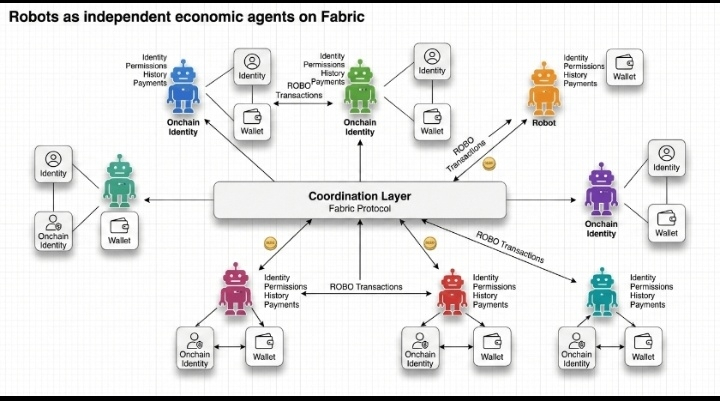
When I try to picture this in a real messy setting I don’t imagine smooth glowing robots in promotional videos I think of a dusty medical supply robot wheeling through a crowded hospital corridor. On Fabric that robot would register its identity on chain then find a job like “deliver meds to room 402.” The task would be encoded in a contract that specifies criteria like time limits and steps. When the robot claims it is finished the network would collect proofs in the form of cryptographically signed logs and other attestations from verifiers and then smart contracts would settle payment in ROBO tokens if the task checks out. That’s the theory: verified work in the real world leads directly to payment on chain instead of a company ledger.
But here’s the uncomfortable part that doesn’t get polite marketing language: moving from logs and telemetry to verifiable reality is brutally hard. Sensors fail data gets noisy and anyone who has ever debugged real robots knows that. Fabric talks about consensus and cryptographic identity and verification but it doesn’t yet lay out a bulletproof way to anchor messy physical outcomes to on‑chain truth without trusting some kind of oracle or attesting entity. This is exactly where the economic engine hinges: if a task is misverified and tokens are released for nothing that undermines the entire incentive model.
ROBO itself is built as the native token of this network with a fixed 10 billion supply to pay for identity registration transaction fees task settlements developer access and governance. Roughly thirty percent is set aside for ecosystem and community incentives tied to contributions and what they call Proof of Robotic Work while other chunks go to investors teams and reserves with vesting schedules meant to spread unlocks over time. These design choices matter because heavy initial allocations to insiders create a real risk that governance could be captured by a small group who steer fee schedules or identity rules in ways that favor them.
It’s also emotionally jarring to think about robots with wallets but on a weak anchor: if that hospital delivery robot earns today and its token price swings wildly tomorrow because of exchange listings and speculative traders its “wage” changes in value independent of the work it did. The network currently lives on Base and aims for its own Layer 1 eventually but until the value of the token is steady enough to act as a reliable unit of account every little pump and dump on Coinbase or KuCoin adds unpredictability to someone’s robotic paycheck. “Fair wage” feels like a vulnerable notion when the economics are built on volatile crypto markets.
To zoom out into adoption the token was recently listed across multiple exchanges which certainly raises visibility and liquidity but those are market signals not proof of real usage. Listings on KuCoin Bybit Bitget MEXC and promotions around trading don’t yet equate to fleets of robots using the protocol to coordinate shipments or nursing tasks across cities. Liquidity feels like excitement not deployment.
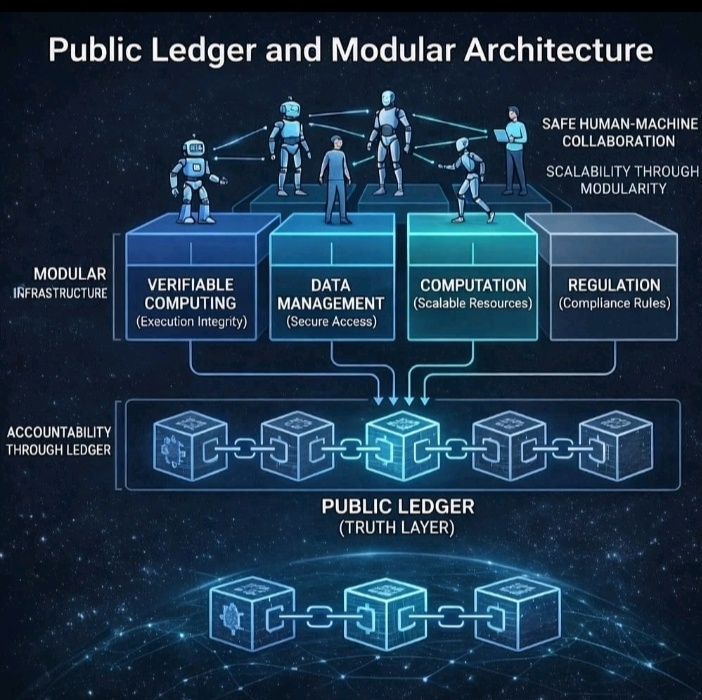
Compared to adjacent efforts like Virtuals or Fetch or Robonomics Fabric is explicit about real robots with physical consequences and identity built on blockchain rather than purely digital agents but that emphasis brings tradeoffs. Robots in factories or hospitals are bound by real safety regulations liability concerns and human privacy implications that a decentralized token network doesn’t automatically satisfy just by recording an identity or a task outcome on a ledger. These requirements exist outside the protocol and will press in hard once robots start interacting with humans at scale.
In the cracks between the promise and brittle reality lie sharp unanswered questions: how will the network handle collusion where robots and verifiers game proofs to earn tokens? Who is liable if a robot acting through a Fabric task injures someone — its owner the validators or token holders who voted for protocol parameters? Will token‑based governance meaningfully protect humans and safety or devolve into mercenary voting by speculators? And crucially will the robot economy ever need on‑chain wallets at all or will hybrid legal frameworks with banks and regulators always intervene? These aren’t marketing checkpoints they are existential stress tests for the idea and they matter far more than the next price chart or listing event.
@Fabric Foundation #ROBO $ROBO

